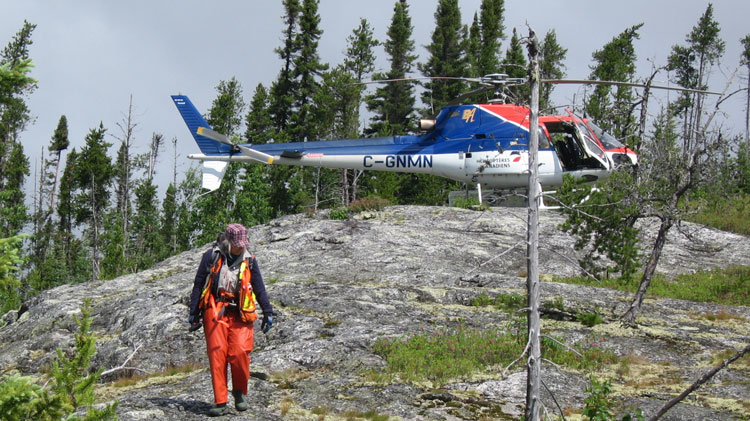
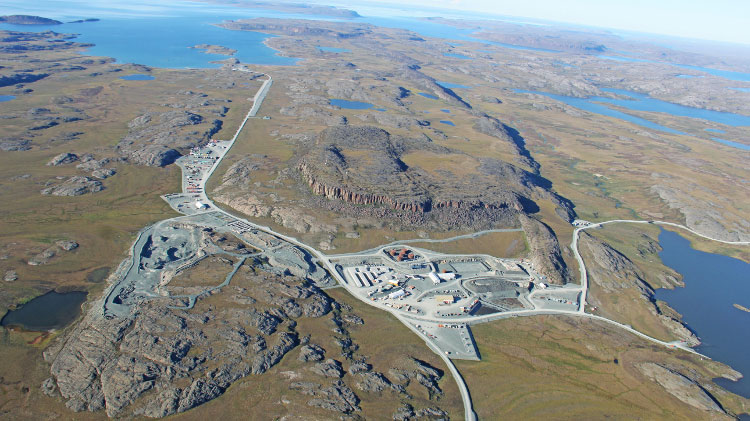
The McIlvenna Bay mine features clean power infrastructure, battery-electric equipment and other technologies. Courtesy of Eldorado Gold
Eldorado Gold’s McIlvenna Bay copper-zinc-gold-silver mine in northern Saskatchewan is now in operation, putting Canada on track for its first low-carbon mine of its kind, with commercial production expected in the third quarter of this year.
The underground operation produced its first copper concentrate on June 7, 2026, and is now in the final stages of hot commissioning as Eldorado ramps up to its nameplate capacity of 4,900 tonnes per day.
The milestone comes as mining companies worldwide face growing pressure to reduce emissions while supplying the copper, zinc and other critical minerals needed for electrification and clean energy technologies. While many operations are working to lower their carbon footprint, few have been designed from the ground up with carbon neutrality in mind. At McIlvenna Bay, that objective shaped everything from the site’s power infrastructure and electric equipment to ventilation systems, water management and tailings storage.
“This project is a really positive example of sustainable practices all the way through,” said Simon Hille, executive vice-president and chief operating officer at Eldorado Gold.
Eldorado Gold acquired the McIlvenna Bay project after completing its purchase of Foran Mining in April for $3.8 billion, with Eldorado maintaining its corporate headquarters in Vancouver. For Eldorado, adding the McIlvenna Bay project to its portfolio is helping it gain further exposure to copper.
By next year, the company expects copper to account for roughly 15 per cent of the miner’s revenues.
Located on the mineral-rich Flin Flon greenstone belt, the McIlvenna Bay mine as of November 21, 2024, contained proven and probable reserves of 29.7 million tonnes at average grades of 1.21 per cent copper, 2.17 per cent zinc, 0.44 grams of gold per tonne and 14.4 grams of silver per tonne.
The initial life of the mine is expected to be 18 years. The mine is expected to produce 41 million pounds of copper, 20,000 ounces of gold, 444,000 ounces of silver and 54 million pounds of zinc annually.
Foran committed to building the McIlvenna Bay mine in July 2024 before it became a federal priority in September 2025, when it was selected as one of the first five projects referred to the Major Projects Office, a new federal initiative aimed at accelerating nationally significant developments. The project had also secured federal support through several funding programs, including a $156 million investment from the Canada Growth Fund, $42 million through the Strategic Innovation Fund (now the Strategic Response Fund) and a $20 million investment through the Critical Minerals Infrastructure Fund.
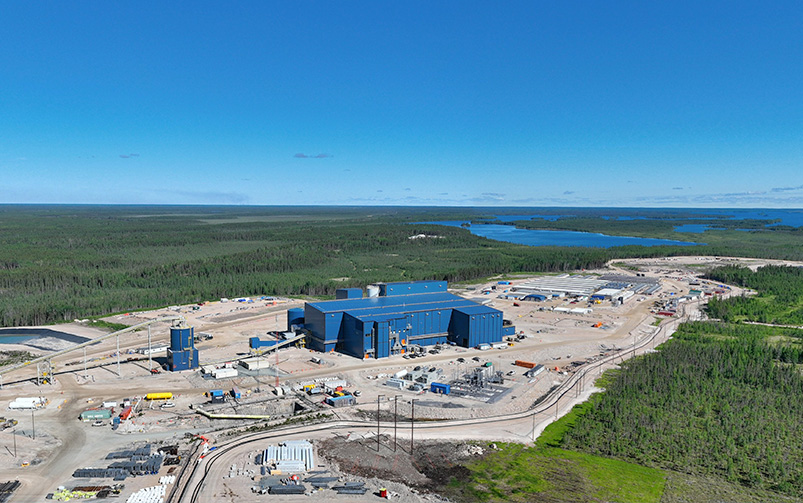 Eldorado Gold expects its McIlvenna Bay mine to reach commercial production in the third quarter of 2026. Courtesy of Eldorado Gold
Designing a low-carbon mine
Early on, Foran decided to incorporate renewable energy, battery-electric vehicles (BEVs), energy-efficient ventilation systems and dry-stack tailings into the McIlvenna Bay mine’s development plan.
One of the most significant milestones came in March this year with the completion of an 85-kilometre, 110-kilovolt (kV) transmission line connecting the operation to SaskPower’s Island Falls hydroelectric facility. Initially, an on-site 11.1-megawatt liquefied natural gas power plant provided the required power for the mine, paired with energy from a 25-kV SaskPower distribution line.
The new hydroelectric connection provides renewable electricity to the site and significantly reduces the mine’s overall carbon footprint.
“It gives this property a really unique flavour in terms of its green-centric design,” Hille said.
BEVs represent another key component of the mine’s sustainability strategy. In 2023, Foran entered into a $67 million agreement with Sandvik Mining and Rock Solutions to equip McIlvenna Bay with a fleet of BEVs, along with charging stations and batteries.
“The facility was established as a credit arrangement, with funds drawn as vehicles are delivered. This structure enabled a junior mining company to share risk and manage upfront costs in the early stages of development,” Hille said. “Attracting a global partner such as Sandvik was an early signal of McIlvenna Bay’s potential. This has been reinforced by the Canadian government’s support for critical minerals development, which is reflected in how the mine has been designed, including our vehicle fleet.”
“The underground fleet currently includes seven battery-electric loaders and five battery-electric trucks on site, with an additional two BEVs expected to arrive by 2028 when the mine hits full capacity,” Hille added. “BEV equipment will also include jumbo drills and production drills, while boom trucks, utility vehicles and personnel carriers will be non-electric.”
According to Hille, Eldorado’s experience operating similar equipment at its Lamaque gold complex in Quebec will help to accelerate the learning curve at McIlvenna Bay.
“We’ve been trialling BEVs at Lamaque for the last three years,” he said. “We can transfer the lessons we learned at Lamaque to McIlvenna Bay.”
One critical benefit of using BEVs is the elimination of diesel exhaust, which significantly reduces underground ventilation requirements compared to a conventional operation and can contribute to improved air quality and safer working conditions.
Hille estimates ventilation requirements are roughly 65 per cent lower than they would be with a diesel fleet.
The operation also employs a ventilation-on-demand system that uses sensors, underground Wi-Fi networks and tracking technology to direct fresh air only to areas where workers and equipment are active.
A heat-recovery system further improves efficiency. Warm air exiting the mine passes through heat exchangers, transferring heat to incoming fresh air before additional energy is required to warm it.
“The approach helps reduce energy consumption while preventing freezing conditions that could damage equipment or create safety hazards underground,” Hille said.
Water and tailings management
A low-carbon footprint is only one part of McIlvenna Bay’s sustainability strategy. The mine was designed to maximize water recycling and reduce long-term environmental risks associated with tailings management.
“Most of the water that will be used at the mine will be sourced from the dewatering of underground workings. The second largest source of water will come from surface runoff around the McIlvenna Bay site,” said Hille.
Excess water following the processing stage “will be diverted to a water treatment facility, upgraded to remove any deleterious elements, and then recycled back into the ecosystem,” Hille said.
The mine will take a similar approach to its tailings, which will be desulfurized to remove pyrite before being dewatered for dry stacking.
“We use bioreactors to help us break down any excess nitrogen species that are in the solution,” Hille said. “We use the typical thickening and filtration aspects to take any suspected solids out of our system.”
Sourcing labour from local communities
Eldorado is also prioritizing the creation of long-term economic opportunities for nearby communities.
The project is located on the traditional territory of the Peter Ballantyne Cree Nation (PBCN). Eldorado is following Foran’s example of working closely with local First Nations groups to improve the mine and the local economy, said Hille.
Foran signed a collaboration agreement with the PBCN in July 2023, which focused on providing education, training and employment and business opportunities to PBCN members. Meanwhile, Eldorado has invested in apprenticeships for workers to gain experience in various areas of the mine.
Eldorado is ramping up its workforce at McIlvenna Bay and currently employs approximately 380 full-time employees, with total employment at McIlvenna Bay expected to reach about 450 once the mine achieves commercial production, Hille said. Currently, 34 per cent of workers are Indigenous.
“We are committed to working with local Indigenous communities to support employment opportunities, both on-site and through the development of local services and businesses that provide long-term benefits,” Hille said. “Approximately 15 per cent of our workforce are women, reflecting our commitment to building an inclusive and diverse workplace.”
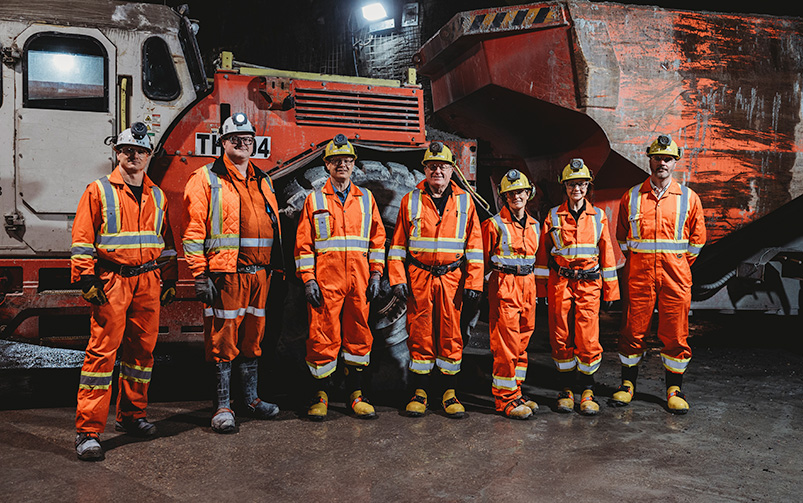 McIlvenna Bay currently employs about 380 full-time workers and this is expected to grow to approximately 450 workers once it achieves commercial production. Courtesy of Eldorado Gold
Beyond first production
With first copper concentrate production achieved, McIlvenna Bay is focused on ramping up towards commercial production, which is expected in the third quarter of this year, Hille said.
Eldorado believes its experience operating similar polymetallic deposits elsewhere in its portfolio will help support a smooth ramp-up. Hille pointed to the company’s Olympias gold-silver-lead-zinc mine in Greece, which uses a comparable processing flowsheet.
“Our familiarity with that style of operating is also one of the reasons why McIlvenna Bay is a good fit for us as a business.”
Eldorado has continued to work closely with G Mining Services, which was responsible for surface-level infrastructure and the design and construction of the process plant at McIlvenna Bay. In March, Eldorado signed a project alliance agreement with the consultancy firm, which will see G Mining provide engineering and construction services across Eldorado’s portfolio.
While bringing McIlvenna Bay into commercial production remains the immediate priority, Eldorado is already looking beyond the mine’s initial reserve base. The mine sits adjacent to several prospective targets, including the Tesla zone, Bridge zone and the Bigstone copper-zinc-gold deposit.
“We have strong positivity, which can correlate with mineralization on this property,” said Hille. “The Foran team had a $3-million-per-year exploration program, and we’ve committed to spending another US$17 million this year to boost that plan.”
Much of that investment will focus on the Tesla zone, where Eldorado is evaluating what could become the district’s next major development opportunity.
“Tesla is a little deeper,” Hille said. “We think there’s a solid zone and we're investigating it now.”
The company expects to publish an initial mineral resource on this zone later this year and believes the target could ultimately rival the size of McIlvenna Bay itself.
For Eldorado, McIlvenna Bay represents more than a new source of copper and zinc; it is the foundation of a broader mining district and a model for how future critical minerals projects can combine lower-carbon operations, responsible resource development and long-term economic opportunities for communities.
“Our intention is to continue developing and exploring in this area, as quickly as we can,” Hille said.