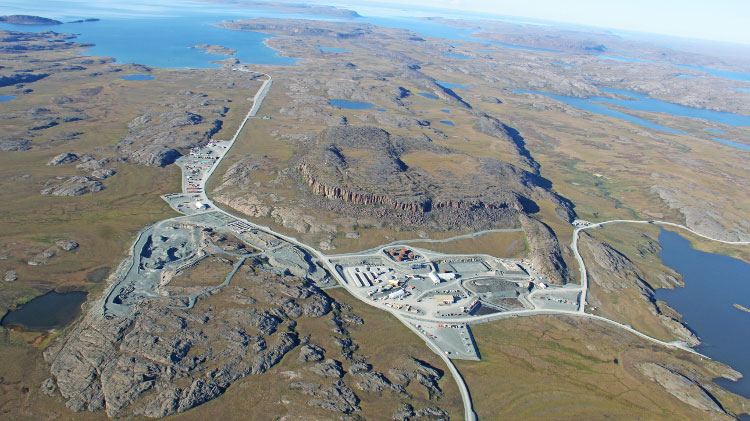
The mill at the Madsen mine is permitted to process an average of 800 tonnes of gold per day on an annual basis. Courtesy of West Red Lake Gold Mines
Despite recent record gold prices, restarting the Madsen underground gold mine—located in the Red Lake gold district of northwestern Ontario—represented a potential challenge for new owner West Red Lake Gold Mines (WRLG).
The previous mine operator, Pure Gold Mining, had resumed production at Madsen in 2021, only to suspend operations 14 months later, leaving behind a fully permitted modern mill and extensive underground infrastructure.
When WRLG fully acquired the project in June 2023, the company did not immediately focus on restarting the operation. Instead, WRLG chose to invest the time required to position Madsen for a successful restart and build a mine with broader scope and a longer operating runway. The company spent two years rebuilding the geological model and mine plan through extensive definition drilling, advancing underground development to establish multiple mining areas and investing in infrastructure. The work provided a better understanding of the ore body and greater flexibility in sequencing where and how WRLG could mine.
The Madsen mine encompasses the Madsen deposit and several satellite deposits including Fork, Starratt-Olsen, Russet and Wedge. The Madsen deposit is the largest and most significant mineralized system on the property and comprises four main zones: McVeigh, Austin, South Austin and 8 Zone.
“A key part of WRLG’s approach at Madsen is to develop multiple mining areas simultaneously, providing greater operational flexibility and reducing reliance on any single stope or mining area to sustain production,” said Shane Williams, CEO at WRLG.
False starts, fresh eyes
The Madsen mine originally produced gold from 1938 to 1974 and was briefly revived in the 1990s before the now-defunct Pure Gold Mining acquired the project in 2014. Production restarted in 2020 but consistently fell short of expectations and Pure Gold entered creditor protection in 2022.
When WRLG acquired Madsen in 2023, it inherited much of the infrastructure required to restart the operation, including underground access, a permitted mill, tailings capacity and surface facilities. “The mill was in brand new condition,” Williams said.
But the company believed it needed a better understanding of the ore body before committing to a new production plan.
That work was led by WRLG team members, who have extensive experience building and operating gold mines. Williams and his team reviewed historical mine data, completed more than 150,000 metres of exploration drilling and advanced more than 10,500 metres of underground development.
The company also rebuilt the operation and workforce—with approximately 300 employees and contractors now supporting the mine—and invested roughly $150 million in development and resource growth for the mine’s restart.
One of the key changes was where the company intended to mine. Unlike previous operators, WRLG focused on deeper, largely unmined portions of the Madsen deposit, such as the 904 complex, located deep in the Austin zone—which contains isolated pockets of ore left behind by previous mining.
“Today we’re in areas that haven’t been mined since the 1970s, whereas previous operators didn’t get to this depth,” said Williams.
The distinction is important because WRLG’s strategy is not simply a choice between remnant and non-remnant ore. By developing multiple areas of the mine, the company is creating additional working faces and more options in the production schedule.
To improve confidence in the mine plan, the company tightened drill spacing in key areas to as little as six or seven metres, compared with the wider spacing more commonly used for resource definition. The objective, Williams said, was to better understand “the structural controls of the Madsen deposit and the continuity of its high-grade mineralization.”
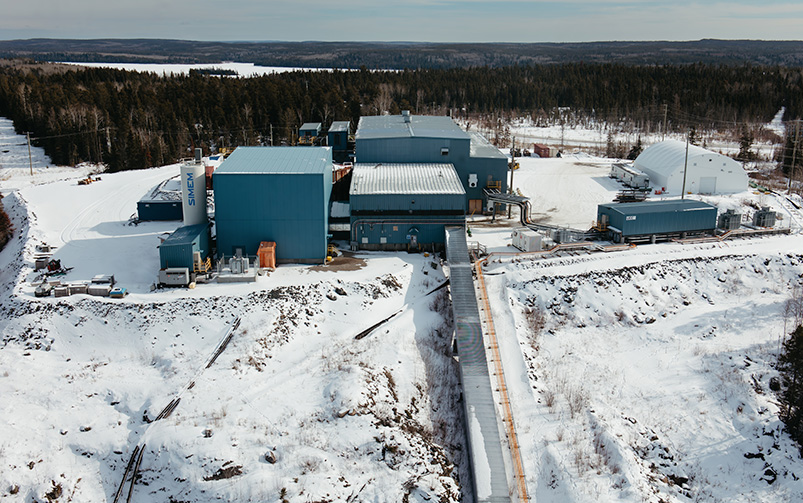 West Red Lake Gold Mines prioritized underground development during the first half of 2026 to prepare for future expansion of different mining areas at the Madsen mine. Courtesy of West Red Lake Gold Mines
Revised sequencing
“The knowledge gained through drilling and underground development provided the WRLG mining team with greater confidence in where the ounces were potentially located and allowed individual stopes to be more precisely defined before they were mined,” said Williams.
WRLG officially announced its decision to restart the Madsen mine in May 2025, before commercial production began in January 2026. In its February 2025 prefeasibility technical report, the company had outlined plans to mine the high-grade 4447 complex in the South Austin zone in Q1 2026, with a rapid ramp-up to steady-state operations. However, rather than follow that production schedule, WRLG elected to prioritize additional underground development before mining the 4447 complex.
The work marked a shift towards larger, less remnant portions of the Madsen deposit. The 4447 complex represents one of the first non-remnant areas to be mined, while the nearby 904 complex is another largely unmined area being developed. Together with the Fork deposit, 904 is expected to form a significant part of the 2027 mine plan.
The same long-term mindset also influenced another key decision: the refurbishment of the Madsen shaft. The existing shaft historically operated for approximately 50 years. WRLG is refurbishing the shaft in three phases, with the objective of progressively increasing its hoisting capacity over time to hoist 2,000 tonnes per day (tpd) by 2028 in order to complement the truck haulage as mining advances deeper. Phase one of the shaft refurbishment—with an initial hoisting capability of approximately 200 tpd—was announced as completed by WRLG on Aug. 13.
“While underground trucks will continue to play an important role throughout the Madsen mine, the shaft is expected to improve operating efficiency and contribute to lower operating costs and all-in sustaining costs over time,” said Williams.
The resequencing in Q1 2026 contributed to lower production volumes and average grades. However, the benefits of the additional development began to emerge during Q2, with underground mining averaging 878 tonnes per day and exceeding 1,000 tonnes per day later in the quarter. Higher mining rates supported increased mill throughput while also allowing WRLG to establish a surface stockpile containing approximately 1,500 ounces of gold.
“The mill is currently permitted to process an average of 800 tonnes per day on an annual basis. With throughput below that level earlier in the year, we have the ability to operate at higher rates during the second half of 2026 and expect mill throughput to increase as the year progresses,” said Williams.
The next chapter
While the Madsen deposit is the immediate focus right now, it is not the entire story for WRLG.
The company’s broader strategy is centred on building a scalable, multi-asset gold operation in the Red Lake district.
“The Madsen mill is intended to act as the central processing hub for future satellite deposits across the district,” explained Williams. The first of those potential satellite operations is WRLG’s Rowan project, located within trucking distance of Madsen. Rowan encompasses three former gold mines: the Rowan mine, the Mount Jamie mine and the Red Summit mine. WRLG plans to develop Rowan as a satellite mine to potentially supply additional material to the Madsen mill, leveraging its existing infrastructure.
“While we’re completing underground development and mining continues at Madsen, we are advancing Rowan through the permitting process,” Williams said. “We expect 2028 to focus largely on development at Rowan, positioning it to begin contributing to the production profile in 2029.”
WRLG’s 2026 production guidance for Madsen is between 35,000 and 45,000 ounces of gold. “Looking further ahead, the company sees the potential to consolidate its position in the district and leverage the Madsen infrastructure to support annual production of up to approximately 150,000 ounces over time,” Williams added.
An updated prefeasibility study, currently proposed to combine the Madsen and Rowan deposits, is expected in the fall of 2026 and will outline the company’s integrated growth strategy in greater detail to increase investor confidence. The updated study will also likely incorporate different assumptions of the gold price than those used in earlier technical studies. WRLG’s January 2025 prefeasibility study for Madsen, prior to the steep climb of gold prices, assumed a price of US$1,680 per ounce for gold reserves. Applying a gold price more in line with current and forecasted levels could materially increase Madsen’s reserves and extend the mine life.
“Red Lake is a prominent gold mining district and has historically produced over 20 million ounces, so it’s endowed with opportunity in and around where we’re operating,” said Williams.
With a long history of mining, the local communities are also interested in what happens at Madsen. WRLG’s relationship with the communities is built in part on its project agreement with the Lac Seul and Wabauskang First Nations, which the company assumed from Pure Gold Mining. The 2019 agreement includes provisions for employment and business opportunities, capacity building and potential future profit sharing, while the company continues to work with all communities on recruitment, business development and environmental monitoring.
The mine also remains closely tied to the broader Red Lake community. Approximately 60 per cent of WRLG’s workforce lives locally, while the company works with local contractors and maintains a relationship with the Municipality of Red Lake. The mine and surrounding community also share critical infrastructure, including a wastewater treatment plant operated by WRLG and a nearby fire station that serves as the mine rescue station. To minimize the project’s footprint on its neighbours, WRLG installed acoustic barriers along the haul road and crusher unit to reduce operational noise to acceptable levels for residents.
“The communities that we operate in, and the district itself, are very mining friendly,” Williams added. “There’s a real sense of support in the community. All of our stakeholders and, of course, the entire team want to see Madsen succeed.”