Nothing is more important than ensuring workers go home at the end of the day. However, many of Canada’s mining operations are located in sparsely populated regions, which often makes medical services difficult to access.
One of the companies bringing hard-to-access care to mine sites across North America is Mynwell, a Toronto-based service provider that helps companies improve the physical health, mental well-being, safety and performance of their workforce through customized on-site services.
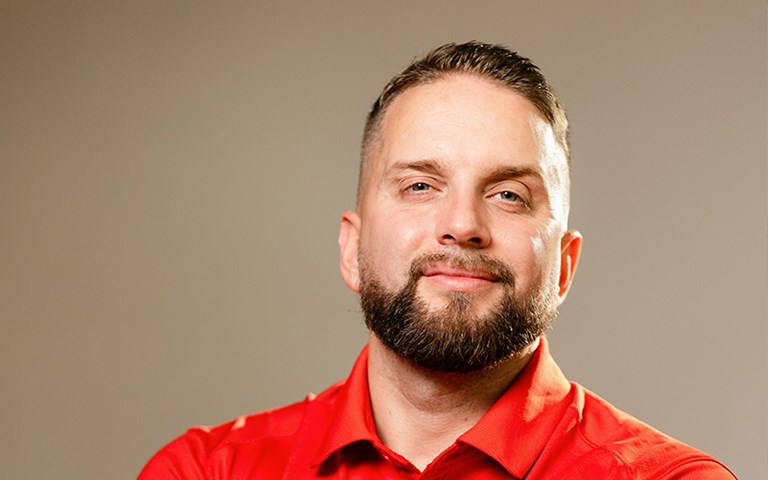
Mynwell’s director of health and wellness services, Mario Causevic—a presenter at the 2026 ISSA Mining Safety Conference—has more than 15 years of experience in kinesiology, strength and conditioning, and physical rehabilitation. He has worked extensively with industrial workers, with a particular focus on the mining sector, as well as high-performance athletes, including several NHL hockey players.
He co-founded Mynwell in 2020 with Priya Maloni, a physiotherapist. The company is looking to redefine the site worker as a “mining athlete” and treat them accordingly. Causevic took some time with CIM Magazine to detail how this concept developed, the impact it has had and how it answers a larger industry challenge.
CIM: Please tell us more about the “mining athlete” concept.
Causevic: Mine employees are in high-performance, physically demanding and mentally demanding jobs that are very different from typical office work, so their treatment needs to be that of an athlete. You wouldn’t treat your [elite level] hockey player the same way you treat a desk worker.
We found the reason some mining workers weren’t returning to work sooner after an injury—or weren’t returning to work with the knowledge of [how, for example,] they shouldn’t lift this way or shouldn’t use their body that way to avoid injuries—was because they weren’t getting educated on it.
The real vision of Mynwell is a basis of prevention. So, if you have a pain that’s a two out of 10, let’s tackle it before it gets to a nine out of 10.
CIM: What were the origins of this idea?
Causevic: We identified a gap in the northern Ontario mining sector, specifically in the need for physical and mental health solutions for remote mine sites. Mine sites didn’t have embedded programs that would offer quick access to care, whether it be physiotherapists, athletic therapists or psychotherapists or clinical psychologists for the mental health side.
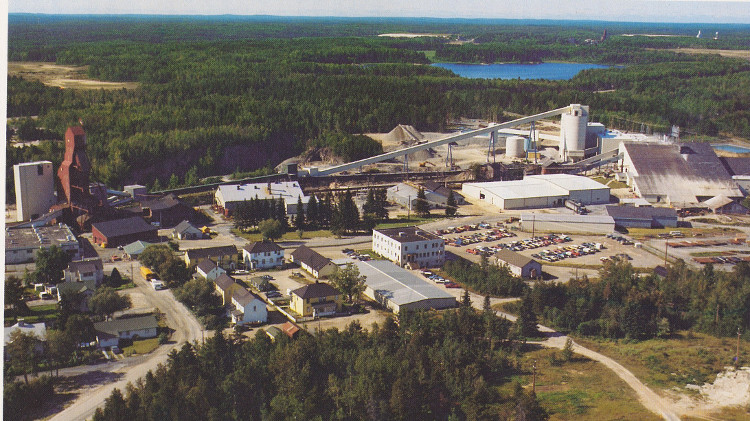
The first site we worked with on a pilot program was Alamos Gold’s Island Gold District mine site [in Dubreuilville, Ontario] in 2021. Alamos Gold’s leadership had a vision and proactive approach to the mine’s workers with a high focus on prevention, and wanted to get ahead of injuries before they happen. One of the executives said, “I don’t want my employees walking around the site with back pain when they can get treated that same day.”
Within the first three months of the program, 213 one-on-one treatment sessions were provided. In the first year of the program, there was a 66 per cent reduction in occupational injury claims.
CIM: On remote mine sites, how challenging is it for employees to get access to services for their physical and mental health?
Causevic: The biggest challenge is that there is a complete disconnect between mining operations and the local hospitals and the community. When a mine worker hurts themselves, if they get an appointment at a local private practice or hospital—which could take up to six months—those places don’t understand the demands of that job, so they’re generalizing the treatment.
The typical quality of care was also not up to par to what the miners needed because they can have significant chronic and acute injuries that require a lot of attention to detail and a lot of return-to-work planning.
CIM: Could you share some of the company’s results on mine sites to date?
Causevic: Mynwell’s programs embed specialized health and wellness professionals directly into mining operations, and we’ve seen a 77 per cent faster return to full duties compared to traditional models of care. With the “mining athlete” approach, you want to have an injury assessed within 24 hours and [then] have that person come in for follow-ups on that injury at least three times within the first two weeks to expedite recovery.
One of the biggest advantages of providing care directly on-site is the ability to intervene early, before a minor issue becomes a significant injury or leads to lost time. When support is immediately accessible, workers don’t have to wait days or weeks for an appointment or travel off-site to receive care.
What makes the Mynwell model particularly effective is that our practitioners understand the mining environment and the specific physical demands of the jobs being performed. We’re not only treating the symptoms—we’re looking at how the injury occurred, what the worker is exposed to throughout their shift and what can be done to prevent the issue from recurring.
That combination of immediate access, early intervention and job-specific care allows us to move from a reactive model of treating injuries to a proactive approach focused on keeping workers healthy, capable and at work.
CIM: What are the most common physical injuries or mental health challenges leading to lost time at mine sites?
Causevic: We found that areas of injury that were contributing most to lost time were back, shoulder and neck injuries as well as head traumas. The mechanisms behind these injuries typically fall into two categories: acute trauma or cumulative stress. Acute injuries can occur from a traumatic event, such as a worker striking their head or experiencing a sudden impact. The other common pathway is overuse, [which is] often driven by repetitive movements, poor posture or sustained positioning throughout the workday. Over time, these factors can place excessive stress on muscles, joints and connective tissues, increasing the risk of sprains, strains and other repetitive-use injuries.
From a mental health perspective, our registered psychotherapists and clinical psychology team provide direct oversight and support for every case on a one-on-one basis at the mine sites. Some of the most significant challenges we’ve seen contributing to lost time are depression, substance use and the cumulative effects of burnout and fatigue.
The nature of shift work and being away from home—particularly the realities of camp life and schedules—can take a significant toll on a person’s overall well-being, [and] these challenges often don’t occur in isolation. Anxiety, depression, disrupted sleep, burnout, fatigue, financial pressures and the strain of being away from family can begin to compound one another. When multiple factors build up over time, they can have a significant impact on an individual’s mental health, physical well-being and ability to perform safely and effectively at work.
CIM: What are some of the most effective methods mining companies can use to reduce physical injuries in the workplace?
Causevic: One of the best ways to look at injuries at a mine site is to look at them as department specific and track your injuries. If you’re not collecting data, you cannot put programs in place.
We have to look at ergonomics, [such as] the machinery that they’re using. For example, a lot of sites haven’t changed the hydraulic seats in their haul trucks for years, and these seats are sometimes not functional to their proper capabilities, which means that the worker’s lower back is impacted more when they are in it.
The physical injuries that we see are mainly tied to a lack of education, lack of awareness and lack of preparation. When you’re lifting and moving as a maintenance mechanic, for example, you’re constantly in awkward positions. If you do not receive regular proactive treatment—such as physiotherapy, massage or soft tissue work—the muscle tension accumulates, allowing for more risk of injury and discomfort. If workers do not perform warm-up stretch routines and stretching during shift breaks, this also contributes to injury and pain.
If you’re tracking the mechanisms of injuries, then you know directly how to program your injury prevention protocols. You can get your health and safety teams, nursing department and medics on board as a circle of care with your physiotherapists, who might be embedded at your site to work jointly on workshops, education, job observations, tip sheets—anything that will help with looking at these trends to reduce the rate of injury.
CIM: How can mine sites battle mental health stigma?
Causevic: The real challenge arises when [mine site] leadership and management fail to recognize or acknowledge that mental health stigma exists within the workplace. There can still be a “tough it up” mentality in the mining industry, where workers may feel that speaking up about anxiety, depression, stress or other personal challenges is a sign of weakness.
When that culture exists, workers are less likely to come forward early and ask for help. By the time they do seek support, the situation may have escalated significantly—potentially resulting in psychological injury, a severe mental health episode or time away from work.
Creating an environment where workers feel safe asking for help is critical. The goal should be to normalize early intervention and make mental health support as accessible and accepted as physical health care.
CIM: What are your hopes for the future of worker health in the mining industry?
Causevic: Mynwell’s ultimate goal is to help retain and attract new skilled workers to the mining sector by creating a culture around well-being and a sense of belonging at the mine sites.
We want workers to be viewed as high-performance athletes, and we want mine sites to understand that if you treat people this way, your metrics, production numbers, safety numbers and overall critical incidences and hazardous incidences will be reduced.
Our goal is to make this a standard across the Canadian mining industry; to move having programs in place for the physical and mental health of your workforce away from being a “nice to have” to being a “must have.”