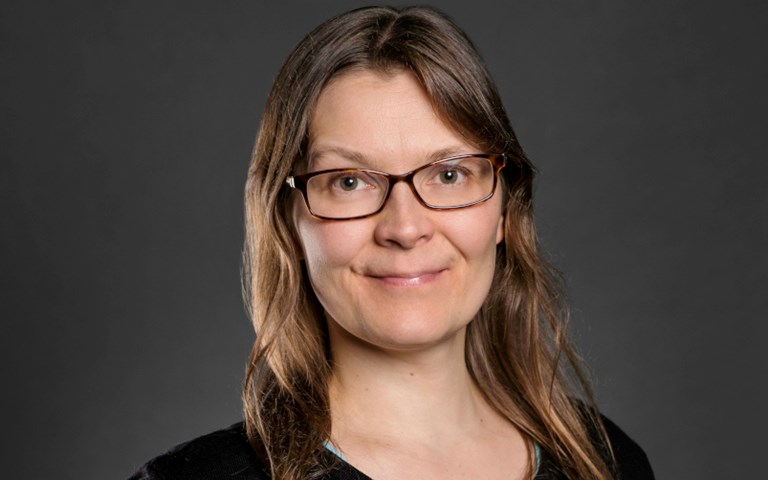
Anna Kaksonen. Photo: Courtesy of CSIRO
Anna Kaksonen is senior principal research scientist in bio- and environmental technologies at the Commonwealth Scientific and Industrial Research Organisation (CSIRO) in Australia. In this role, she develops biotechnological processes for environmental and industrial applications in the mining, energy, water supply, waste and wastewater treatment industries. She has also applied molecular and culture-based detection and monitoring approaches to microbial communities in natural and engineered environments, and isolated and described novel microorganisms.
As part of the 25th International Biohydrometallurgy Symposium (IBS 2024) that will be held during the 63rd Annual Conference of Metallurgists (COM 2024) on Aug. 19 to 22 in Halifax, Nova Scotia, Kaksonen will be presenting a keynote on the topic “Biomining of Critical Minerals from Ores and Wastes: Progress and Prospects.”
CIM Magazine talked to Kaksonen to find out more about the increased interest in biomining for more sustainable mining, as well as the importance of evaluating its feasibility for each individual mining operation.
CIM: What are the different types of biomining processes and their applications?
Kaksonen: Biomining utilizes the activity of microorganisms—most commonly bacteria, but sometimes other prokaryotic microbes called archaea, or eukaryotic fungi—to extract and recover metals from metal-bearing materials.
There are a few different types of biomining. For example, bioleaching can be used to extract metals or other valuable elements from ores or wastes, and it has been utilized for decades at an industrial scale to extract base metals from sulfidic ores.
Bio-oxidation can be used to pre-treat refractory sulfidic gold ores and solubilize the sulfide matrix before the leaching of valuable elements by other means such as cyanidation.
Bioprecipitation is another way to use microbes to recover solubilized metals from leach liquors into solid form.
Some researchers are also exploring bioflotation as a way to beneficiate low-grade ores and separate the minerals of interest from gangue minerals.
There are also various engineering solutions or processes that can be applied to use the microbes for metal extraction. For example, bioleaching and bio-oxidation can be conducted in bioreactors—usually, they are used for higher-grade ores and concentrates. If the ore grades are lower, then people can use vats, heaps or even in-situ leaching, which can also be used for deeper deposits—the leaching agents are pumped underground, so the ore does not need to be dug out from the ground. For bioprecipitation, the engineering solution is typically bioreactors if aiming to recover metals from the leachates.
Microorganisms can use various mechanisms for bioleaching. Acidolysis is based on acid leaching, so the microbes produce biogenic inorganic or organic acids that then leach the metals.
A second process is redoxolysis, which is based on redox reactions—either oxidation or reduction. Oxidation works for reduced sulfide minerals, while the reductive processes can be used for oxide ores.
The third kind of mechanism is complexolysis. In that case, the microbes produce complexing agents like organic acids, iodine-based lixiviants or other compounds that then complex the elements of interest and increase their solubility, and therefore help to extract them into solution.
CIM: What types of mines are suitable for biomining?
Kaksonen: Mines or ore deposits that have low-grade and complex ores and wastes that are uneconomical to process using traditional pyrometallurgical or hydrometallurgical routes could particularly benefit from biomining. Biomining is also attractive for ores that contain elements such as arsenic, which would cause penalties in traditional processing such as smelters.
Biomining provides opportunities to reduce the energy consumption and overall carbon footprint of processing ores and wastes when compared to pyrometallurgical operations or hydrometallurgical pressure leaching, as biomining is usually carried out at ambient pressures and relatively low temperatures.
Additionally, it can reduce an operation’s consumption of chemical reagents, further reducing operating costs and environmental impacts. Moreover, biomining can reduce the passivation of some minerals, improving mineral extraction and recovery.
CIM: Are there any key challenges that need to be overcome to implement successful biomining processes at mining operations?
Kaksonen: Some elements that may be present in the ore or the source water that is used at mine sites may be toxic to microbes. For example, if there is fluoride, that can be toxic to typical biomining microbes. Excess chloride is another example; many of the typical biomining microbes are sensitive to the combination of high chloride and high copper, whereas the presence of chloride could facilitate chalcopyrite leaching for example, so there could be benefits of using more saline water, but then that can be inhibitory to microbes. So, there are some challenges to implementing biomining.
In some low-grade ores, there might also be a lot of acid consumption from gangue minerals, so the pH may tend to rise unless it is controlled by acid addition, or unless the ore contains enough pyrite that the microbes can oxidize to produce sulfuric acid and keep the pH lower. The acid consumption tends to otherwise increase the pH, which limits the solubility of metals.
Also, if thinking of rare earth phosphates, for example, in those ones the rare earths are bound with phosphate in the ore and then phosphate solubilizing microbes can leach the rare earths and utilize the phosphorus. However, if the phosphorus accumulates to high concentrations in the leach liquor, it can re-precipitate or bind the rare earths. So, we need to find solutions to separate the two of them in solution.
Overall, it is important to evaluate the economic feasibility of biomining processes on a case-by-case basis to see whether it is actually economical to use the processes for a particular type of ore or mine waste. This case-by-case evaluation is vital because deposits are always different. It is also important to actually do experimental work on the ore or the waste that is being considered for biomining to see whether it is technically feasible, and also how the economics stack up.
CIM: Has there been increased interest in biomining in recent years?
Kaksonen: Yes, I think there has been. Ore grades have been declining over time, and that means that some of the traditional processing methods are not economical to process lower-grade ores. Biomining could potentially enable value recovery from at least some of those lower-grade ores.
For example, in Finland, where I come from, the Terrafame mine is biomining low-grade complex black shale ore that contains nickel, cobalt, copper and zinc. That ore was evaluated originally to see if it was possible to process it with pyrometallurgy or hydrometallurgy, but the traditional methods were not considered economical. But then biomining was tested and it was shown to be suitable, so the mine is now operating and uses heap bioleaching to extract those metals from the ore.
There has also been increasing interest in using biomining to extract value from various mining and metallurgical wastes, such as slags, tailings, sludges and ashes. Moreover, there is interest to extract metals from post-consumer waste, such as batteries, magnets and printed circuit boards to support the circular economy.
CIM: What do you think is the future of biomining?
Kaksonen: Traditionally, biomining has been used mainly for base metal bioleaching and for bio-oxidizing refractory sulfidic gold ores, but I think that the scope of biomining will be broadened further from base metals and gold to applications in other commodities, such as rare earth elements, platinum group metals and other critical minerals. The use of biomining to extract rare earth elements is still at the lab-scale evaluation stage, and I have not seen any large-scale operations for that yet.
Also, chalcopyrite is still a mineral that is difficult to bioleach, so more work is needed to optimize the biomining of chalcopyrite to increase extraction rates and yields.
I also think that waste biomining will further increase as ore grades decline, and there is a bigger and bigger emphasis on the need for a circular economy and waste valorization. I think biomining can play a role in that.