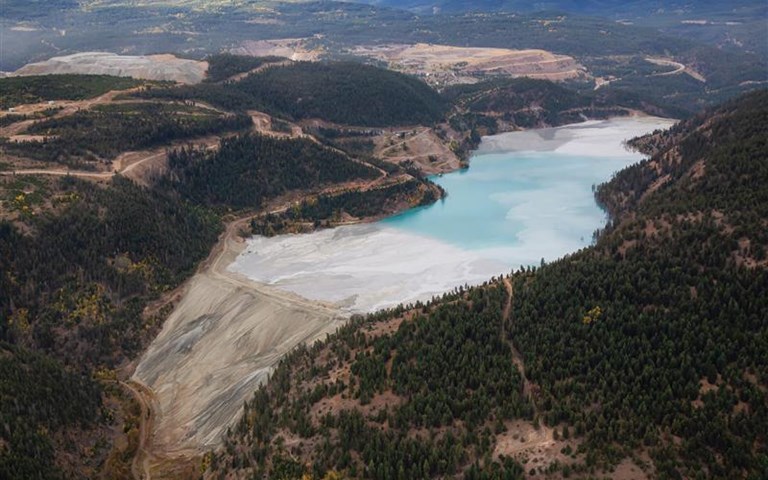
An update on tailings management standards from the Mining Association of Canada will include a broader framework for leading practices around tailings design that extends beyond dams. Photo: Adobe Stock
This was one of our favourite stories of the year. To see the full list, check out our Editors' Picks 2025.
It has been five years since the Global Industry Standard on Tailings Management (GISTM) was published in August 2020, following a landmark collaboration between ICMM, Principles for Responsible Investment (PRI) and the United Nations Environment Programme (UNEP).
The implementation of the GISTM has been an overall positive development for the industry, several tailings specialists told CIM Magazine.
“I think it is a good development, and I think that many mining companies are making an honest effort to implement it,” said Luis Torres-Cruz, mining engineering professor at the University of British Columbia’s Norman B. Keevil Institute of Mining Engineering.
The creation of the standard has helped companies make more progress towards safer tailings structures and it has been a guide for companies who had not yet begun work on reviewing the risks and stabilities of its tailings facilities, according to Karen Chovan, a tailings specialist who is founder and CEO of Enviro Integration Strategies.
Outside of ICMM members, many companies “might not have committed to adopting the GISTM, or the full set of criteria—but at least they’re reviewing everything, and trying to catch up to best practices on the risk side,” she said.
ICMM director Emma Gagen stated that the GISTM is in a good spot. “We’ve seen integration [of the GISTM] into the highest levels of [corporate] governance, so that’s very significant progress,” she said. “It’s a very different story from where we were, five years ago.”
Changes and consolidation
As for reporting, ICMM members—26 of some of the largest global mining companies—were required to report on their progress in conforming with the GISTM for their high- and extreme-consequence tailings facilities by August 2023, and for all other tailings facilities by Aug. 5, 2025.
Partner organizations behind the standard have been moving forward on the next step: establishing the Global Tailings Management Institute (GTMI), which launched operations in January 2025.
Board members include mining executives, environmental lawyers, scientists and tailings specialists. In July, it was announced that former Anglo American CEO Mark Cutifani would take the reins as chair, while Vicente Mello, senior vice-president at AECOM, would serve as deputy.
The GTMI will operate independently and will be responsible for auditing and clarifying protocols in the standard. The institute will also be developing a certification process, which will improve conformance across the industry, Gagen said.
The Mining Association of Canada’s (MAC) Towards Sustainable Mining (TSM) standard, which was originally launched in 2004, will also be undergoing changes, said Charles Dumaresq, MAC’s vice-president for science and environmental management.
“Back in 2022, we updated our Tailings Guide and OMS [Operation, Maintenance and Surveillance] Guide, including the Tailings Management Protocol and our tool for performance management,” he said.
MAC did a gap analysis after the GISTM was launched to compare GISTM and TSM requirements. “Some gaps in TSM we tightened up fairly quickly, others require more work,” he said.
Design of facilities was one of the areas where MAC determined there to be gaps compared to the GISTM. Historically, MAC had deferred to the Canadian Dam Association (CDA) for technical guidance on tailings facility design.
MAC’s updated guidance will address design in a way that complements technical guidance from the CDA while expanding the focus on design beyond tailings dams. “We’re trying to emphasize that design is about more than just the tailings dams,” Dumaresq said. “There are many other components that need to be designed throughout the facility’s life cycle, including closure. We’re looking at the bigger picture of design, to make sure it’s being done well throughout the entire life cycle—not just during dam construction.”
The review of the Tailings Guide and OMS Guide, as well as the requirements in the Tailings Management Protocol and performance measure tool, is expected to be finalized next year.
Meanwhile, the consolidation of mining sustainability standards has continued apace; ICMM, MAC, The Copper Mark and the World Gold Council are collaborating to create one accessible mining standard for companies to work towards. This consolidated standard would address many aspects of environmental and social performance.
“We need simplification, without lowering the bar,” Gagen said. “The idea of the consolidated standard is to have good practice standards to show everyone the pathway to improve.”
Dumaresq pointed out that the consolidated standard will include tailings management. “But for tailings, companies will have the option to implement either the GISTM or the MAC requirements and guidance,” he added.
Launched in 2023, the Consolidated Mining Standards Initiative is now in the process of finalizing its second draft. The first draft, which ended its public consultation period at the end of 2024, received more than 4,500 comments in five languages, with 162 stakeholders providing input through quantitative survey questions.
Gagen expects public consultation on the second round to begin in the fourth quarter of this year. After incorporating new comments, the consolidated standard will be “good to go,” she said.
Implementation of the consolidated standard is anticipated for the second half of 2026.
Nagging questions remain
The need for an oversight body to resolve disputes over how the GISTM should be applied is becoming more important by the day, sources said.
Clarifying how to meet the standard continues to be a challenge in the industry, according to Chovan. Engineers have differences in opinion on how deep a dive on risk assessment is necessary for some structures to meet the GISTM, and having a decisive oversight body to clarify these questions would strengthen the standard.
For many in the sector, what failure modes are classified as “credible”, what measures will be accepted as “as low as reasonably practicable” (ALARP), and even the acceptable methods to clearly determine these, is still unclear, Chovan said. Mining specialists have been trying to work that out and create alignment in workshops and conferences, she added, resulting in new guidelines from the CDA, but guidance from the GTMI would be helpful.
Tailings storage specialists are also wrestling with how to determine when to apply qualitative, semi-quantitative or quantitative analysis methods in evaluating risks, Chovan said.
“How much precision is required in quantifying probabilities and consequences of failure? How do you assure you have the right, and accurate, inputs to calculate those precise numbers?” she asked. “What level of accuracy will enable effective decision-making for prioritization of actions, and is qualitative or semi-quantitative analysis enough? And, do you only do quantified modelling for extreme-consequence or high-risk [structures], or is it required for everything?”
There also needs to be more clarity on the notion of failure, specialists said. For Torres-Cruz, there are two types of failure: slow-motion failures, such as repeated acid drainage from the facility, and sudden failures, along the lines of the 2019 tailings dam failure that caused a mudslide, resulting in hundreds of deaths in Brumadinho, Brazil.
“It seems the focus of the GISTM is on Brumadinho-like failures,” Torres-Cruz said. “But contamination of groundwater is, in my mind, a type of failure. It’s not a as dramatic a failure as a mudflow, but it is a failure nonetheless.”
However, Chovan is encouraged by the dialogue.
“The important part is that everyone is talking about it, exchanging notes, listening and coming to resolutions,” she said.
Shortage of engineers
The role of the engineer of record (EOR) has always been important, but never before have EORs faced this level of scrutiny, Siavash Farhangi, senior principal for tailings and mine waste at WSP, told CIM Magazine.
EORs are needed more than ever to meet the exacting requirements of the GISTM, but finding engineers for these positions has become more difficult.
EORs in major mining disasters, like the Mount Polley tailings dam failure in 2014, found themselves dragged through the papers, Farhangi noted. “There’s a lot of spotlight on EORs now,” he said, and tailings engineers are not eager to step into that role.
The number of tailings engineers, in Canada and in other mining jurisdictions, who have been trained adequately to assume EOR responsibilities is limited, Farhangi pointed out. Additionally, the workload required of an EOR means that people holding these positions are not able to serve as EOR for more than a few mine sites at a time.
“A senior geotechnical engineer could be an adviser on five to 10 projects,” Farhangi said. “With EORs, you can only handle a couple, maybe even one if it’s complex. We’re also seeing signs of burnout [in existing EORs], and that’s another reason it’s not easy to convince juniors [engineers] to take on EOR positions.”
Further compounding the EOR shortage is the increase in other designated positions for similarly trained specialists required by new tailings standards, Chovan said.
This is a problem because with TSM requiring EORs for all tailings facilities, and the GISTM requiring them for all operating tailings facilities and many closed facilities, the demand is continuing to increase.
“There are now independent review boards, dam safety reviews and additional layers of independent audits required by the new standards and regulations,” Chovan said.
Furthermore, many specialists who have the skills to be an EOR are now working on independent review boards, or have moved into corporate tailings manager or director roles. “There are only so many of us who have specialized in this space over the years,” she added.
This shortage will only increase over time. “There are people in these roles working now who should have aged out and should be long retired,” she said. “But they’re still working, and as experienced folks step into their shoes, there will be challenges to backfill other roles.”
Graduate tailings diploma and certificate programs in universities have responded to the spate of tailings disasters and new standards by integrating tailings facility management into their courses, Farhangi said. However, the mining industry as a whole has long been facing a recruitment crisis, with engineers being more interested in working in high tech and more “glamorous” sectors.
“A recurring theme at recent tailings conferences is that we’re desperately short of people,” Dumaresq said. “That’s one of the biggest challenges for the next five to 10 years.”
WSP has also added more training modules for engineers interested in tailings management, Farhangi said.
“We’re having tons of meetings with our juniors to explain what the consequences are of a dam failure,” he said. “When you have the right checks and balances in place, becoming an EOR doesn’t have any higher risk than being a design engineer. We also have in-house training for people who want to become an EOR.”
These include routine assessments of engineers’ strengths, and guidance on what potential EORs need to learn more about. In the last two years, WSP brought in EORs from all around the world for workshops at its Canadian and Australian offices. “We’re developing a pipeline of engineers, from intermediate to senior level, who are interested in becoming EORs,” he said.
“People need to understand that they need an overall understanding of the system. They don’t need to understand the details and mechanics of every single step. [EORs in training] need to understand where an issue becomes technical and needs an expert to ensure there are no concerns,” he added.
For now, there is still a shortage of EORs. To manage client requests, WSP has created an inventory of existing dams where it is the EOR.
“If a new client comes in and says they need an EOR, there are steps to evaluate the new opportunity, typically starting with a comprehensive dam safety review,” Farhangi said, referring to the shortage. “If the existing clients are not willing to invest to follow industry standards and make the facility safer, we have divorce clauses to walk away.”
Social engagement
One of the goals of the GISTM is to improve relations between mining companies and the communities where they operate, Torres-Cruz said.
“I think the standard improves on the emphasis that previous standards had placed on social engagement and liaising with surrounding communities,” he said. “So much so, that the first topic of the standard is centred around people. This is not a coincidence.”
Earning community approval for mining projects is integral to securing the social licence to operate, and Torres-Cruz believes the GISTM has prioritized this need.
For some social practitioners, the GISTM came with very high expectations, said David Clarry, a sustainability consultant at Innotain Inc. who is a former board member and chair of MAC.
However, some of these expectations have not been met, according to Clarry. “I don’t think it’s a shortcoming of the GISTM,” he said. “The GISTM’s primary purpose is to prevent failures, not to enhance communications.”
For Clarry, the lack of advancement in community engagement is due more to competing priorities.
“Tailings aren’t a thing that communities want to spend a lot of time on. People are more interested in jobs and current company performance, rather than discussions about risk,” he said.
“While transparency is important, the onus is on the operator to make sure the risk [from tailings facilities] is low. It makes sense that communities are more focused on current issues, their economies, than wanting to be part of the governance for tailings risk.”
One of the risks of drafting a brand-new standard is that the strengths of earlier standards can be forgotten, Clarry said. The TSM program, now adopted by national mining associations in 14 countries (including Canada), had been progressing both tailings standards and community engagement standards for the last 20 years.
“The GISTM is still working to put those in place,” he said. “They have verifiers, they have an institute—but I’m not sure they have as dynamic oversight by civil society and industry as TSM does.”
According to Dumaresq, the updated TSM requirements and guidance will address social engagement on tailings in a way that is integrated with site-wide engagement. “TSM already has strong requirements for engagement, and the goal is to work tailings management into that while helping to ensure two-way communication with communities about tailings management,” he explained.
For ICMM’s Gagen, creating a standard to entrench community engagement is tricky, as it requires continued, meaningful engagement and is not an exercise in ticking boxes.
It is also complicated by regulations in different jurisdictions.
“For some requirements in the social space, like emergency preparation or response planning, companies do everything they can,” Gagen said. However, in some areas, responsibilities for these activities rest with local regulators, making it difficult for companies themselves to fulfill these obligations, she said.
These challenges highlight the importance of a continued partnership between governments, companies and local stakeholders to see the full implementation of the GISTM, Gagen added.
The future
Having the GTMI as an active management institute to oversee the GISTM and improve conformance will only strengthen the standard and its ability to prevent tailings failures, specialists said.
Several experts emphasized that the GISTM must be open to changes as well.
“The big question is whether the GISTM will be updated,” Dumaresq said. “No one could really answer that before because the institute hadn’t been established.”
He hopes the standard will be updated to address the gaps and weaknesses he has noted to make the standard stronger and more efficient.
“But realistically, I wouldn’t expect much change for a few years,” he said.
On the ground, technological developments are making it easier for companies to better gather data, monitor, evaluate and report on the performance of their tailings structures, Chovan said.
“A lot of risk management software companies have incorporated the [GISTM] standard into their compliance systems, and there are more platforms to evaluate risk,” she said. This makes it easier for companies to report against the standards and creates more transparency within the industry.
Specialists emphasized that the critical aspect of these standards is the end goal of preventing catastrophic tailings facilities failures.
“It will never be enough to achieve regulatory compliance. One always has to be ready to go beyond regulatory compliance,” Torres-Cruz said.
“Regulatory compliance is a means to achieve the objective of safe tailings storage facilities.”