British miner Anglo American’s proposed US$20 billion all-share acquisition of Canada’s Teck Resources, which was announced on Sept. 8, comes at a critical time in Canadian history.
With a sense of urgency some Canadians have not seen in their lifetimes, the current government under Prime Minister Mark Carney is crafting industrial policies through its Build Canada Act that aim to diversify the economy away from the United States and nurture key sectors like mining, and in particular, critical minerals such as copper.
The federal budget released on Nov. 4 underscored Carney’s efforts to support the development of domestic critical minerals value chains. It promised a $2 billion sovereign fund that will make equity investments, offer loan guarantees and negotiate offtake agreements for critical minerals projects. It also set aside hundreds of millions of dollars in additional spending for the mining industry.
Highlights included a new investment vehicle called the First and Last Mile Fund focused on getting near-term critical minerals projects into production, which will be run by Natural Resources Canada, and the expansion of eligibility for the Critical Mineral Exploration Tax Credit to include 12 new minerals necessary for defence, semiconductors, energy and clean technologies.
In August, Carney launched the new Major Projects Office to simplify and accelerate federal decision making for projects essential to Canada’s economic growth. The office will work towards ensuring that projects of national interest are reviewed within two years.
“These are the right moves and they haven’t been made in since forever,” said Jay Khosla, executive director of economic and energy policy at the Public Policy Forum in Ottawa. “Canada has really become an uncompetitive environment.”
From 2015 to 2024, Canada ranked second last in the Organisation for Economic Co-operation and Development (OECD) in real gross domestic product per capita growth, surpassing only Luxembourg, he noted, and from 2006 to 2020, the country fell from fourth place to 23rd in the World Bank’s ease-of-doing-business rankings. In 2019, the most recent year statistics were available, Canada ranked second worst in the OECD for the time required to obtain a general construction permit.
“That’s a problem,” Khosla said. “We spent a decade getting our environmental fundamentals right, which was positive, but at the same time there was little or no focus on economic goals. Then along came U.S. President Donald Trump and there has been a fundamental reshaping of the economy and how critical metals projects fit [into] that.”
At a time when demand for copper is set to surge, combining Anglo American and Teck would create a top five global copper producer headquartered in Canada with assets in Canada, the United States, Latin America and South Africa.
 Duncan Wanblad, CEO of Anglo American (left), and Jonathan Price, CEO and president of Teck Resources, announced the proposed merger in September 2025. Courtesy of Anglo American
The Global Critical Minerals Outlook 2025 report, released by the International Energy Agency (IEA) in May, forecasted a 30 per cent copper supply deficit by 2035 based on the current copper mine project pipeline. In addition, the report found that China is the leading refiner of 19 of the 20 energy-related critical minerals the IEA analyzed.
The proposed deal faces intense scrutiny from the federal government, the mining sector and the public. The transaction must be reviewed under a rigorous foreign investment review to see if it passes net benefit and national security tests.
A July 2024 Ministerial Statement with respect to the Investment Canada Act stated that transactions involving foreign investment in Canadian mining companies with significant critical minerals operations “will only be found of net benefit in the most exceptional of circumstances.”
Canada’s Minister of Industry Mélanie Joly is reviewing the deal and will approve or reject it within the coming months.
“It’s the first major test of the policy after the government announced that it is going to be very, very cautious about assessing these types of transactions,” said Subrata Bhattacharjee, partner and national chair of the competition and foreign investment review group at law firm Borden Ladner Gervais LLP.
“This transaction comes at a very sensitive time with the government’s call to increase our own self-sufficiency, maybe reclaim some of our excellence, and now in mining critical minerals to protect the interests of Canada.”
Sweetening the pot
Both companies have fended off takeover attempts in recent years. Glencore made an unsolicited bid for Teck in 2023, while BHP made an unsolicited bid for Anglo American in 2024, followed by another preliminary takeover offer in November 2025 that has since been dropped.
Teck and Anglo American declined to be interviewed for this article but pointed to specific commitments the two companies made to critical minerals development in Canada as part of the merger announcement. These include naming the company Anglo Teck, moving its global headquarters to Vancouver and basing its top executives in Canada.
The two companies also promised roughly $4.5 billion of investment in Canada over five years, about half of which is earmarked for a brownfield expansion of Teck’s 100 per cent owned Highland Valley Copper mine in B.C., a multi-billion-
dollar project that Teck’s board had already approved for construction in July, months before the proposed merger was announced in September.
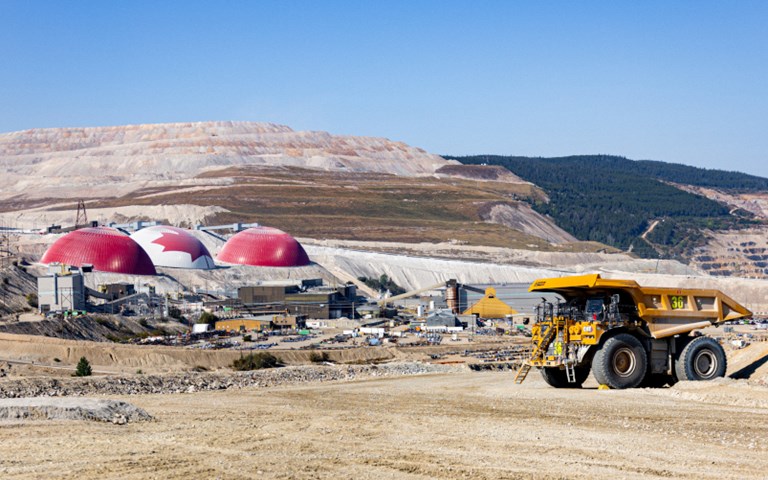
The Highland Valley Copper Mine Life Extension Project will extend the life of the country’s largest copper mine from 2028 through to 2046, create 2,900 jobs during construction and support about 1,500 direct jobs through ongoing operations.
In addition, the merged company would advance development of Teck’s Galore Creek and Schaft Creek copper projects in northwestern B.C., including capital expenditures of $750 million, and invest $300 million in Canadian critical minerals exploration and technology.
On the research and development side, the incentives stretch to investments of at least $100 million towards critical minerals skills training and research in Canada, and an offer to work with the Canadian government to set up a Global Institute for Critical Minerals Research and Innovation. The institute would be supported financially by Anglo Teck and potentially involve leading institutions in Canada, South Africa, the U.K. and other nations, the companies stated.
James Whiteside, director and head of metals and mining corporate research at Wood Mackenzie, sees the merger as beneficial to both companies.
“In theory, Anglo is very complementary to Teck,” he said in an interview from London. “While Teck has a project pipeline that is very enviable, Anglo doesn’t. For Teck shareholders, they get access to Anglo’s portfolio of world-class copper assets—Quellaveco, Collahuasi, Los Bronces—and alongside that Anglo’s project execution expertise.”
In an industry that chronically delivers projects over budget, Anglo distinguished itself with the 2022 commissioning of its Quellaveco copper mine in Peru on time and just US$200 million over its projected cost despite the added complexity of the COVID pandemic.
The second phase of Teck’s 60 per cent-owned Quebrada Blanca mine in Chile, QB2, produced its first copper in 2023 but has seen cost overruns and has not reached its expected production levels. The mine is adjacent to the Collahuasi copper mine, which is a joint venture between Anglo American (44 per cent), Glencore (44 per cent) and a Japanese consortium led by Mitsui & Co. (12 per cent).
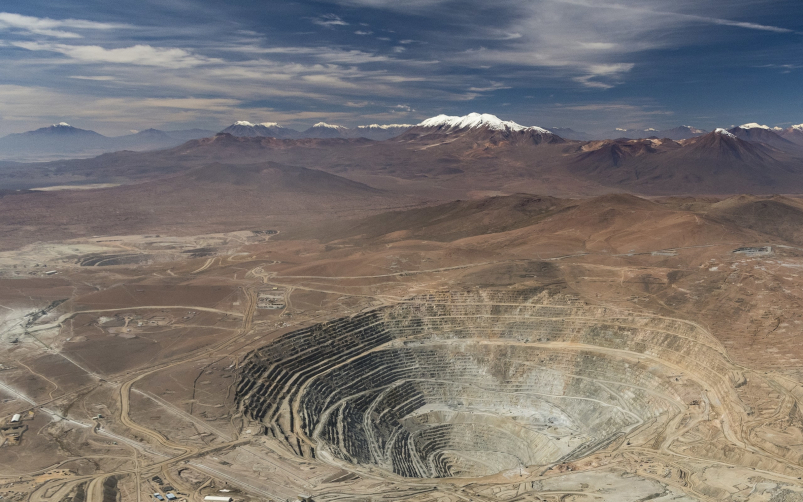 As part of the proposed merger, the companies would combine the Collahuasi mine (pictured) and the Quebrada Blanca mine, which are located just 15 kilometres apart in northern Chile. Courtesy of Collahuasi
Whiteside views the $750 million set aside for the Galore and Shaft Creek projects, which previously he had thought were lower on Teck’s priority list, as being positive too. “It is pre-development capex so it may actually lead to more investment,” he said.
In terms of the total $4.5 billion capex commitment the companies made in the September announcement, that is “going to be a big chunk over the next few years,” Whiteside added. “It’s a big deal in terms of investment into Canada.”
Having Anglo Teck’s headquarters in Vancouver would be a huge plus, in part because it would help generate more research and development in the critical minerals space, according to John Steen, director of the Bradshaw Research Institute for Minerals and Mining at the University of British Columbia (UBC).
“Headquarters matter,” he said. “Having a major company based in your city means the ecosystem of technology and development happens in that city. We’ve seen that with Rio Tinto in the U.K.”
Steen pointed to the Rio Tinto Centre for Future Materials, which Rio Tinto and Imperial College London launched in December 2024 to accelerate the development of technologies necessary for the green energy transition. Rio Tinto plans to invest US$150 million over the next decade and the centre will act as a hub to connect some of the world’s best researchers, including those at UBC.
Steen also pointed out that seven of the top 50 biggest mining companies in the world have headquarters in Vancouver, according to a survey by Mining.com released in April.
Trail’s strategic value
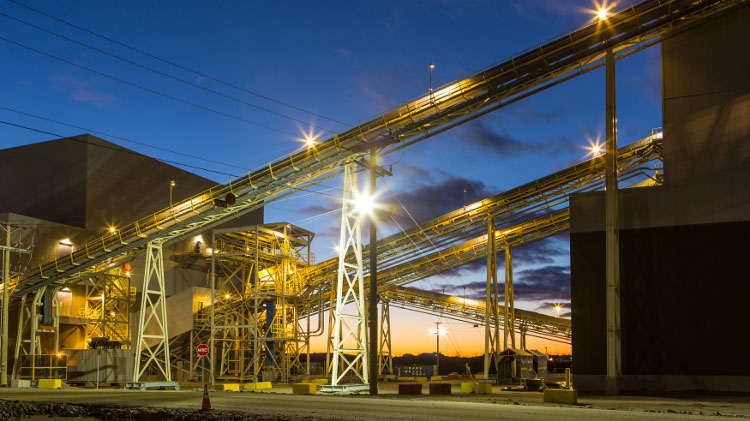
Another pledge made in the merger announcement was investment in Teck’s Trail metallurgical facility in B.C., one of the world’s largest fully integrated zinc and lead smelting and refining complexes. Promises include $750 million to enhance the smelter’s critical minerals processing capacity, expand its germanium production capacity and the potential expansion to other strategic minerals.
The two companies have also said they would “explore opportunities” to add copper processing at Trail and “support the establishment of new critical minerals processing facilities in Canada.”
Canada’s regulators must ensure that the combined company follows through with its commitment to the Trail smelter, industry watchers agree.
That is particularly true, said Steen, because Trail is not a significant money maker.
“It’s a bit of a ball and chain for Teck because it’s not very profitable, but when we talk about the strategic value of critical minerals it becomes more important,” he said.
Assurances that Anglo Teck will continue to run the smelter and potentially expand its processing capacity to other strategic metals is important, Whiteside said. “Teck had already been working towards doing a deal with the Canadian government to look at recovering some of these critical minerals—like antimony and gallium—on the back of export controls from China,” he noted. “So they have accelerated that and got a commitment seemingly on the face of things.”
While those materials have always been there and have been recoverable, Whiteside explained, the process needs some adaptation and the reason it has not been done before is because it has been so low margin. “If it weren’t for this merger, would Teck be incentivized to build recovery of these critical metals so quickly?” he asked.
However, with China controlling much of the refining of many critical minerals, it is vital to start building processing capacity in Canada.
According to the IEA, China refines 87 per cent of the world’s graphite, 77 per cent of its cobalt, 76 per cent of four rare earths (neodymium, praseodymium, dysprosium and terbium), 62 per cent of its lithium, 47 per cent of its copper and 33 per cent of its nickel.
“The Canadian government has to make their commitment to Trail binding, otherwise the economic reality might set in,” Steen said. “It needs to be very clear exactly what is being committed to and how these commitments will be enforced.”
What to watch for next
Prime Minister Carney’s prerequisite that any company acquiring Teck would have to move its headquarters to Canada makes competing offers unlikely, Whiteside said.
“That would be the number one obstacle,” he said. “Anglo has some rationale to move its headquarters to this time zone and it’s more aligned to where most of its revenue is generated in South America—but the same can’t be said for a BHP or Rio Tinto.”
While Whiteside is reluctant to speculate on whether Canada will greenlight the transaction, he argued that with the combined company becoming the fifth-largest copper producer and the absence of any rivals, it could go through.
UBC’s Steen argued the transaction meets Canada’s net benefit test.
“It’s positive because the alternative is having a weak Teck that is becoming gradually less of a player on a world scale,” he added.
Other potential new demands could also derail the deal. Articles in The Globe and Mail in mid-November citing unnamed sources suggested Ottawa may insist the combined company be domiciled in Canada before approving the acquisition.
Wood Mackenzie’s Whiteside argued it is difficult to see what more Canadian regulators could request.
“It definitely felt like, in the announcement of the deal and recent articles by Teck that have been published, that a lot has been done for Canadian regulators,” he said. “I don’t know what else they could ask for. A higher proportion of their capex going into Canada? Higher than the net asset value derived from Canada? Shifting their primary listing from London? I don’t think there are any other concessions they could ask for.”
According to Whiteside, 17 per cent of Teck’s net asset value (NAV) is in Canada, while seven per cent of Anglo Teck’s NAV would be in Canada.
Canada’s foreign investment review has often been a feature in large global mining deals with Canadian targets, and the process is something that both companies, and especially Teck, are quite familiar with, noted Bhattacharjee of Borden Ladner Gervais.
Teck itself has been a vocal participant in past discussions about what the federal government should do about foreign investment and how to regulate it, he added. “The parties came out swinging as the deal was announced trying to explain to everyone that it was going to be of net benefit.”
Ultimately it is a negotiation process, Bhattacharjee said, adding that Minister Joly must be persuaded that the deal is going to be better for Canada than what the situation would be if the deal does not proceed.
On Sept. 16, Joly told reporters in Ottawa that the promises Anglo and Teck have made do not go far enough to ensure the transaction benefits Canada.
“Anglo and Teck are going to try very hard to give the government the best reasons they can that it’s okay for Anglo to take Teck,” Bhattacharjee said. “There is a higher political risk situation than for deals at other times, but I think they are trying to get ahead of that with fairly aggressive promises out of the gate.”