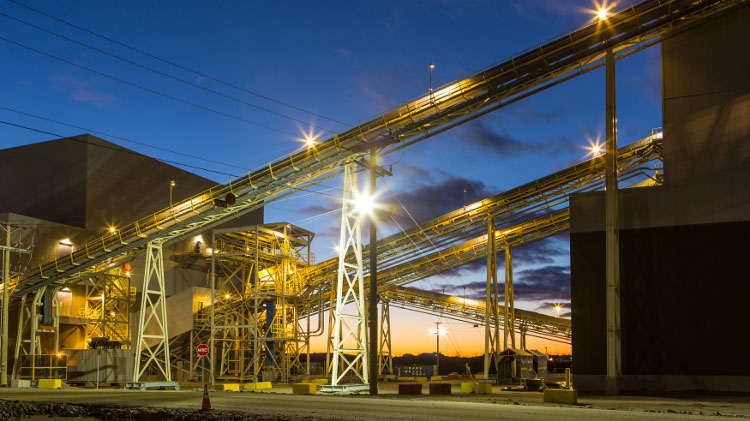
For many mining companies, the real operational risk is not a lack of compliance data, but the loss of time and people to reporting instead of improving performance. Adobe Stock
M
ining companies are held to high regulatory standards that aim to make the industry safer and more environmentally and socially responsible. Not only do they have to prove they are financially viable despite all the pressures they are facing, such as labour shortages and high costs, but they also use environmental, social and governance (ESG) reporting to show they can manage risks and stay compliant.
Each company has its own systems for tracking, storing and disseminating the information it captures about its operations, often involving paper checklists, spreadsheets and hours of manual data entry. For maintaining compliance, these systems can be effective, but they can also be time-consuming and inefficient.
New digital software systems can take compliance from a mere box-ticking exercise into a tool for becoming more efficient, better at managing risk and ultimately more attractive to the investors who keep the industry going.
Reducing the burden of ESG data collection
One of the challenges of ESG reporting is the constant need for data collecting. Busy field teams must track their activities consistently and then manually input the data into various forms to fulfil their compliance obligations.
Even in very large companies, individual local teams may be only 50 or 100 employees strong. These administrative burdens prove overwhelming for those small teams but are the only resources the companies have to gather the information they need to assess where they stand as an organization.
“When you look at that small team, without many resources, you can see what a heavy lift it is to gather that information from the site, from incoming invoices, from meter readings and from community discussions,” said Élie-Adrien Mouzon, CEO of Ensogo, a Toronto-headquartered company whose software tool helps teams gather, analyze and report their ESG data with less manual input.
In developing the Ensogo system, Mouzon said he thought of the most labour-intensive tasks his team members performed and aimed to make an artificial intelligence (AI) agent that could take on some of the workload.
“We have an agent that is what we call a data harvester,” he said. “It goes into databases to pick up the data that we need from invoices or other documents. Then we have the data controller that’s going to control the quality of the data that you have and check that all the sources are correct.” Automated collection systems like Ensogo’s create a clear lineage for the data and a robust audit trail.
There does not need to be a lot of data to make educated decisions that move a company forward, but it has to be good quality data that accurately reflects the company’s actions and identity, said Mouzon. Ensogo specializes in ESG, allowing it to collect and structure data to create a company knowledge base that can later be used to perform some more generative tasks like advising and recommendation.
“We’re working with clients to create this knowledge base so that they have the right data collected and cleaned to start deriving good information,” Mouzon said.
For now, though, Ensogo’s base strength is helping people get a grip on their company’s information through data collection, tagging and organization so that reporting can be completed much faster.
“One of our clients was taking a full 12 months to complete reporting for the year,” Mouzon said. The employee responsible for that was very frustrated because her role was not to merely report, but to drive impactful change within the organization. When it takes all year to complete reporting, though, there is little time for anything else.
With Ensogo’s software, the client completed its reporting requirements in a quarter of the time. During the rest of the year, the company was able to drive progress that was not even on the radar before.
Integrated data use
Beyond the need to fulfil regulatory and social commitments, a mining company’s efficiency depends on internal visibility—for decision makers to have access to fast, accurate and up-to-date information as they need it. When performance metrics are updated continuously, companies gain earlier warning signals and more time to respond to regulatory, environmental or social challenges.
But even when the gathering itself is automated, to effectively use the data, it first needs to be entered into management, accounting, financial and ESG reporting systems. When administrators input the data into multiple systems, it costs time; in addition, manual data entry can result in data entry errors and lead to a lack of critical visibility.
Evotix created a comprehensive platform to avoid these types of roadblocks. One of the challenges mining companies face in data collection is limited mobile connectivity on remote mining sites. The platform’s mobile-friendly usability means field workers can collect data throughout the day through intuitive interfaces with voice-to-text capability. The data can be stored locally and synched when connectivity is restored.
Since Evotix has created a single system that encompasses health and safety, risk management and environmental management functions, once the information is gathered and presented, it can be repurposed again without the need to rekey information. When data is gathered from the field, a mining company can use it to fulfil a checklist of requirements for government compliance. In fulfilling ESG or safety reporting, the same data and calculations can be restructured easily, without any additional manual inputs.
“If you’ve entered it once, it’s there, and you can leverage it. You can access it in different areas,” said David Lemon, solutions consultant at Evotix.
Evotix’s platform is equipped with two separate AI capabilities. The retrieval-augmented generation AI system answers user queries using the company’s datasets from any system across the organization.
An OpenAI system can query from outside the closed system. “So it could take a recent event the company has data on and ask what legislation might apply to the situation in a specific location,” said Lemon. “Executives need access to a high-level view to make the best decisions possible. For instance, if a mining company is considering investing in a new site, they can collect historical data that relates to the new site to understand the different elements to consider.”
For the future, Evotix is working on developing more natural language processing and scanning capabilities to make entering and accessing information even more intuitive for users.
From reporting to risk intelligence
From the perspective of Toronto-based Onyen founder and CEO Laurie Clark, data collection, analysis and reporting all apply to managing risk on projects. Mining stakeholders, including investors, insurance companies and owners, all want to protect their investments, she said. Reporting comes down to the due diligence these stakeholders take to manage those risks.
Strong, consistent reporting is increasingly tied to a mining company’s access to capital, added Clark. Lenders use company data to assess operational and reputational risk, and those companies that can provide timely, credible information are often better positioned to secure financing on favourable terms.
Like other products on the market, Onyen supports disclosure requirements across a wide range of regulatory and investor-driven frameworks, including environmental and operational metrics, modern slavery reporting, and internal variance and trend tracking over time. Onyen now includes a full carbon accounting module for Scopes 1, 2 and 3, allowing mining companies to capture, calculate and report emissions with audit-ready traceability.
While the data itself is important, Clark noted that regulators, investors and insurers want to know how the data was generated and verified. Onyen’s AI-driven platform helps companies manage the complexity of their reporting obligations.
“What we’re actually doing is a risk report for investors who want to understand how you’re running your company, how you’re dealing with your people around the world or at home, how you are managing your money, and how you are going to sustain yourself and grow,” Clark said.
While many mining companies rely on consultants to manage their reporting and compliance obligations, those consultants often themselves rely on spreadsheets, with all their manual entry and lagging data availability. In addition, their focus is on reporting rather than using the data to focus on risk management.
“There are AI hooks that will tell you your risk profile immediately as soon as you put the information into the system, no matter how it comes in. It can come in through application programming interfaces, file uploads or direct data entry. No matter how that information gets into the system, it can assess performance,” Clark said.
Onyen’s closed-loop AI capabilities enter data to a predictive scoring model that acts as an alert for how stakeholders will view the company’s risk. The ratings provided—red, yellow or green—give the company a direction for further action. For example, yellow alerts are indications that some problem solving is needed.
The AI system constantly pulls data from financial institutions, stock exchanges and regulators, so it provides timely and accurate data to compare with internal performance metrics.
“The biggest value for Onyen customers is confidence that their reporting is accurate and they can respond quickly to regulators, investors or lenders,” said Clark. “The mining companies that are succeeding, and that are going to continue to succeed over the next decade, will be those that treat data, risk and compliance as strategic assets. They’re not just after-the-fact reporting exercises.”
As responsibility and compliance expectations continue to evolve, platforms like Onyen reflect a broader shift away from static, retrospective reporting and towards systems that automatically collect ongoing data to make reporting more efficient and give companies real-time insight into their operations. With these updates, technology shifts from meeting compliance to building accountability, trust, proactive risk management and long-term resilience.