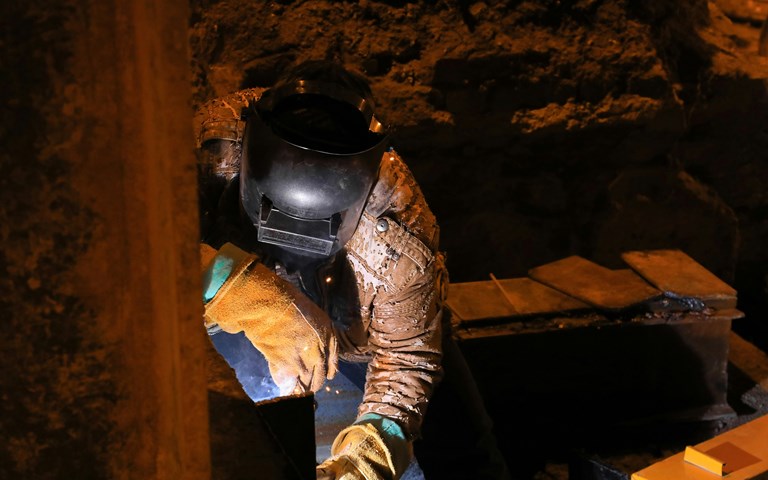
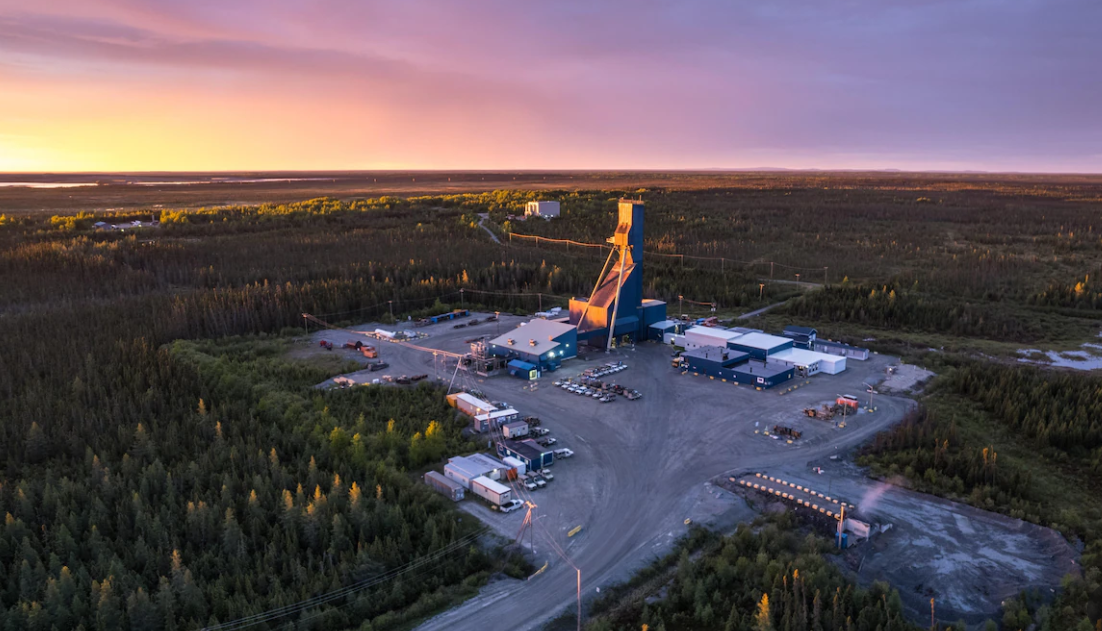
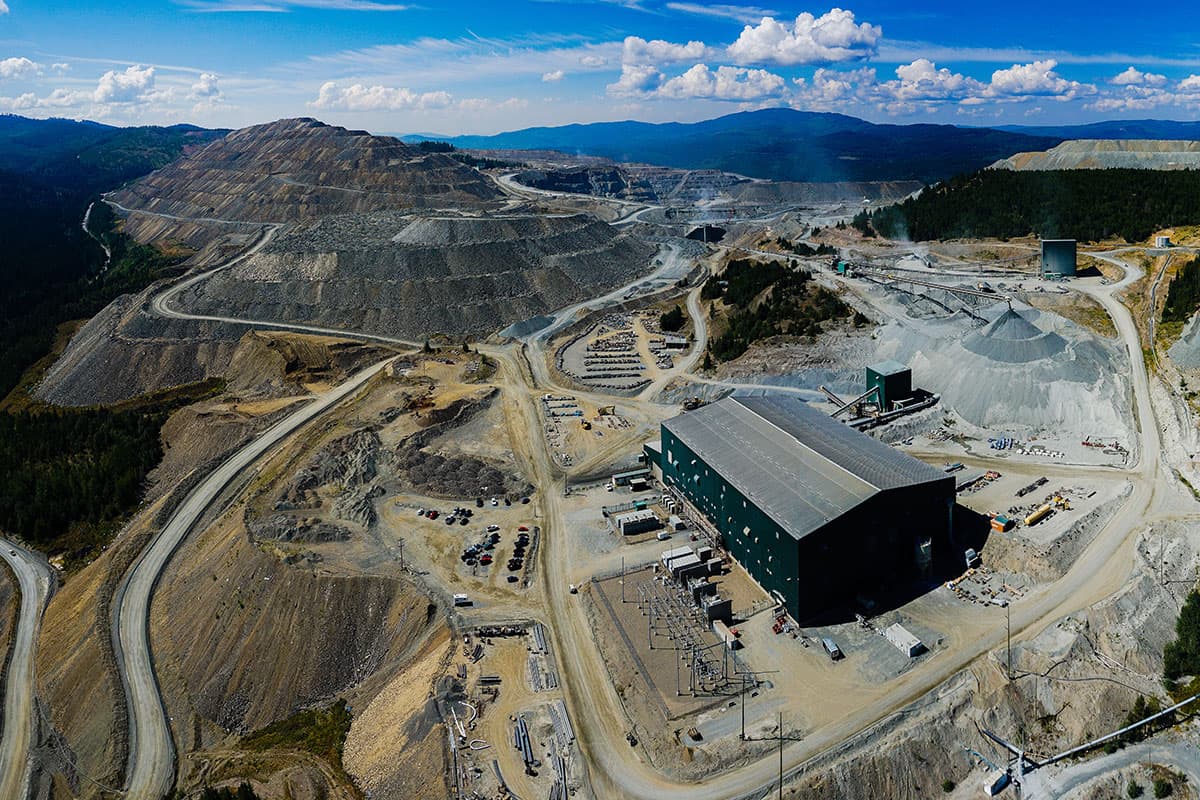
A recent national approach to fatality and serious injury prevention aims to use data to support stronger on-site protections in the Canadian mining industry. Courtesy of Mohamamd Noori via Unsplash.
Canada’s mining industry currently has no national system for tracking the causes and control failures behind fatalities and serious injuries, leaving companies to piece together lessons from fragmented provincial data. The CIM Health and Safety Society (HSS) is working to close that gap through its Serious Injury and Fatality (SIF) prevention initiative.
The initiative aims to create a national SIF database that will serve as a central platform where mining companies across the country can document SIF incidents and use that information to develop best practices and guidance to improve prevention across the industry.
The lack of a unified reporting system in Canada (each province and territory has its own standards and reporting structures) means that while fatalities are often publicly reported, the underlying circumstances and control failures are not always clearly or consistently documented. This can limit how quickly companies assess whether similar risks exist at their own operations or identify recurring critical incidents such as falls from height, ground falls and vehicle-human interactions.
Building the database
The database under development will initially focus on tracking mining fatalities, capturing information on incident circumstances, control failures and critical risk factors to help companies identify patterns and prevent similar events at their own operations.
Fatalities will be the first priority because they are more clearly defined and consistently reported than serious injuries or high-potential near-miss incidents, explained Nelson Bodnarchuk, secretary of the CIM HSS and vice-president of people and systems at Fuerte Metals. Once the system is established, the scope is expected to expand to include serious injuries and high-potential near misses.
Mining companies that participate in the initiative will not only contribute data but also gain access to prevention-focused tools and guidance generated from the database. Bodnarchuk said the backend of the system—where he believes “the real magic will happen”—will allow supporting companies to access standardized bowtie diagrams and guidance for managing critical risks. These diagrams visually map how serious incidents can occur and the controls needed to prevent or mitigate their consequences.
The HSS is currently working to engage mining companies from across Canada to contribute data, with Teck Resources among the early industry participants.
“We’re looking for more partners in the industry to build that database in six to eight months, then launch it in the second half of this year,” said Bodnarchuk, in an interview with CIM Magazine. “We’re looking to have a beta test ready for CIM CONNECT 2026 so we can demo it at the conference. The [second] half of the year, we’ll be making sure [we gather] as much data we can get, [from both publicly available sources and partnered companies] and make sure we have a functioning public-facing dashboard that the public can subscribe to.”
Once the database is up and running, there are plans to hire several full-time data analysts by 2028.
The idea for the database emerged around three years ago, after a CIM HSS meeting opened with discussion of a fatality at a Canadian mine. Bodnarchuk recalled asking whether Canada had a centralized system for tracking fatalities and learning from incident trends, only to learn that no such database existed.
“I said, ‘Well, let’s see if we can make it work this time,’ and then I spent about a year researching why this concept has failed in the past,” Bodnarchuk said. “I think it’s because past teams have tried to approach it as an unfunded and non-industry supported initiative. To make this initiative sustainable, it needs to be funded.”
Following that meeting, the society developed a project charter, finalized documentation in 2024 and presented the initiative at CIM CONNECT in Vancouver, British Columbia, that same year. The presentation led to the formation of a SIF working group, which began evaluating vendors to develop a database platform in mid-2025 and has since selected a provider.
Though the project is still in its early stages, Bodnarchuk explained that “our hope for the future is that we can [partner] with every single mining company in Canada, and if they have a fatality, they would voluntarily send us the required information to add into the database within 24 hours.”
Industry feedback
With a background in accident investigation, Emily Tetzlaff, director of publications for the CIM HSS and principal scientist of environment, health and safety at Wenco International Mining Systems, was eager to get involved with the project after first learning about it during a presentation at CIM CONNECT 2024.
As director of standards for the SIF working group, Tetzlaff is helping to develop a “living” SIF Risk Standard document, along with an implementation guide to support the integration of critical control management into safety systems at mine sites across Canada, both of which will continue to evolve over time.
In this role, she also identified the need for a research component and proposed a survey to broaden industry engagement and capture participant feedback, which began development in the summer of 2025.
“[We want to know] what companies need and want from this initiative, how they will use it, and what they are currently using [to report data] so that we can look for pros and cons [in these systems],” said Tetzlaff, in an interview with CIM Magazine.
The group released an online survey, open until February 28, to individuals working in the Canadian mining industry. The survey is being conducted in collaboration with Laurentian University, the Centre for Research in Occupational Safety and Health, and Wenco Mining Systems.
The survey gathers feedback on dashboard training preferences once the database is running, data-sharing willingness, and privacy and data-management concerns, helping to inform the platform’s design.
While the survey is intended to shape how the initiative evolves, Bodnarchuk stressed that better data alone will not prevent fatalities unless it leads to more consistent application of critical controls at mine sites.
Bodnarchuk noted that fatalities can occur even at companies with strong safety cultures, often indicating that one or more critical controls were skipped on a given day. The challenge, he explained, is recognizing that those lapses may not be isolated events.
“We’ve done a really good job [in Canada] of reducing total recordable injury frequencies, but the one thing we haven’t done is eliminate fatalities,” he said, adding that one of the biggest misconceptions about workplace fatalities is the industry’s belief that it is better at preventing them than it actually is.
“Every day you need to be on top of safety because complacency is a killer,” said Bodnarchuk.
A recent episode of the Safety Share webinar series from CIM Magazine and the CIM HSS on Dec. 4, 2025, covered an update on the initiative.