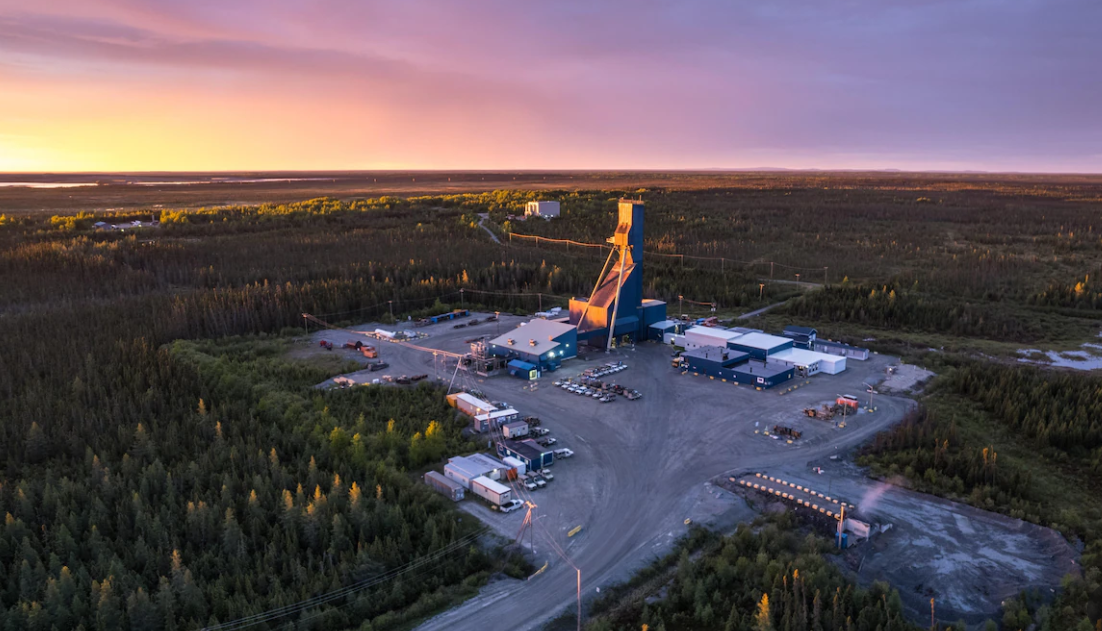
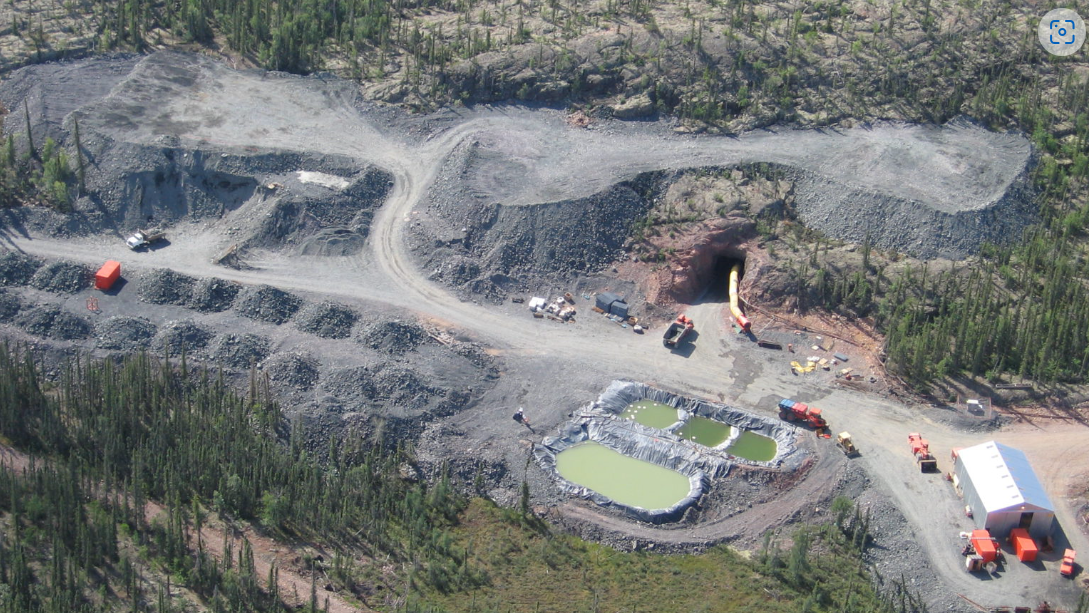
The federal government is backing the redevelopment project with $25 million to upgrade the mine’s energy infrastructure. Courtesy of Agnico Eagle Mines via Instagram.
Agnico Eagle Mines is moving ahead with the redevelopment of its Hope Bay gold mine in western Nunavut, the company announced on May 19.
Located in the Kitikmeot region, roughly 160 kilometres north of the Arctic Circle, the Hope Bay property hosts the Doris, Madrid and Boston deposits along an 80-kilometre greenstone belt that Agnico said remains highly prospective for future discoveries and resource growth, in a press release.
Agnico Eagle acquired the project in 2021 through its takeover of TMAC Resources, which hadpurchased Hope Bay in 2013 and brought the Doris deposit into commercial production in 2017. Shortly after acquiring the asset, Agnico placed the operation on care and maintenance to focus on exploration and technical studies aimed at evaluating a larger-scale redevelopment.
That work culminated in a 2026 preliminary economic assessment, which estimated a potential annual gold production of between 400,000 and 435,000 ounces over an initial 11-year mine life.
Initial production at Hope Bay could begin as early as 2030, said Agnico.
The miner plans to invest US$2.4 billion to redevelop the gold mine. Planned infrastructure upgrades include reconstruction of the processing facility, installation of a 37-megawatt diesel power plant, upgrades to the tailings storage facility, new mobile equipment and about 33 kilometres of underground development. Agnico said detailed engineering for the project is already about 62 per cent complete.
“We are incredibly proud of our team for transforming Hope Bay from a vision into one of Canada’s most important new mines in just five years,” said Ammar Al-Joundi, Agnico Eagle’s president and CEO, in a statement. “Hope Bay has the potential to evolve into a long-life, district-scale mining camp for decades to come.”
Federal investment in infrastructure
The redevelopment comes as governments and industry continue to place importance on northern infrastructure and resource development in Canada’s Arctic. The remote region is rich in mineral deposits but faces longstanding logistical and infrastructure challenges, including limited transportation networks, high energy costs and harsh operating conditions.
To help address some of those challenges, Natural Resources Canada (NRCan) also announced $25 million in funding through the Smart Renewables and Electrification Pathways Program on May 19 to support the Hope Bay wind project. The project will be led by Inuit-owned Kitikmeot Tugliq Limited Partnership and is expected to add 4.2 megawatts of wind generation and four megawatts of battery storage to the mine site’s existing power system.
According to the federal government, the wind project is expected to reduce diesel consumption by three million litres per year and greenhouse gas emissions by over 8,000 tonnes per year, equivalent to taking 1,800 cars off the road annually.
The federal government is expecting the Hope Bay redevelopment to support nearly 2,000 jobs, increase Canada’s exports by $2.6 billion annually and create long-term economic opportunities for Indigenous organizations and communities in the region.
A new co-operation agreement between Agnico Eagle and the Department of National Defence (DND) was also announced to facilitate knowledge-sharing on Arctic infrastructure development as Canada works to strengthen its northern presence and sovereignty.
“Building essential infrastructure in the North for the Canadian Armed Forces is not just a defence priority, it is a national one,” said Minister of National Defence David McGuinty in a statement. “This co-operation agreement with Agnico Eagle will allow us to learn from industry leaders and advance the delivery of essential infrastructure that will meet [DND’s] defence’s operational and security requirements in the Arctic and the North.”