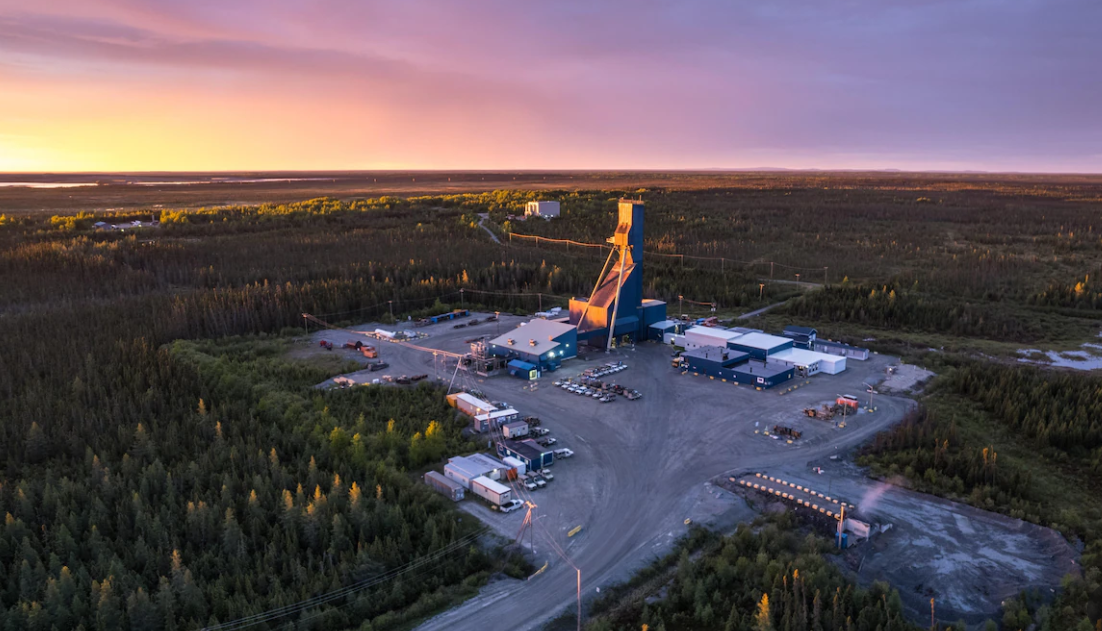
Core samples taken from the Baptiste nickel project site, located in the Decar nickel district in central B.C. Courtesy of FPX Nickel.
FPX Nickel has started the environmental assessment process for its Baptiste nickel project in central British Columbia, after submitting an initial project description that has been accepted by both provincial and federal regulators.
The project description outlines a proposed greenfield open-pit operation with an estimated three-year construction period and a mine life of 28 years. During phase one, spanning the first five years of operation, the project is expected to process an average of 108,000 tonnes of ore per day; this is planned to increase to 162,000 tonnes per day in phase two, which will start in year six.
The project’s next major regulatory step will be the submission of a detailed project description, currently planned for mid-2027. In the interim, provincial and federal regulators are accepting public comments on the initial description until March 9.
Upcoming priorities will also include advancing the project’s feasibility study over the next two years, with an anticipated release in 2028. FPX president and CEO Martin Turenne told CIM Magazine that, as the EA process progresses, discussions are also under way about using a substituted process under which British Columbia—based on its existing agreements with the federal government—would lead the environmental assessment in place of a federal EA.
FPX has highlighted several multigenerational benefits the project is expected to deliver, including the creation of around 4,200 direct and indirect jobs per year, an estimated $45 billion contribution to Canada’s gross domestic product, and educational and capacity-building opportunities for the eight local First Nations communities.
According to Turenne, Baptiste is expected to be one of the lowest-cost nickel producers in the world, producing the metal at an average operating cost of around US$3.70 per pound. He added that the project is also expected to be among the lowest carbon-emitting nickel operations in the world, emitting about one tonne of CO2 for every tonne of nickel produced.
A key driver of these advantages, he explained, is the nature of the deposit itself, which hosts nickel in the form of sulfur-free awaruite rather than in a sulfide or laterite deposit. Combined with access to British Columbia’s abundant, low-cost hydroelectric power, this allows the project to avoid intermediate smelting and complex refining, reducing both costs and emissions.
He added that this will allow for higher nickel recoveries and the production of a higher-value product that can be fed directly into the stainless steel and electric vehicle battery markets.
“There are also significant environmental advantages because there’s no sulfur in the host rock system, so acid rock drainage and other environmental issues are not going to be associated with mine operations here, which is quite unique,” he said.
A pilot for expedited permitting
Baptiste was selected in 2024 by the B.C. provincial government as the first project to be included in its critical minerals office’s concierge service. The initiative is intended to accelerate the development of priority projects through improved regulatory coordination and engagement with First Nations and regulators—a designation from which Turenne said FPX has “benefited hugely.”
“We think that it’s a great model for other projects in British Columbia, and for other provincial governments in Canada to consider,” he said. “We think ensuring that all of the parties involved, [including] the proponent, First Nations and government, are fully prepared prior to the EA process beginning can then create the conditions for that process to run as smoothly and as efficiently as possible.”
The project also received $3.5 million in funding from Natural Resources Canada’s Critical Minerals Infrastructure Fund in September 2025 to help advance key pre-construction and infrastructure studies.