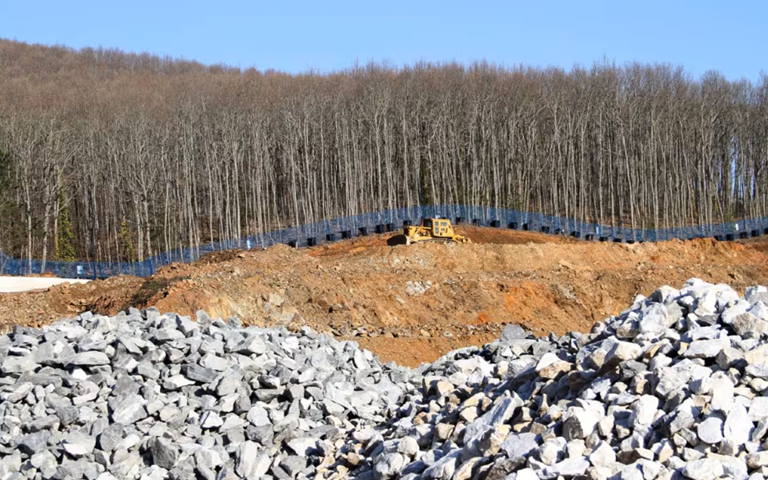
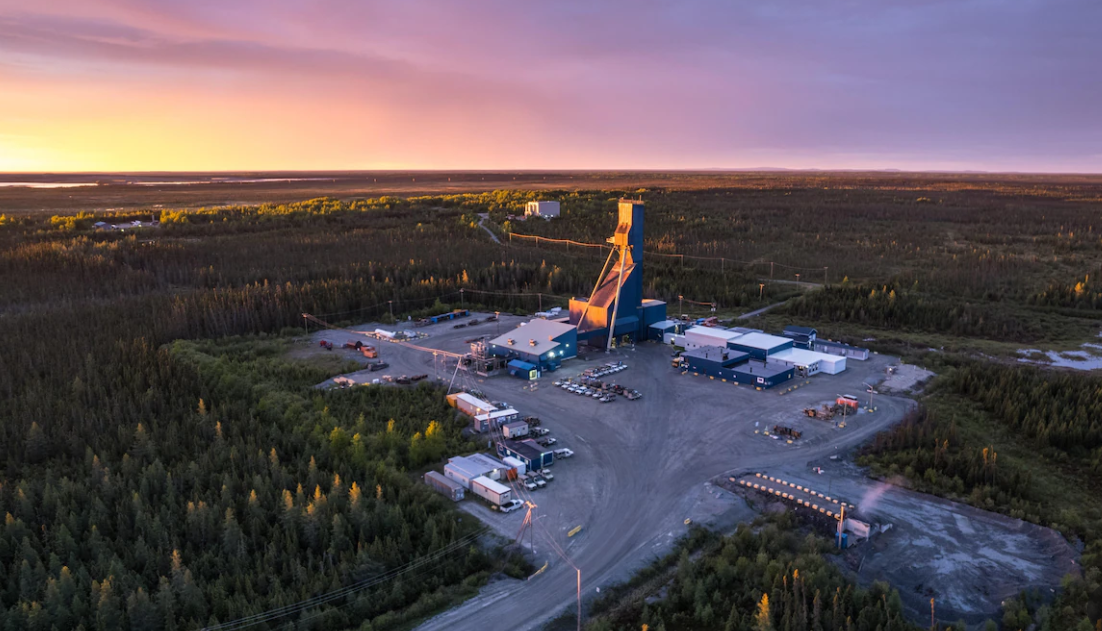
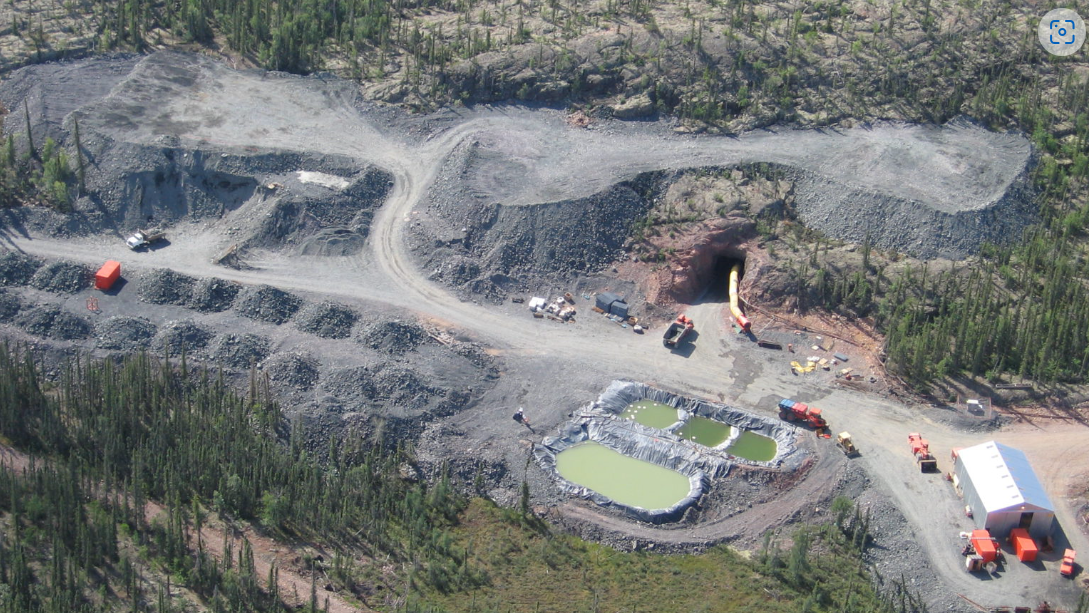
The Crawford nickel sulfide project site in Ontario. Courtesy of Canada Nickel.
Canada Nickel's Crawford nickel sulfide project, located 42 kilometres north of Timmins, Ontario, has received federal approval.
The company will now move forward with detailed engineering, project financing and securing the remaining provincial and federal permits needed before construction commences. A construction decision is anticipated in 2027, with production expected in 2029.
Once in production, the project is expected to be the largest nickel sulfide operation in the Western world and the sole source of chromium in North America.
Over its projected 41-year operating life, the Crawford project is expected to produce about 1.6 million tonnes of nickel. During a 27-year peak production period, annual output is projected to average about 48,000 tonnes of nickel, 76,000 tonnes of chromium and 1.6 million tonnes of iron, along with roughly 800 tonnes of cobalt and 13,000 ounces of palladium and platinum. According to Canada Nickel, chromium would be recovered as a value-generating by-product contained in the magnetite concentrate produced at the Crawford project.
Crawford is expected to create around 5,000 jobs during the construction phase, along with 1,300 jobs during operations. A 2025 economic impact study prepared by Mansfield Consulting Inc. estimated that the project could contribute over $70 billion to Canada’s gross domestic product over the life of the mine.
The project was referred to the federal government's Major Projects Office in November 2025 and is the first project to receive approval under the new amended Impact Assessment Act. In January 2026, it also became the second mining project designated for accelerated development under Ontario’s One Project, One Process framework. The first was Frontier Lithium’s PAK lithium project, which received the designation in October 2025.
“I am very proud of our team, which completed this key federal permit in just four years and advanced Crawford from its fifth drill hole through feasibility study to today's milestone in under seven years—substantially faster than typically required for large-scale projects,” Mark Selby, CEO of Canada Nickel, said in a July 31 news release.
Path to construction
Canada Nickel is pursuing a US$2.5 billion funding plan for Crawford but has not yet assembled the full financing package. The company is targeting full financing ahead of the final investment decision expected in 2027.
Potential sources include a non-binding letter of interest from Export Development Canada for up to US$500 million and a separate support letter from an unnamed leading Canadian financial institution for up to $500 million.
Canada Nickel has established partnerships with several First Nations in the Crawford project area. In May 2025, Taykwa Tagamou Nation completed a $20 million investment in Canada Nickel. Canada Nickel and Taykwa Tagamou Nation consider the transaction to currently be the largest known direct equity investment by a First Nation in a Canadian critical-minerals company.
In March 2025, Canada Nickel also signed an infrastructure contracting agreement with Mattagami, Matachewan and Flying Post First Nations, all members of the Wabun Tribal Council. The agreement provides a framework for First Nation business and employment opportunities associated with major infrastructure required for the Crawford project.
Although the project received federal approval, the impact assessment concluded it is likely to cause considerable residual effects on local fish habitats and migratory birds, including through habitat loss and water-quality changes. Environment Minister Julie Dabrusin determined that those effects were justified in the public interest, citing the project’s economic benefits.
Canada Nickel will be subject to a range of legally binding conditions throughout the project’s life to address these effects, including requirements to monitor surface-water quality and control lighting to protect migratory birds.