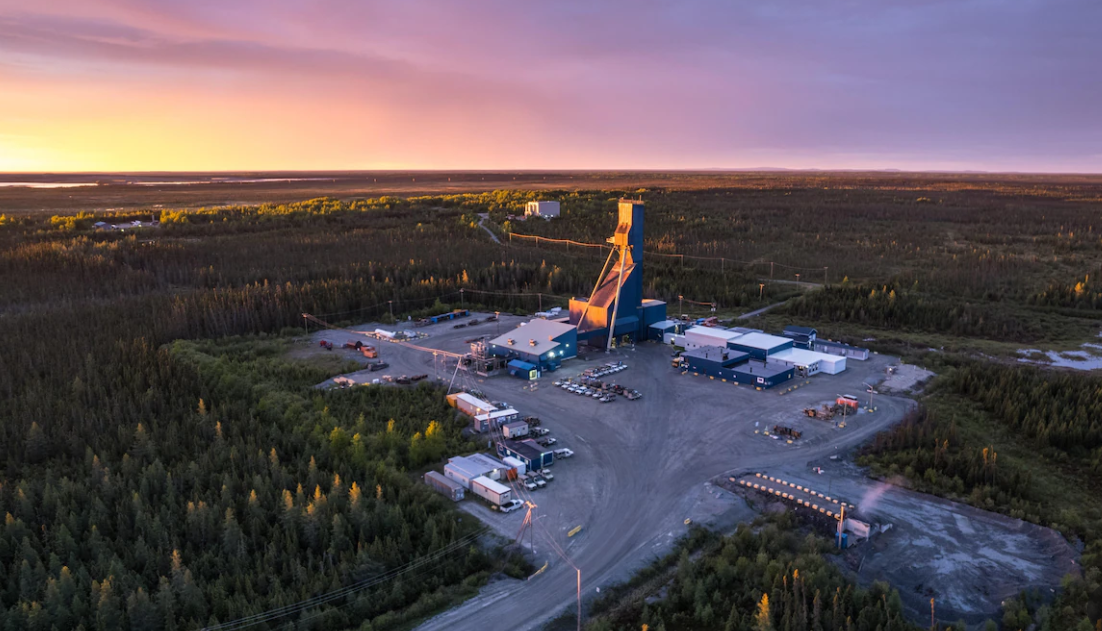
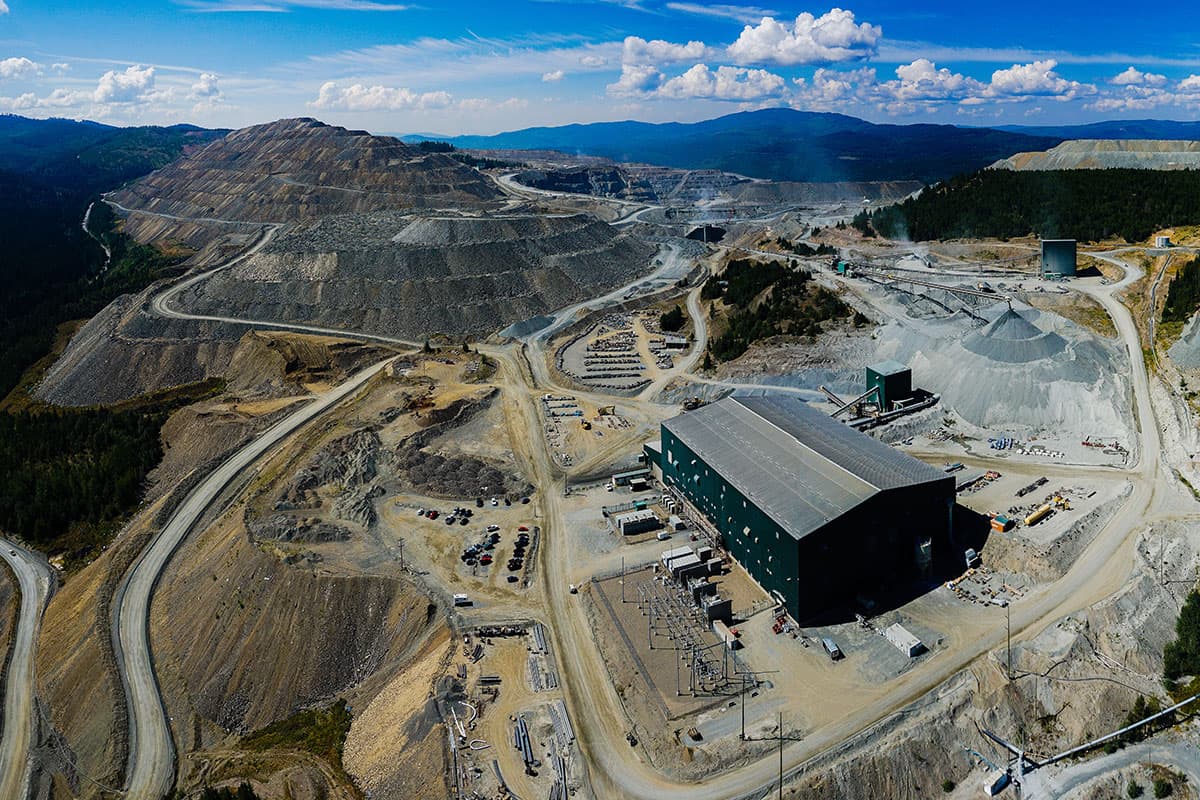
Ontario and New Brunswick outlined new plans to grow their mineral sectors at the 2026 PDAC Convention in Toronto. Courtesy of PDAC.
During the 2026 PDAC Convention in Toronto, which ran from March 1 to 4, the Ontario government unveiled plans to update its current Critical Minerals Strategy, a year ahead of schedule, in response to rising geopolitical tensions and shifting global supply chains.
The provincial government released a vision paper outlining plans to modernize the province’s approach to developing its mineral resources strategy and is inviting feedback on its next phase. The goal is to ensure the updated strategy can respond to a rapidly changing global landscape, with a focus on strengthening Canadian self-reliance, supporting jobs and reinforcing domestic supply chains, while positioning Ontario as a world leader in mining.
A key update announced by the government is the addition of high-purity iron and aluminum to Ontario’s critical minerals list. The change marks the first expansion since the list was introduced in 2022 and brings the total number of critical minerals on the list to 35.
These additions are particularly significant for Ontario’s industrial transition, as high-purity iron supports the shift to “green steel” production using electric arc furnace technology in the province’s steel mills, while aluminum remains a key material for the automotive, aerospace, and defence sectors.
The updated strategy will also seek to broaden its focus beyond electric vehicle (EV) supply chains to prioritize defence and advanced manufacturing. While the original five-year strategy emphasized supporting the EV market and promoting clean technologies, the refined plan aims to address recent challenges such as geopolitical tensions, supply chain disruptions, U.S. tariffs, and rising trade protectionism, while also placing renewed emphasis on strengthening domestically produced clean energy technologies and critical components.
Another area of focus the updated strategy will highlight is continuing to streamline approval processes for critical mineral projects in the pipeline.
Ontario currently hosts 37 active mining operations, predominantly in the northern region of the province, with 33 major projects currently under way.
“Our updated Critical Minerals Strategy will strengthen Ontario’s reputation as a leader in responsibly sourced minerals that power modern economies,” George Pirie, Ontario minister of economic development and growth, said in a March 3 news release. “By modernizing the strategy, our government will attract new investment, create thousands of good-paying jobs, strengthen communities and position the North as a global leader in developing the resources the world needs.”
Since launching the original strategy, the province has implemented the “One Project, One Process” approach to simplify project approvals and improve coordination, while designating three “nation-building” Ontario mining projects: Canada Nickel’s Crawford nickel project, Frontier Lithium’s Pakeagama lithium project and, most recently, Kinross Gold’s Great Bear gold project.
Additionally, a $500 million Critical Minerals Processing Fund was introduced by the province in December 2025 to help boost domestic processing capacity.
New minerals strategy positions New Brunswick for growth
During the PDAC Convention, the New Brunswick government also released a new comprehensive minerals strategy. The strategy seeks to increase mining activity in the province by offering transparent regulatory and permitting processes for projects, providing targeted incentives to enhance competitiveness, and fostering meaningful engagement with Indigenous communities.
The strategy also aims to enhance the visibility of New Brunswick’s mineral sector by promoting the province in industry forums, supporting public education and awareness initiatives, and expanding geoscience research. Building on this, the New Brunswick government is looking to make the province more appealing to investors by enhancing fiscal policies, aligning infrastructure planning with development objectives, and streamlining regulations while supporting Indigenous partnerships to create favourable conditions for new investment.
New Brunswick also plans to modernize its Mining Act during an upcoming legislature session, with the aim of ensuring its “regulatory regime is the most agile, predictable and timely in Canada.”
The province’s mineral development potential is drawing increased focus from mining companies and investors, driven by the proposed Sisson tungsten and molybdenum project north of Fredericton, along with substantial zinc, lead, copper and silver deposits at Murray Brook, and manganese deposits near Woodstock.
“New Brunswick has what the world needs, and we have a responsibility to develop those resources the right way – with strong environmental standards, meaningful partnerships with Indigenous communities and good-paying jobs for New Brunswickers,” said Premier Susan Holt in a March 2 news release. “This strategy is about unlocking opportunity, attracting investment and giving companies the certainty they need to move projects forward, while ensuring communities benefit.”