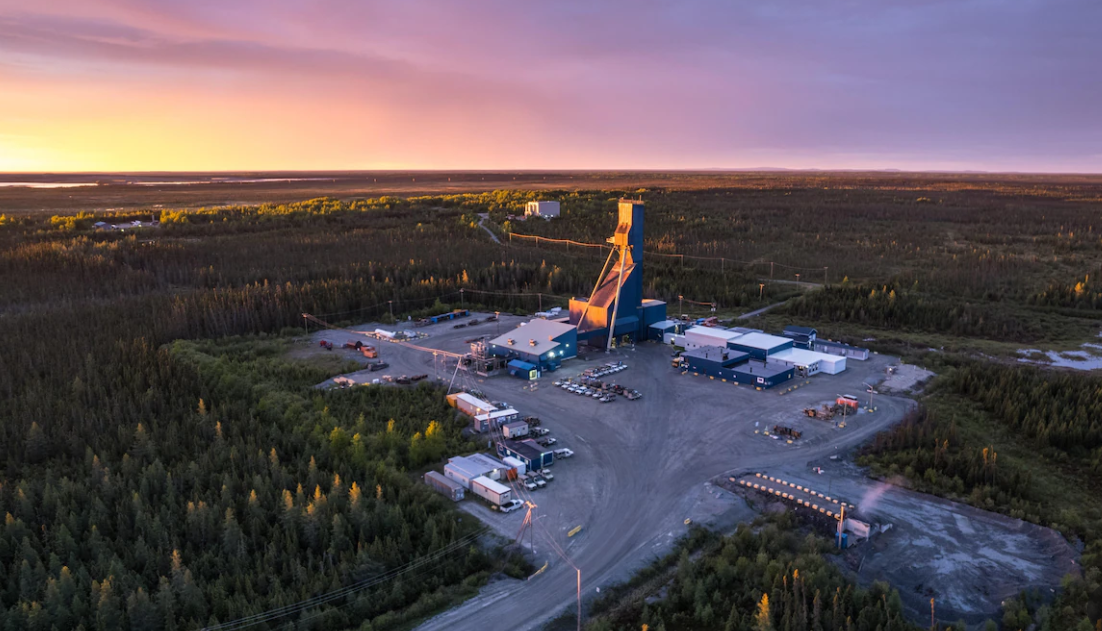
Rio Tinto’s Complexe Arvida AP60 aluminum smelter in Quebec, where a US$1.5 billion expansion is under way to boost production capacity. Courtesy of Rio Tinto.
Rio Tinto has started the commissioning of the US$1.5 billion expansion of its proprietary low-carbon AP60 aluminum smelting technology at its Complexe Arvida in Quebec’s Saguenay–Lac-Saint-Jean region.
The launch of the expansion represents the beginning of the first major primary aluminum development in the western world in more than a decade, said Jérôme Pécresse, Rio Tinto aluminum & lithium chief executive, in a May 29 press release.
Rio Tinto first announced the project in June 2023, alongside $150 million in financial support from the Quebec government.
The process of aluminum smelting involves several interconnected reduction cells, or pots, in which electrolysis is used to produce primary aluminum.
The expansion will add 96 new AP60 pots in operation, with full commissioning expected by the end of 2026. Once fully ramped up, the project will add approximately 160,000 metric tonnes of annual primary aluminum production capacity, bringing total AP60 output at the site to about 220,000 metric tonnes per year.
“For 100 years, Quebec has been at the heart of the aluminum industry, and with AP60, Rio Tinto is now strongly positioned for decades to come with one of the most advanced smelting technologies operating at a commercial scale,” said Pécresse.
The AP60 technology, developed by Rio Tinto’s research and development teams, uses hydroelectric power to produce aluminum with significantly lower emissions. According to the company, the process generates approximately 1.6 tonnes of carbon dioxide equivalent per tonne of aluminum produced. This is roughly half the emissions intensity of the older Arvida smelter technology and significantly below the global industry average.
Rio Tinto said the expanded AP60 smelter will also reduce carbon emissions by approximately 290,000 tonnes annually compared to the older Arvida potrooms, which are scheduled to close in June. The company also expects the technology to reduce fine particulate matter emissions by up to 90 per cent.
At peak construction, the project supported more than 1,500 jobs and generated more than $1 billion in economic activity across Quebec through spending with contractors and suppliers. Once operational, the expansion is expected to support approximately 100 permanent jobs while helping consolidate employment across the regional supply chain.
Pécresse said that the expansion strengthens Rio Tinto’s competitiveness in North America while helping meet growing demand for low-carbon aluminum products to supply to customers in sectors including transportation, construction, electrical applications and consumer goods.
The AP60 project also complements Rio Tinto’s joint venture in the development of ELYSIS’ inert anode technology, a carbon-free aluminum smelting technology that eliminates direct greenhouse gas emissions from aluminum smelting by producing oxygen rather than carbon dioxide during electrolysis. In November 2025, ELYSIS announced the successful start-up of its 450-kiloampere inert anode cell at Rio Tinto’s Alma smelter in Quebec, marking a significant milestone toward commercial-scale deployment.
“Together, with the construction of our ELYSIS demonstration plant in Quebec using the first licence of this breakthrough technology, Rio Tinto is demonstrating its value as a secure, innovative and reliable supplier of low-carbon aluminum the world needs,” added Pécresse.