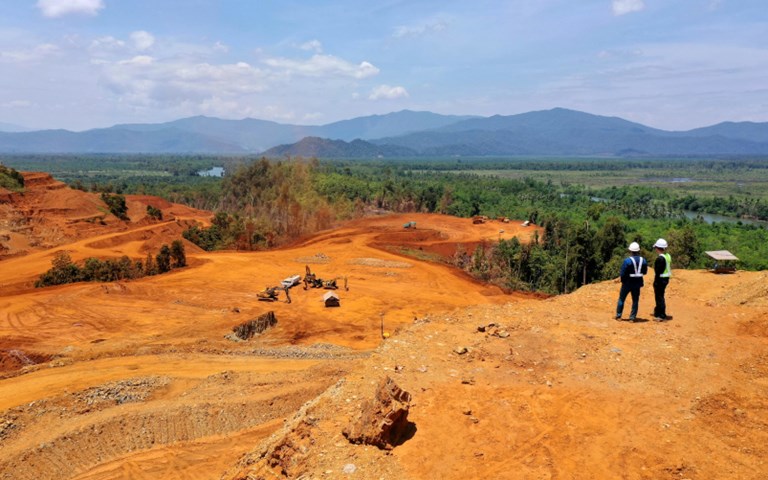
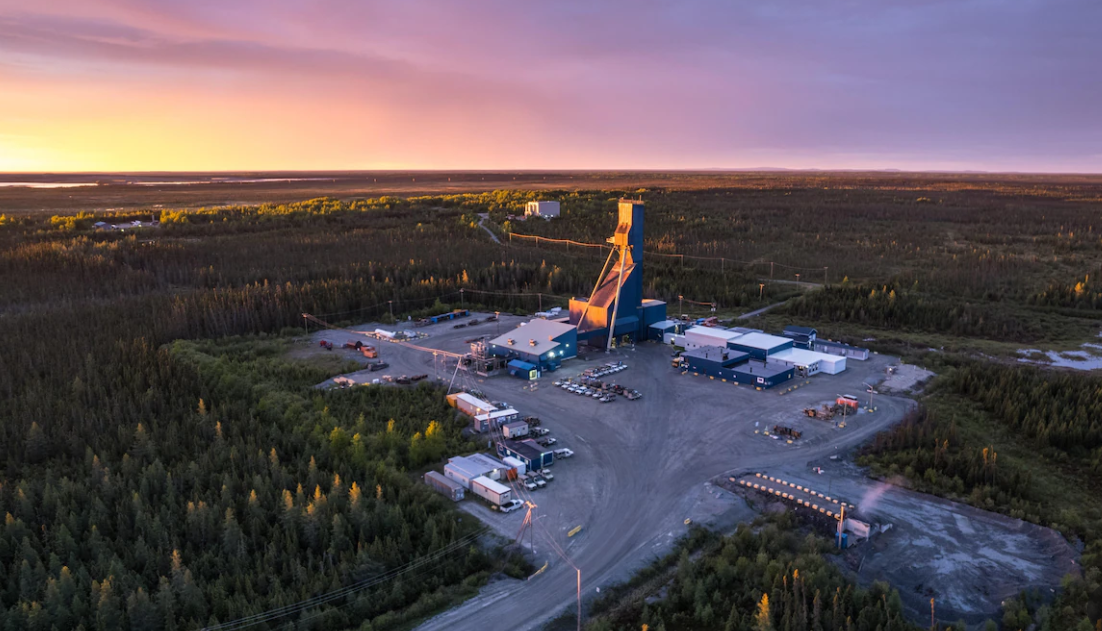
EY’s report identifies where the greatest risks and opportunities lie in 2026 for the mining industry. Courtesy of ArtHouse Studio via Pexels
A new challenge has emerged as the number one hurdle facing the mining industry in 2026: rising operational complexity is set to shake up the sector, driven by complex ore bodies, deeper mines and declining ore grades, according to EY’s latest annual report on mining’s biggest future risks and opportunities.
“Operational complexity is the focus, not just because of uncertainty but because the sector recognizes it must disrupt traditional ways of operating to win,” EY’s global mining & metals leader, Paul Mitchell, said in a news release.
The report, released on Oct. 16, analyzed 500 survey responses gathered in June and July 2025 from leaders in mining and metals organizations with at least US$1 billion in revenue.
Beyond operational complexity, the remaining nine challenges in EY’s top 10 list included rising costs and productivity; capital; resources and reserves; licence to operate; workforce; geopolitics; digital transformation and innovation; sustainability; and changing business models.
Compounding factors
Operational complexity is a new entrant in this year’s EY report. According to Theo Yameogo, EY Americas metals & mining sector leader, mining operations have always been unpredictable, but new elements of variability, including declining ore grades, deeper ore bodies, variability in geometry, grade and geotechnical conditions exacerbated by aging assets and workforce gaps have compounded to make mining operations more complex.
At the same time, investors rely on predictability to build confidence. Moreover, as ore grades decline and quality deposits are depleted globally, operations are increasingly turning to remote regions, which adds another layer of costly challenges such as limited infrastructure, technically challenging extraction methods and environmental or political risks.
“Not only is it just more difficult to operate those mines and processing facilities, but also the repercussions [of those variables] are much more complicated,” said Yameogo in an interview with CIM Magazine.
To mitigate operational risks, the report suggests strategic planning and targeted investment to improve productivity, including deploying robust management operating systems, improving lower-grade ore recovery using advanced processing technologies and better asset management including preventive maintenance and predictive tools.
Costs and productivity, capital among other top challenges
Being a large-scale industry means costs and productivity are an ongoing concern in mining, Yameogo said, but this year something different happened.
“Royalties went up, which meant that companies are paying more of their profit to others,” he said.
ICMM members contributed US$13.4 billion in royalties and US$28.6 billion in corporate income tax (CIT) to host countries in 2024, increasing the combined CIT and royalty rate to 40.6 per cent, up 7.7 per cent from the year prior.
The increase in royalties, along with labour shortages, escalating trade tariffs, higher energy costs and supply chain disruptions have pushed logistics and procurement costs higher and are “creating inefficiencies, eroding margins and hindering operational agility,” read the report.
According to Yameogo, although capital dropped from first to third place compared to last year’s EY ranking, it remains one of the industry’s top challenges since mining companies are now starting to have to compete for investments in a market dominated by technology companies.
Higher interest rates and capital intensity have more than doubled the sector’s weighted average cost of capital compared to big names in the technology sector. In response, mining companies have reacted by increasing capital expenditure while reducing shareholder payouts for the third year in a row.
The resulting growth mindset is intertwined with big picture financing opportunities such as district-level partnerships, optimized portfolios for long-term growth and strengthening community and stakeholder engagement.To lower costs and increase productivity, the report suggests taking a holistic approach to productivity improvements, remaining human-focused while investing in digital innovations, accelerating renewable energy integrations and engaging investors with transparent reporting.
Low confidence in resolving labour shortage
More than half of Canada’s mining workforce is expected to retire over the next decade without adequate replacement, according to the report.
The persistent and worsening labour shortage, which 75 per cent of those surveyed said they were not confident in resolving, ranked sixth, but was a running theme in the report.
Staffing with underqualified candidates or vacant roles resulted in reduced productivity, increased costs and safety risks.
“We don’t have enough new entrants, so then [when] we compete for the same level of expertise, [it] makes the cost go up for labour,” Yameogo explained.
Attracting new talent is a multifaceted issue encompassing perception, training and the attractiveness of the industry. Mining can absorb “anybody” into its workforce—not just those who studied mining—but the industry hasn’t done a great job of marketing itself that way, Yameogo said.
Younger generations are also more values and impact-driven than financially driven, he added, which means mining companies would do well to focus on their value proposition.
While artificial intelligence (AI) was a priority investment for those surveyed, the report suggested remaining human-focused when it comes to productivity. Yameogo explained that AI is a valuable tool the industry should leverage to fast-track how people work but it is finite and only works within a set database, adding that it isn’t creative and able to produce new ideas.
This would be a problem given that “mining is a place where we need to innovate a lot,” he noted. “For the next innovation, humans need to be in the middle. The sector is heavily stakeholder driven, which means emotions, value and culture that AI can’t capture.”
Collaboration spells biggest growth
For Yameogo, the strongest path to growth for the industry in 2026 lies in “district-level” collaboration, through joint ventures or partnerships between neighbouring assets in order to help companies share resources and manage the complexities of large-scale projects.
“Companies operating [mines] side by side [are] finally realizing that we don’t need to compete,” Yameogo said. “We can figure out a way for one of us to be leveraging the other, whether it’s on labour, energy, tailings.”
In Canada, he pointed to the Ring of Fire region in Ontario, where a series of agreements and partnerships—including the province’s partnership agreements with Webequie and Aroland First Nations on critical infrastructure, as well as exploration and development partnerships involving companies such as Northfield Capital and Juno Corp.—demonstrate growing investment activity in the district. He also noted the acquisition of Noront Resources by Wyloo Metals in 2022 and its rebranding as Ring of Fire Metals as a key example of consolidation in the region.
“It’s not this elusive cost reduction anymore,” said Yameogo. Strategy is focused by the region and combining operations to not only improve production but also to simplify the approach to community and environment.
Time to plan for the future
Amid the intersecting, complex challenges facing the mining industry, an underlying theme across the report was how now is the time for long-term planning and investment.
The current Trump administration in the U.S. has thrust the value of mining and minerals into the spotlight at a government level, sending a message to mining and metals producers to be ready for the long game, Yameogo said.
When geopolitical relationships can shift rapidly, causing shortages in different regions, “suddenly it becomes a game of basically guaranteeing supply,” he said. In addition to smoothing out challenges, long-term strategies such as brownfield reprocessing or collaborative partnerships tend to serve the greater good, he added.
“These are all items that point to the longer game, which is the right thing for society,” Yameogo said. “[Metals and minerals] are needed to sustain life on the planet, so it’s very important.”