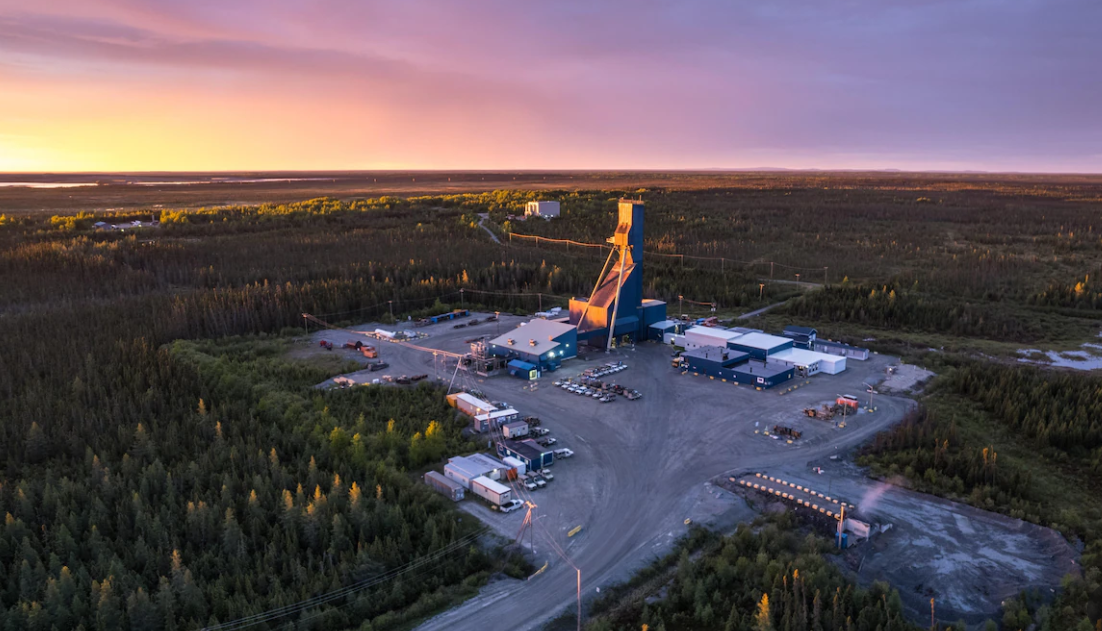
Digital tools such as artificial intelligence and machine learning are increasingly shaping mineral exploration workflows, even as many companies remain in early stages of adoption. Courtesy of VRIFY Technology.
A recent report found that the adoption of artificial intelligence (AI) in mineral exploration is gaining strong momentum, with 77 per cent of respondents reporting some level of use of AI tools in their exploration operations.
The 2025 Mineral Exploration Tech Report was conducted by global market research and polling firm Ipsos on behalf of VRIFY Technology. It draws on a global survey of 135 mineral exploration professionals to provide a snapshot of how AI, machine learning and other digital technologies are being adopted, the perceived benefits, and the barriers that continue to slow innovation.
“We hope this report acts as a practical benchmark for the mining industry, helping teams understand where they stand today, learn from their peers, and make more confident decisions while asking an increasingly important question: how much faster, smarter, and more competitive could our projects be with the right technology in place?” Steve de Jong, CEO and founder of VRIFY, wrote in an emailed statement to CIM Magazine.
While there is strong industry interest in AI, usage remains uneven and in nascent stages: 56 per cent of respondents reported using AI and machine-learning tools occasionally, while just 21 per cent said they use them regularly and 10 per cent said they do not use them at all.
The report identified geologists as the most skeptical towards AI and machine learning tools, followed by field or site managers and then executives. In contrast, functional specialists demonstrate the highest levels of tool usage. The report points to budget constraints, unclear return on investment (ROI), and distrust in AI model outputs as key challenges to adoption. Organizations face a readiness challenge, with the report noting that progress in these areas will likely depend on strengthening both technical capacity and internal frameworks to support effective AI deployments.
The report further indicates that adoption barriers vary by organizational size, with financial constraints weighing heaviest on smaller companies and skills gaps, capacity limitations and integration complexity emerging as greater concerns for larger organizations. Mid-sized companies are suggested to be best positioned to adopt and operationalize AI and machine-learning tools due to having sufficient resources and ability to retain enough organizational agility and absorb higher levels of risk.
Despite the challenges, the report found that perceptions of AI and machine learning improved when companies drew on credible peer case studies alongside insights from internal pilot initiatives, reinforced by more concrete ROI expectations.
When assessing the benefits of AI and machine learning adoption in mineral exploration, 36 per cent of respondents highlighted faster decision-making and more efficient use of resources as the primary gains, implying that current applications are improving existing workflows rather than driving transformative changes in exploration outcomes at this time.
Although 22 per cent of participants indicated no observable outcomes since adopting AI and machine learning, the report suggests that outcomes vary across organizations, with measurable impacts influenced by both the maturity of implementation and data quality.
Looking to the future, the industry is optimistic about AI and machine learning, with 84 per cent of respondents believing these tools will benefit them in the near-term. The report’s findings paint a picture of an industry where innovation is occurring but still in the early stages of trialling the technology and discovering dependable practices. The report noted that further progress will hinge on stronger data foundations and technical skills, as well as greater system transparency and a more open approach to sharing results and best practices between organizations.