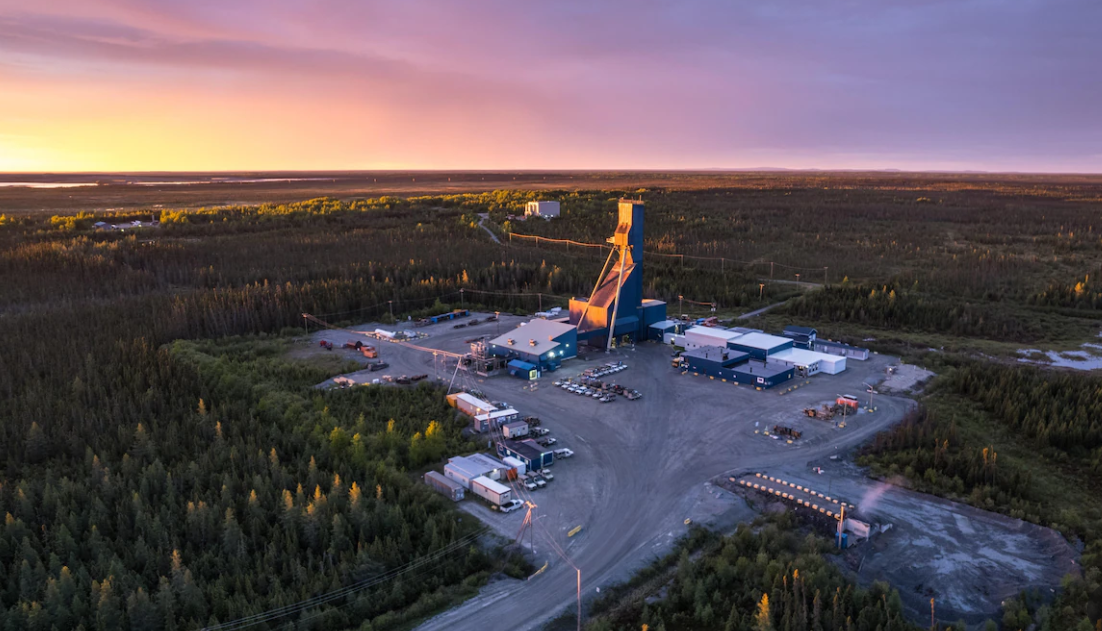
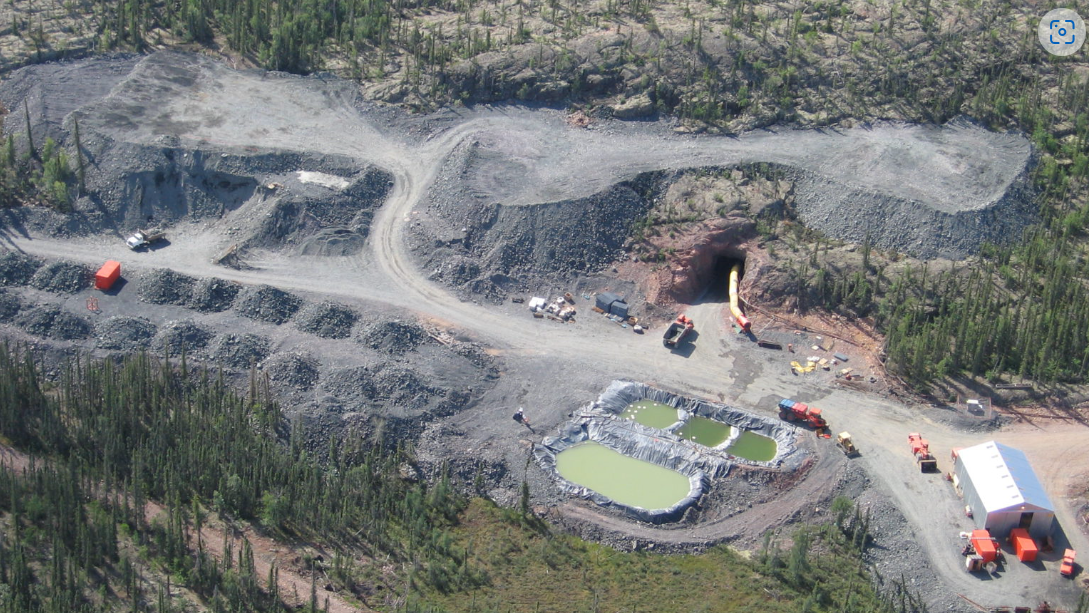
The Upper and Lower Similkameen Indian Bands signed new participation agreements this week with Hudbay Minerals for the expansion of the Copper Mountain mine, located around 20 kilometres south of Princeton, British Columbia. Courtesy of Hudbay Minerals.
Welcome back to your weekly mining news recap, where we catch you up on some of the news you may have missed. This week’s headlines include updated Indigenous participation agreements for Hudbay Minerals’ Copper Mountain mine expansion in British Columbia, fuel shortages threatening Sherritt International’s Cuban operations, and a preliminary economic assessment for the past-producing True North gold mine in Manitoba.
The remains of 10 people have been recovered near Vizsla Silver’s Panuco silver-gold project in Mexico, five of whom have been identified as workers abducted from the site on Jan. 23, The Globe and Mail reported. Forensic teams are working to identify the remaining five victims. Mexico’s Federal Security Minister Omar García Harfuch said on Tuesday that four suspects arrested in connection with the abduction claimed the workers were mistaken for members of a rival cartel.
The Canadian Nuclear Safety Commission (CNSC) concluded the second part of its hearing this week for NexGen Energy’s Rook I uranium project in Saskatchewan. The proceedings, completed on Thursday, mark the final step in the federal regulatory process before the CNSC makes its approval decision. The company’s 2021 feasibility study indicated the project could produce about 28.8 million pounds of triuranium octoxide per year in its first five years, with average annual production of 21.7 million pounds over an initial 10.7-year mine life.
Agnico Eagle Mines reported strong fourth quarter and full-year 2025 financial and production results, producing 3,447,367 payable ounces of gold in 2025 and generating around US$4.4 billion in free cash flow. The company forecasted stable annual gold production of 3.3 to 3.5 million ounces from 2026 through 2028 and expects to increase annual gold output by 20 to 30 per cent over the next decade, potentially exceeding four million ounces by the early 2030s.
The Upper and Lower Similkameen Indian Bands inked new participation agreements with Hudbay Minerals on Tuesday for the expansion of the Copper Mountain mine in British Columbia. The new agreements, which replace those in place since 2019, do not provide advance consent to the expansion but instead outline how the bands and Copper Mountain mine will address the project if it is approved. In March 2025, the Copper Mountain mine submitted an application to the Provincial Ministry of Mines and Critical Minerals to reopen the past-producing New Ingerbelle pit at the site.
Sherritt International announced on Tuesday that its nickel and cobalt operations in Cuba could shut down as the United States halts oil shipments to the country, triggering severe fuel shortages, The Globe and Mail reported. Sherritt explained that although its Moa mine in Cuba can source fuel from international suppliers to continue operations, “there can be no assurance that it will be successful in maintaining the continuity of operations.” Sherritt also released fourth quarter and full-year financial and production results this week.
1911 Gold released a preliminary economic assessment on Tuesday for the past-producing True North gold project in Manitoba, targeting 58,114 ounces of gold per year over an 11-year mine life. The assessment also outlined an all-in sustaining cost of US$1,897 per ounce, with an initial capital cost of $59.2 million.
United States Antimony and Americas Gold & Silver have formed a joint venture to build a hydrometallurgical antimony processing plant at Americas’ Galena mine in Idaho, Metal Tech News reported. The facility will feed U.S. Antimony’s smelter in Montana, establishing a domestic supply chain that will process the Galena mine’s ore into refined antimony for industrial and defence uses. Once the supply agreements and construction budget are finalized, the companies expect the plant to be operational within about 18 months.
Artificial intelligence (AI) is showing promise in mineral exploration for helping geologists analyze vast datasets, identify deposits and optimize drilling decisions, Jax Jacobsen reported for CIM Magazine. While early results are encouraging, AI adoption remains limited by data quality, the need for expert oversight and industry familiarity, and the technology’s full potential to transform mineral exploration is still being explored.
Researchers from the University of Regina’s Institute for Microbial Systems and Society have partnered with Integral Metals and Pan American Energy to test the use of DNA sequencing of microbial communities in soil to enhance mineral exploration, Mehanaz Yakub reported for CIM Magazine. At Pan American’s Big Mack lithium project in Ontario and Integral’s Burntwood rare-earth project in Manitoba, researchers mapped microbial communities and their genetic profiles to infer mineralization and identify promising drill targets. While still in the early stages, this method could complement traditional exploration methods.
That’s all for this week. If you’ve got feedback, you can always reach us at editor@cim.org. If you’ve got something to add, why not join the conversation on our Facebook, Twitter, LinkedIn or Instagram pages?