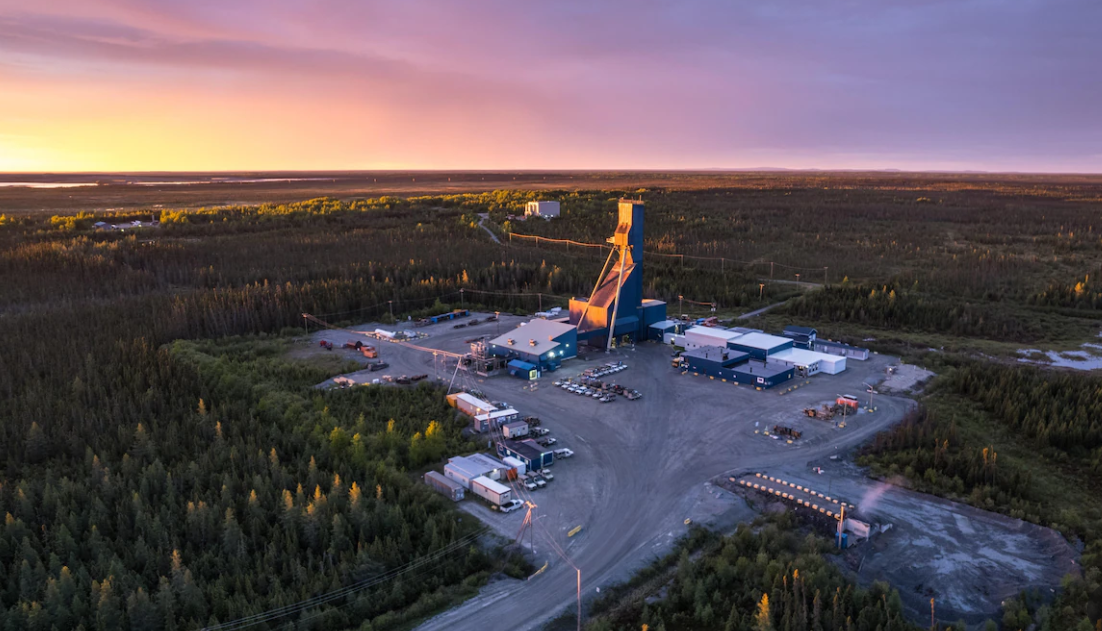
West Red Lake Gold Mines has announced the start of commercial production at its Madsen gold mine in northwest Ontario, which it acquired in 2023. Courtesy of West Red Lake Gold Mines.
Welcome back to your weekly mining news recap, where we catch you up on some of the news you may have missed. This week’s headlines include federal funding to support Indigenous participation in critical minerals development, new highs for precious metals and Kinross Gold’s plan to advance three gold projects in the U.S.
Canada Nickel’s Crawford nickel sulfide project near Timmins, Ontario, has been selected as the second project to be progressed under the province’s One Project, One Process framework, which seeks to streamline permitting for major mines. Construction is expected to begin by year-end, pending final federal approval. The company also reported a 46 per cent increase in measured and indicated resources at its Reid nickel sulfide project near Timmins.
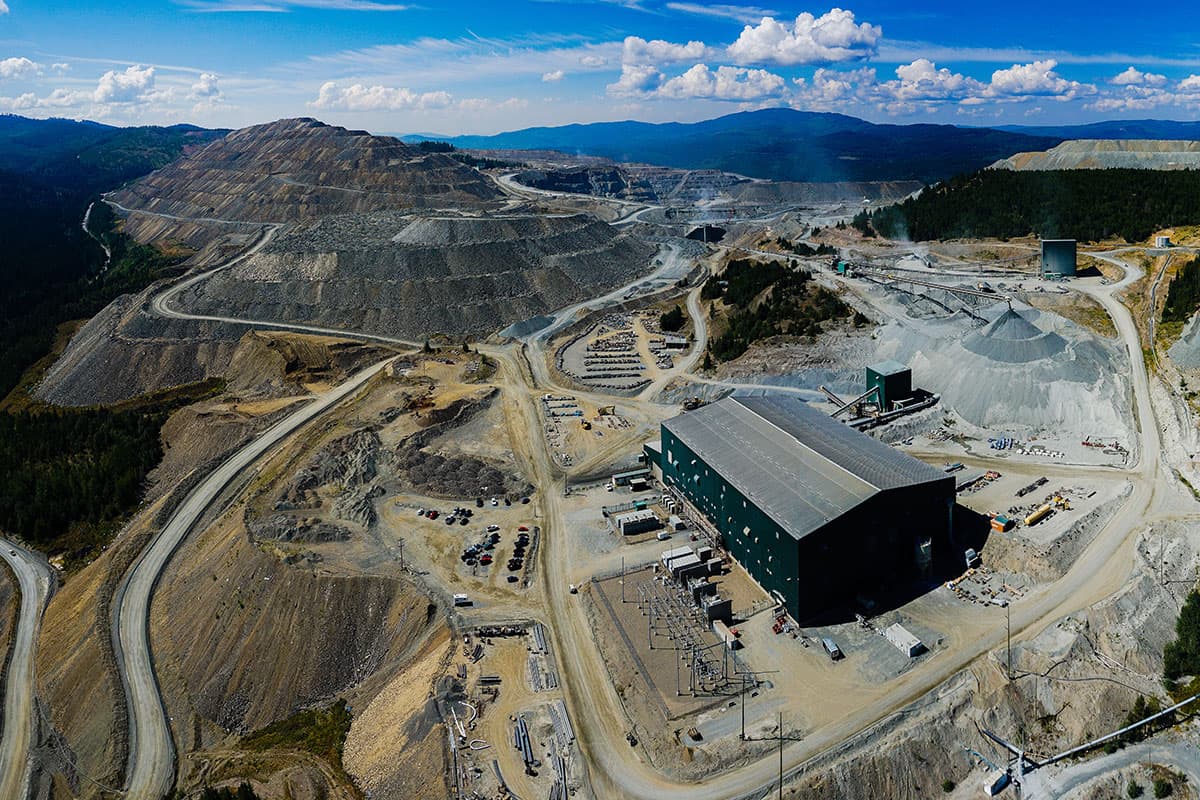
Taseko Mines announced this week that construction of its Florence Copper operation in Arizona, the world’s first greenfield in-situ copper recovery mine, is complete. The company is now advancing wellfield operations and commissioning of the solvent extraction/electrowinning plant, targeting first copper cathode production within the upcoming weeks. At Taseko’s Gibraltar mine in British Columbia, copper production in 2025 totalled 98 million pounds, while molybdenum output reached 1.9 million pounds.
West Red Lake Gold Mines achieved commercial production at its Madsen gold mine in Ontario on New Year’s Day. The mill ramped up to 86 per cent of its 800-tonne-per-day capacity, producing 3,215 ounces of gold in December. The company expects to reach full permitted capacity by mid-year.
The federal government is investing over $850,000 in 14 Indigenous-led projects through the Critical Minerals Infrastructure Fund that will support clean energy, transportation and critical minerals development. Projects include Indigenous capacity building tied to Seabridge Gold’s KSM gold-copper project in British Columbia, engagement on transmission upgrades for Rock Tech Lithium’s Georgia Lake lithium project in Ontario and more.
Gold and silver extended record rallies this week as geopolitical tensions, economic uncertainty, expectations of U.S. Federal Reserve rate cuts, along with threat to the independence of U.S. monetary policy-making from the Trump administration drove safe-haven demand, Reuters reported. Spot gold hit a record of US$4,641.40 an ounce on Wednesday, while silver surged more than five per cent to a new high of US$92.23.
Kinross Gold will move ahead with the construction of three growth projects in the U.S.: Phase X at its Round Mountain operation, Redbird 2 at Bald Mountain, both in Nevada, along with the development of its Kettle River-Curlew project in Washington state. Together they are expected to produce about three million gold-equivalent ounces from 2028 to 2038. Kinross plans to self-fund the projects, which will require capital expenditures of about US$425 million in 2026 to support development.
Nevada continues to attract investment in gold projects, as Orla Mining approved construction spending this week for its South Railroad gold project, coinciding with the release of an updated feasibility study. The study outlines an after-tax net present value of US$783 million at US$3,100 per gold ounce. The company said the project is construction ready, with an estimated initial capital cost of US$395 million, average annual gold production of about 130,000 ounces in its first five years and a permitting path targeting approvals in mid-2026.
Mining companies are adopting flexible energy technologies to cut carbon emissions while maintaining reliable power, Mehanaz Yakub and Graham Chandler reported for CIM Magazine. Options include floating solar systems on mine pit lakes and tailings ponds, hybrid diesel generators that integrate with batteries and renewables and fuel-flexible engine plants. These solutions can reduce land use, lower emissions and allow mines—especially remote sites—to transition gradually toward lower-carbon energy systems while maintaining operational reliability.
Todd den Engelsen, CEO of the Tahltan Nation Development Corporation, outlined the strategic importance of the Tahltan-led acquisition of the Port of Stewart in a Q&A with Mehanaz Yakub for CIM Magazine. He emphasized the importance of economic sovereignty through Indigenous ownership of mining infrastructure and discussed plans to modernize and expand the port. Strong partnerships with the Nisga’a Nation, Arrow Transportation and government were also highlighted as key to securing reliable, Indigenous-controlled logistics for critical minerals in northwestern British Columbia.
That’s all for this week. If you’ve got feedback, you can always reach us at editor@cim.org. If you’ve got something to add, why not join the conversation on our Facebook, Twitter, LinkedIn or Instagram pages?