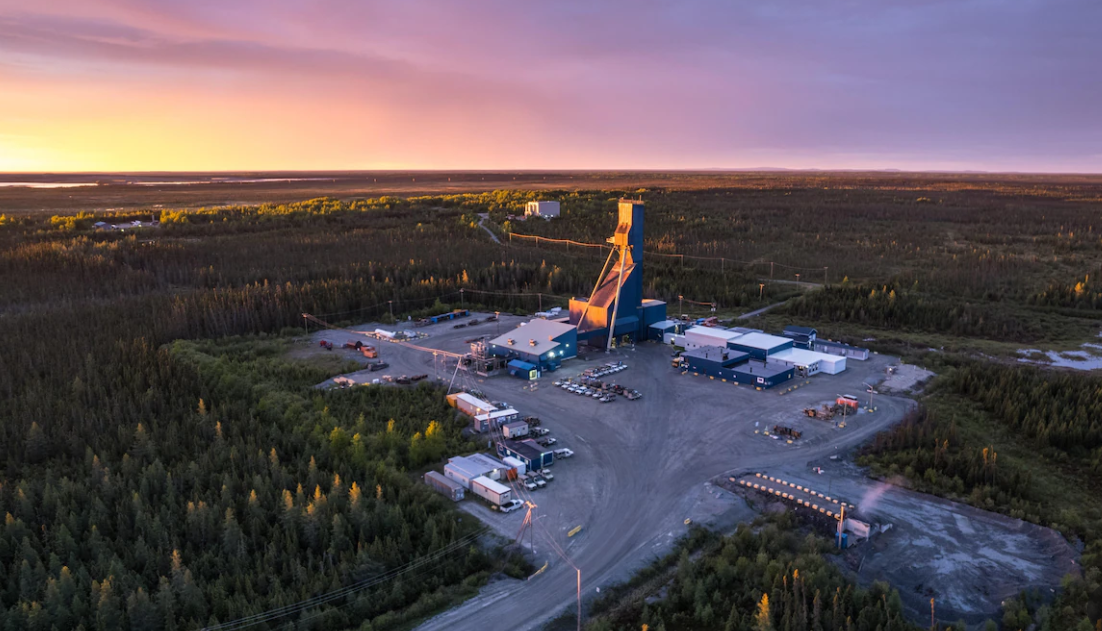
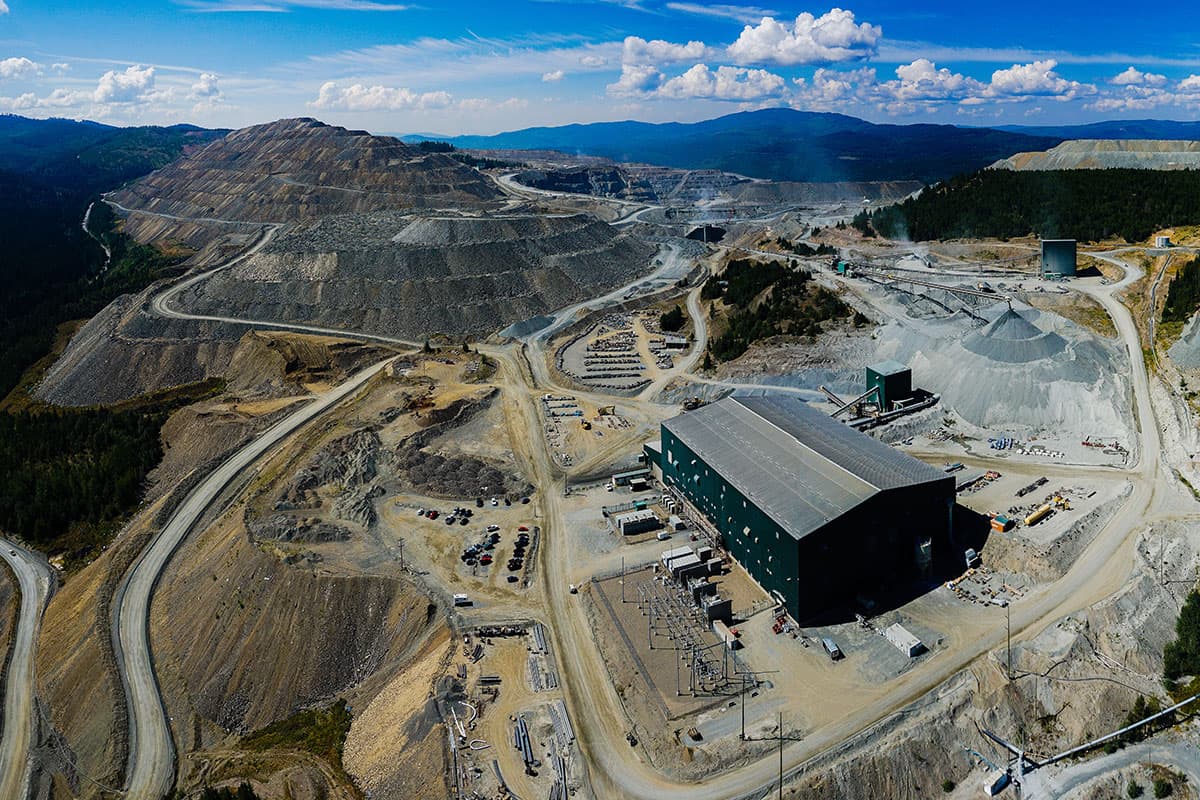
This week, Centerra Gold received approval from British Columbia’s Environmental Assessment Office to operate the Mount Milligan copper-gold mine through to 2035. Courtesy of Centerra Gold.
Welcome back to your weekly mining news recap, where we catch you up on some of the news you may have missed. This week’s headlines include the Toronto Stock Exchange (TSX) setting a new record, Greenland annexation returning to focus after U.S. raid in Venezuela and Glencore and Rio Tinto reviving merger talks.
Following the U.S. military’s capture of Venezuelan President Nicolás Maduro on Jan. 3 and Washington’s pledge to revive the country’s oil industry, energy experts are processing what the supply of Venezuelan heavy crude oil to U.S. refineries could mean for the Canadian oil sands sector which provides a similar product, The Toronto Star reported. Some consider the risk to be limited, noting that most Canadian oil is shipped by pipeline to U.S. Midwest refineries that Venezuelan barrels cannot easily reach. Venezuela also still faces significant investment hurdles and years-long timelines to increase output.
The TSX closed at record highs this week after U.S. forces captured Venezuelan President Nicolás Maduro, The Globe and Mail reported. The S&P/TSX Composite jumped 1.1 per cent to a new closing record of 32,219.95, surpassing its previous high set in December 2025.
British Columbia has approved an extension of the Mount Milligan copper-gold mine near Fort St. James to 2035, allowing for increased ore production and a larger tailings storage dam, The Canadian Press reported. The Nak’azdli Whut’en First Nation, whose territory includes the mine site, participated in consultations and says its environmental guardians will monitor water quality, wildlife impacts and compliance with the assessment conditions to protect the Nation River watershed.
A recent report from polling firm Ipsos and VRIFY Technology found that artificial intelligence (AI) and machine learning adoption in mineral exploration is growing but uneven. While 56 per cent of respondents reported using AI occasionally and 21 per cent regularly, skepticism of the technology persists, especially among geologists. Key barriers to adoption include budget constraints, unclear return on investment, skills gaps and trust in model outputs. Despite this, most respondents saw near-term benefits, namely faster decision-making and improved efficiency.
U.S. Secretary of State Marco Rubio will meet with officials from Greenland and Denmark next week as the Trump administration has left open the possibility of using military force to seize control of Greenland if a threat to U.S. national security is identified, The Globe and Mail reported. President Donald Trump has repeatedly expressed interest in acquiring Greenland, viewing it as vital to counter Russian and Chinese influence in the Arctic and to secure access to critical mineral resources. Denmark and Greenland have strongly rejected annexation threats, warning that an invasion would contravene NATO.
Glencore and Rio Tinto are engaged in early discussions regarding a possible all-share merger that could form the world’s largest mining company, Reuters reported. Terms remain uncertain, with a Feb. 5 deadline for Rio Tinto to make or abandon an offer. These renewed talks come over a year after Glencore first approached Rio Tinto in late 2024 in conversations that failed to result in a deal.
Arianne Phosphate will receive up to $735,000 in federal funding from Natural Resources Canada to support phosphate processing and purified phosphoric acid production at its Lac à Paul project in Quebec, Canadian Mining Journal reported. Lac à Paul is currently Canada’s only fully permitted phosphate project.
Denison Mines announced this week that electric power at its Phoenix in-situ uranium development project in Saskatchewan is now in place. The site’s electrification comes as the company prepares to make a final investment decision, pending federal approval of its environmental assessment and licence.
Ivanhoe Mines has begun copper anode production at its Kamoa-Kakula smelter in the Democratic Republic of the Congo, Mining.com reported. First output occurred on Dec. 29, 2025, several weeks after the smelter’s heat-up. Once fully ramped up, the facility will have an annual capacity of 500,000 tonnes, which would make it Africa’s largest smelter.
First Mining released an updated socio-economic analysis this week for its Springpole gold project in Ontario. A December 2025 prefeasibility study outlined a project that would cost an estimated US$1.1 billion to construct, have a 9.4-year mine life and average annual gold output of around 330,000 ounces over the first five years of production. The company is now nearing the completion of its provincial and federal environmental assessment and environmental impact statement processes, with a construction decision expected thereafter.
Transporting heavy mining equipment to remote sites requires careful coordination to navigate infrastructure limits, seasonal access windows, permitting requirements, extreme weather and on-site assembly constraints, Lynn Greiner reported for CIM Magazine. Preventing possible delivery delays depends on early planning, contingency routing, on-site supervision and ensuring crews, equipment and permits are in place before loads arrive.
That’s all for this week. If you’ve got feedback, you can always reach us at editor@cim.org. If you’ve got something to add, why not join the conversation on our Facebook, Twitter, LinkedIn or Instagram pages?