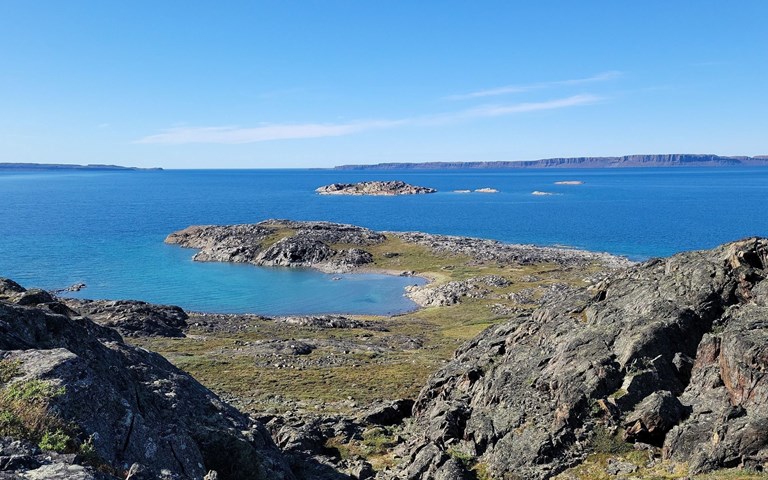
The Grays Bay Road and Port project, being developed by West Kitikmeot Resources, will receive a roughly $10 million investment from ATCO. The project is expected to improve access to critical mineral mines and support economic development in Nunavut and the Northwest Territories. Courtesy of West Kitikmeot Resources.
Welcome back to your weekly mining news recap, where we catch you up on some of the news you may have missed. This week’s headlines include growing concerns of a global energy shortage amid war in the Middle East, a processing technology firm scaling up its operation and criticism of the federal Indigenous procurement program.
Rio Tinto’s Diavik diamond mine in the Northwest Territories ended production on Tuesday after 23 years of operations, yielding over 150 million carats of rough diamonds during its mine life. Closure work will continue until 2029, after which post-closure monitoring will take place.
Canadian utilities and infrastructure company ATCO will invest around $10 million for a 40 per cent stake in West Kitikmeot Resources (WKR) to advance the Grays Bay Road and Port project in Nunavut. The infrastructure project, which was referred to the Major Projects Office for consideration earlier this month, involves the construction of a deepwater port with access to the Northwest Passage shipping corridor, a 230-kilometre all-season road and an airstrip. WKR filed an impact statement for the project with the Nunavut Impact Review Board on March 1.
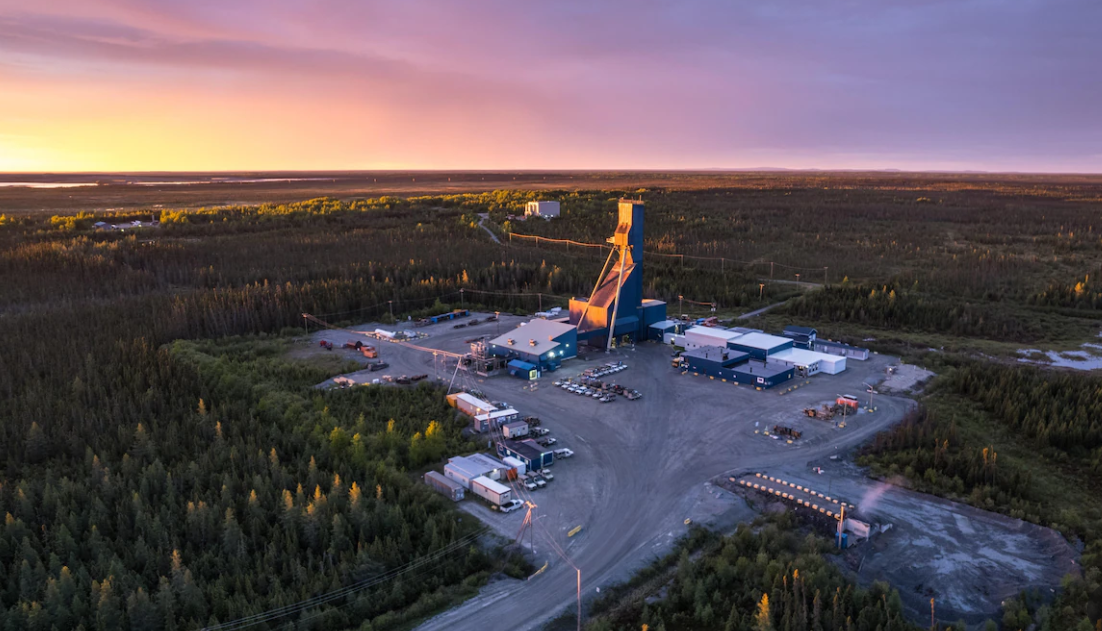
Foran Mining has energized an 85-kilometre transmission line connecting its McIlvenna Bay copper-zinc project in Saskatchewan to Saskatchewan Power Corporation’s hydroelectric grid. The line will power the project’s underground operations and processing plant. The company also reported that construction of McIlvenna Bay is 91 per cent complete and remains on schedule for commercial production by mid-year.
The fighting in the Middle East and the closure of the Strait of Hormuz have created a massive “air bubble” of roughly half a billion barrels of oil, CBC News reported. When the last shipments from the strait are received, the global market is expected to face a shortage, driving prices further upward. Natural gas supplies have also been disrupted, with countries including Pakistan and Taiwan already facing extended shortages and energy rationing.
Vancouver-based pH7 Technologies is expanding its Vancouver processing facility to increase the recovery of several platinum group metals. Supported by up to $4 million in funding from the National Research Council of Canada, the company plans to scale its proprietary processes to extract platinum, palladium and rhodium from secondary materials, such as catalytic converters. Last December pH7 raised over US$25 million to fund its copper extraction technology.
The federal Procurement Ombud has found widespread failures by the federal government in enforcing rules under its Procurement Strategy for Indigenous Business (PSIB), calling the government’s claim that it had achieved its five-per-cent Indigenous contract target “disingenuous,” The Globe and Mail reported. A review of the strategy showed departments awarded contracts without verifying company eligibility, skipped mandatory pre-award audits and allowed non-Indigenous subcontractors to perform most work. Indigenous Services Canada reported that it is engaging Indigenous leaders to look at ways to improve the PSIB.
Standard safety limits at mine sites were not developed with pregnant or breastfeeding workers in mind, noted Courtney Gendron, lead health, safety and environment consultant at WSP in a recent CIM Magazine Safety Share webinar. Practical measures such as limiting high-risk exposures and adjusting duties, along with maternity and paternity leave and leadership support, can help protect reproductive health and retain women in mining
Several companies shared 2025 fourth quarter and year-end financial results this week, including Skeena Resources, Liberty Gold, Orezone Gold and G Mining Ventures.
Surface mining is shifting into a period of major change where incremental improvements are no longer enough, Rosalind Stefanac reported for CIM Magazine. Industry experts say future success will depend on planning that integrates mine design and infrastructure, technology, environmental performance, workforce skill development and community engagement into one cohesive, system-level strategy.
In recent years, environmental, social and governance (ESG) performance in the Canadian mining industry has moved from a reputational goal to a measurable factor for credit assessment, noted Carlos da Costa for CIM Magazine. Lenders, export agencies and investors now integrate ESG and Indigenous partnership metrics into financing decisions, using them to adjust loan pricing and risk assessment. Regulatory frameworks, sustainability-linked loans and market pressures make ESG performance essential for capital access and long-term competitiveness.
That’s all for this week. If you’ve got feedback, you can always reach us at editor@cim.org. If you’ve got something to add, why not join the conversation on our Facebook, Twitter, LinkedIn or Instagram pages?