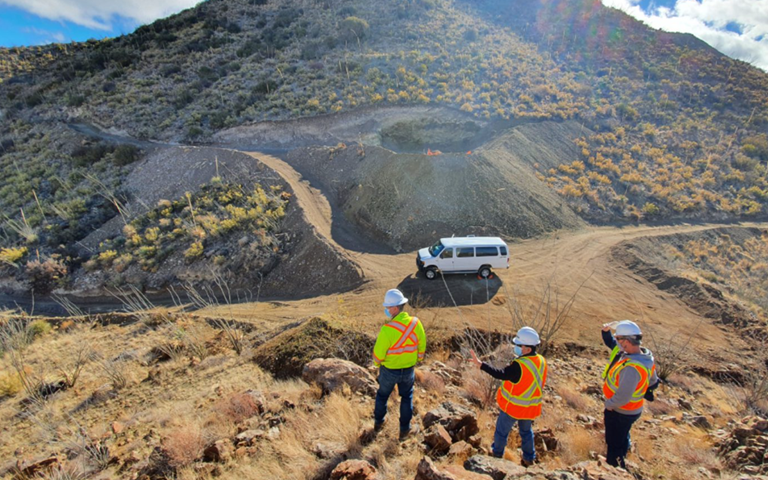
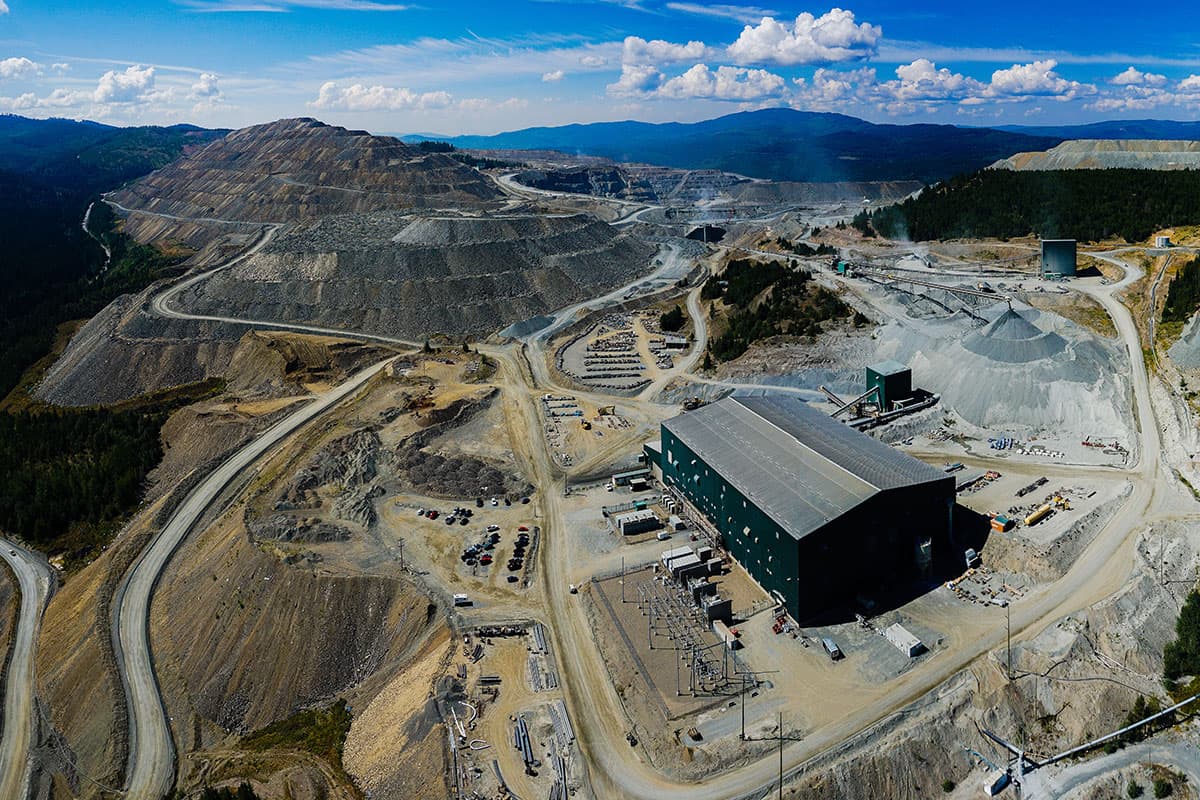
This week, Hudbay Minerals signed an agreement to acquire the remaining shares of the Arizona Sonoran Copper Company. Upon completion of the transaction, Hudbay will gain full ownership of the Cactus copper project in Arizona. Courtesy of Hudbay Minerals.
Welcome back to your weekly mining news recap, where we catch you up on some of the news you may have missed. This week’s headlines include two provinces unveiling new and updated critical mineral strategies, a strategic Canada-Australia minerals alliance, and the Florence Copper in-situ mine achieving first copper cathode output.
Hudbay Minerals entered into an agreement this week to buy the remaining shares in Arizona Sonoran Copper Company for US$1.48 billion, The Globe and Mail reported. Hudbay currently owns approximately 10 per cent of the company. The deal would grant Hudbay full ownership of the development-stage Cactus copper project in Arizona and, according to the company, could increase its U.S. copper output to around 500,000 tonnes annually once the project begins producing. The deal is expected to close in the second quarter of this year.
During the 2026 PDAC Convention in Toronto this week, the Canadian federal government announced 30 new critical minerals partnerships under the Critical Minerals Production Alliance, unlocking $12.1 billion in project capital. The funding will support various mining and processing projects across Canada, one project in Greenland, as well as associated research and development initiatives. Some investments include $2.5 million to MacLean Engineering to advance commercialization of the company’s GR8 EV graders, as well as $18.9 million to support Rio Tinto’s gallium extraction research and development project in Quebec.
The federal government also launched the Mine Permit Navigator tool at PDAC on Tuesday to help mining companies navigate federal approvals for projects with greater clarity, Mining Weekly reported. Developed by Natural Resources Canada’s CanmetMINING, the online tool identifies applicable federal legislation, outlines regulatory obligations and provides links to additional guidance to support the permitting process.
Also at PDAC, the Ontario and New Brunswick governments announced new critical minerals policy moves, with Ontario planning to update its Critical Minerals Strategy and New Brunswick unveiling a Comprehensive Minerals Strategy. A key move in Ontario’s update is adding high-purity iron and aluminum to its critical minerals list, while expanding the strategy’s focus beyond electric vehicle supply chains to include defence and advanced manufacturing. New Brunswick’s plan aims to boost mining activity in the province through clearer permitting, targeted incentives and meaningful engagement with Indigenous communities.
Cameco has signed an agreement to supply nearly 22 million pounds of uranium ore concentrate to India’s Department of Atomic Energy over nine years, with deliveries slated to begin in 2027. Valued at around $2.6 billion, the deal was announced this week as part of a broader Canada-India strategic partnership unveiled during Prime Minister Mark Carney’s visit to India, aimed at expanding cooperation in energy, critical minerals and technology. The agreement will help support India’s expanding nuclear reactor fleet and its goal of reaching 100 gigawatts of nuclear capacity by 2047.
Canada has inked new critical minerals agreements with Australia during Carney's visit to the country this week, Reuters reported. The agreements will focus on expanding the production, processing and stockpiling of minerals, while also strengthening collaboration in defence, maritime security, trade and artificial intelligence. Australia will also join Canada’s G7 Critical Minerals Production Alliance, which aims to diversify and secure global critical minerals production and supply.
Taseko Mines achieved the first copper cathode harvest from the commercial production facility at its Florence Copper in-situ copper recovery operation in Arizona last week. Once the operation reaches its nameplate capacity of 85 million pounds per year, Taseko would become the third-largest copper cathode producer in the United States. The facility is projected to deliver at least 1.5 billion pounds of copper over the next 22 years.
The team from the University of British Columbia’s Norman B. Keevil Institute of Mining Engineering won first place at the 2026 Canadian Mining Games, which was held from Feb. 19 to 21 in Saskatoon, marking its third consecutive victory. Competing against nine other universities across 27 events, UBC’s 16-member team tackled a mix of technical and practical challenges. Next year’s competition will be held at the University of Toronto.
SSR Mining is planning to sell its 80 per cent stake in the Çöpler gold mine in Turkey to Cengiz Holding for US$1.5 billion, Reuters reported. The deal is expected to close in the third quarter of this year. SSR suspended operations at the mine in 2024 after the collapse of its heap leach pad killed nine people.
That’s all for this week. If you’ve got feedback, you can always reach us at editor@cim.org. If you’ve got something to add, why not join the conversation on our Facebook, Twitter, LinkedIn or Instagram pages?