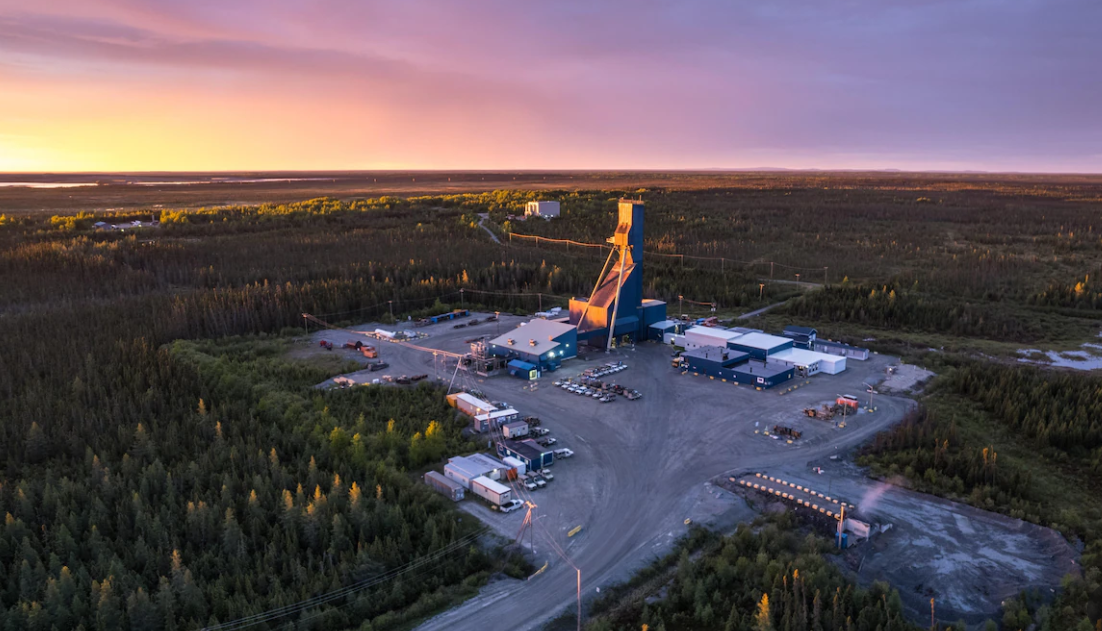
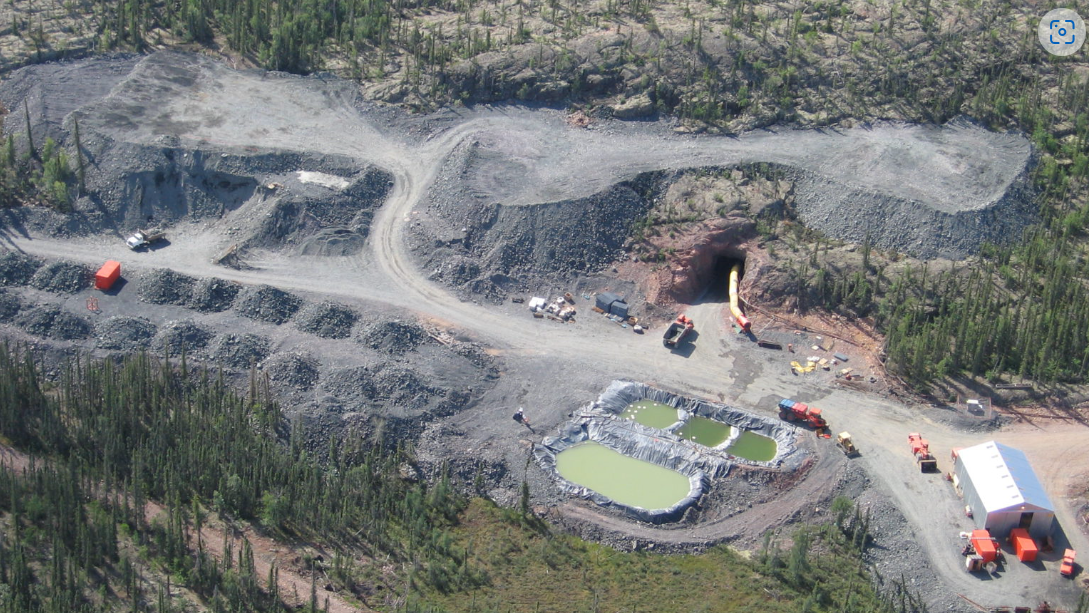
With the merger of Equinox Gold and Orla Mining, the combined company will have a portfolio of six operating mines across Canada, the United States, Mexico and Nicaragua, including the (pictured) Greenstone mine in Ontario. Courtesy of Equinox Gold.
Welcome back to your weekly mining news recap, where we catch you up on some of the news you may have missed. This week’s headlines include flooding in northern Saskatchewan disrupting operations at Cameco’s Key Lake mill and McArthur River uranium mine, New Brunswick’s new Mineral Resources Act aimed at speeding up mining project approvals, and a new batch of first quarter financial results.
Equinox Gold announced plans on Wednesday to acquire Orla Mining for US$5.1 billion in an all-stock deal that will create Canada’s second-largest gold producer, valued at US$18.5 billion. The combined company—which will continue operating as Equinox Gold—will be anchored by the Greenstone, Valentine and Musselwhite mines in Canada, along with three other mine sites in the United States, Mexico and Nicaragua. Together, the mines are expected to produce approximately 1.1 million ounces of gold in 2026.
The Canada Growth Fund is investing $145 million to support the expansion of Elevra Lithium’s North American Lithium (NAL) mine in the Abitibi-Temiscamingue region of western Quebec. This is part of a $417 million financing package Elevra Lithium has raised, which also includes $272 million in public share offerings. The funding will support a staged expansion aimed at increasing NAL’s annual spodumene concentrate production capacity from 200,000 to 338,000 tonnes by 2028.
The Ontario government announced on Wednesday that Agnico Eagle Mines plans to spend $14 billion in the province by 2030. The investment will include approximately $12 billion towards mining operations, development and exploration programs across the miner’s Ontario assets, along with an additional $2 billion earmarked for the Detour Lake underground expansion and the Upper Beaver gold-copper project. The Ontario government is also investing $10 million through its newly overhauled Ontario Junior Exploration Program to help junior explorers and licensed prospectors by covering eligible costs for mineral exploration and development.
Cameco paused production activities at its Key Lake mill and reduced activity at the McArthur River uranium mine in northern Saskatchewan on Monday due to flooding in the area, CTV News reported. While neither site has been directly impacted by floodwaters, the flooding has led to the collapse of a bridge along the primary supply route to both operations. Depending on the duration of road restrictions and the ability to deliver critical operating materials, Cameco said the 2026 production outlook for the McArthur River and Key Lake operations could be adversely impacted.
The Mining Association of Canada released its annual Facts & Figures 2026—The State of Canada’s Mining Industry report on Wednesday, which provides a comprehensive accounting of the sector’s economic performance, mineral production, trade, employment and recent investment trends. The report called for additional measures—such as improving federal and provincial coordination of mine permitting, strengthening mineral resource assessments and investing in northern infrastructure—to improve investment conditions and support future project development.
The New Brunswick government introduced a new Mineral Resources Act on Wednesday aimed at streamlining mining project approvals and modernizing the province’s regulatory framework for mineral development, CTV News reported. The proposed legislation would replace the province’s 1985 Mining Act and introduce a single-process approval pathway with clearer timelines, enhanced financial assurance, improved transparency and permitting predictability, and stronger engagement requirements with First Nations and local communities. In March, the provincial government unveiled a comprehensive minerals strategy to help increase mining activity in the province.
Some companies released first quarter results this week, including Orla Mining, Barrick Mining, Osisko Development, First Majestic Silver, Franco-Nevada, Denison Mines, Wesdome Gold Mines, G Mining Ventures and Seabridge Gold.
Susanne Ouellet, founder and CEO of Lumidas, shared how her company is developing sensing technology that could detect early signs of tailings dam instability, in a Q&A with Alexandra Lopez-Pacheco for CIM Magazine. Lumidas uses distributed acoustic sensing (DAS) technology to transform fibre-optic cables into continuous sensors capable of detecting subtle ground movements. The start-up is currently running a two-year pilot project at an active Canadian mine site alongside partners to develop a scalable, cloud-based DAS monitoring framework.
A hybrid-electric ultra-class mining haul truck, powered by Cummins First Mode hybrid technology, was deployed at the Caserones copper-molybdenum mine in Chile, Ashley Fish-Robertson reported for CIM Magazine. The Komatsu 930E haul truck used a diesel-electric hybrid system designed to cut fuel consumption and lower greenhouse gas emissions while maintaining productivity in high-altitude conditions.
Selenium regulation in the mining industry is increasingly being shaped by public perception, lobbying and reputational concerns rather than consistent scientific evidence, noted Monique Simair for CIM Magazine. Simair argued that after decades of selenium research and investment, the gaps between evidence, application and outcomes are too large to dismiss and that to see progress in selenium policy, emotions need to be set aside and policy must be shaped by the same standards of transparency as science.
Canada Nickel Company is piloting an in-situ carbon sequestration technique at its Crawford nickel-cobalt project in Ontario that aims to permanently store carbon dioxide underground before mining begins, Lynn Greiner reported for CIM Magazine. Developed in partnership with the University of Texas at Austin, the process injects CO2-rich water into a well within the ultramafic rock formation to mineralize and trap CO2 within the rock’s mineral structure, allowing carbon storage to be integrated directly into the mining environment rather than added later in the process. The project is part of Canada Nickel’s broader strategy to develop a low-carbon industrial cluster in northeastern Ontario.
That’s all for this week. If you’ve got feedback, you can always reach us at editor@cim.org. If you’ve got something to add, why not join the conversation on our Facebook, Twitter, LinkedIn or Instagram pages?