Courtesy of Gregory R. Baiden
Canada’s identity has been forged in the toughness of the North, the endurance of long winters and the resource wealth beneath our land. But today, toughness is not enough. To survive and prosper in a competitive, technology-driven world, Canada must move beyond traditional mining and embrace robotic mining as the foundation of its future.
Critical minerals—such as nickel, cobalt, uranium, lithium and rare earths—are no longer just economic assets. They are strategic imperatives, essential for clean energy, defence and advanced manufacturing. The world needs them, and Canada has them. But without robotic mining, we cannot deliver them safely, sustainably or competitively.
Traditional mining is labour intensive, hazardous and environmentally costly. Robotics can transform all of that on four fronts:
» Safety—robotic systems keep people out of dangerous environments;
» Sustainability—precision drilling, blasting and haulage reduce waste and environmental damage;
» Productivity—automation enables continuous operations and higher ore recovery; and
» Data-driven decision-making—artificial intelligence and geospatial blockchain technology track every tonne of ore, every blast, every drill hole in real time.
Robotic mining is not a luxury. It is the only viable path forward if Canada wants to lead in supplying critical minerals to the world.
Canada has also already shown what is possible.
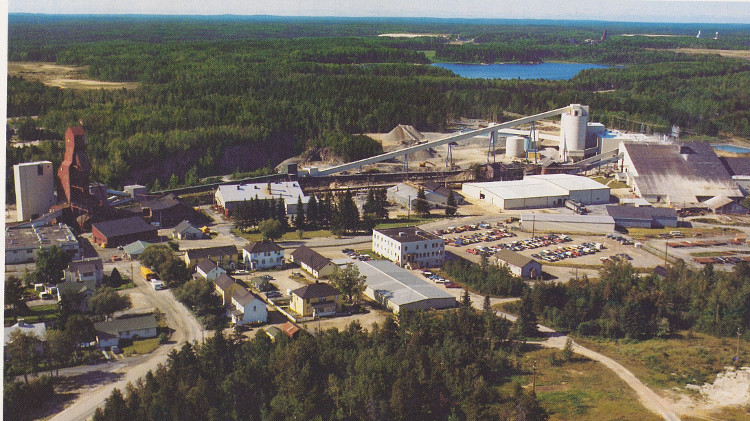
In the 1990s, NASA came to Sudbury, Ontario, to test whether robotic drilling could be trusted in extreme conditions. My team, at INCO Limited in Copper Cliff, Ontario, had developed tele-operated systems to modernize Canadian mines and protect workers underground. Those demonstrations proved that robotic mining works—and under some of the toughest conditions on Earth.
That capability gave NASA the confidence to use robotic drills on Mars, where it ultimately helped uncover evidence of life. The point is not that Canada alone made Mars exploration possible, but that Canadian robotic mining innovation has already proven itself on the world stage.
Canada’s environment—vast, cold and unforgiving—once demanded resilience for survival. Today, those same conditions can inspire innovation for leadership. Robotic haulage trucks, autonomous drilling systems, swarming drones, optical networks that transmit terabits of data, and blockchain-secured ore tracking are not abstract ideas. They are Canadian technologies, developed in response to our environment. What was once about survival can now be about global leadership.
But bold rhetoric will not be enough. Canada must act by launching multiple robotic mining pilots. These must demonstrate safe, sustainable, automated operations across different mineral sites. And they must be built with broad support from:
» Government ministries, to provide incentives and policy frameworks;
» The Mining Association of Canada, to coordinate standards;
» Indigenous nations, as partners in design, stewardship and benefit-sharing; and
» Unions, to ensure workers are retrained and included in the next generation of mining.
Most importantly, these pilots must be insulated from election cycles. Too often, bold initiatives collapse when governments change. Robotic mining is a national project—it requires continuity across decades, not political terms.
Modernizing mining through robotics is not just about minerals; it is about redefining Canadian identity. If we prove that mining can be clean, safe and automated, Canada will not only be the world’s trusted supplier of critical minerals, but we will also be seen as leaders in clean energy, defence readiness and space exploration.
This is about showing that Canadians are not just polite and resilient—we are inventive, bold and capable of leading in the technologies that matter most.
If we fail to modernize, Canada will be bypassed. Allies will look elsewhere for secure supply chains and adversaries will continue to weaponize resource control.
If we succeed, Canada can redefine mining for the world, turning our resource wealth and harsh conditions into a platform for innovation and leadership.
The lesson of Sudbury is clear: robotic mining works. The lesson of Mars is even clearer: Canadian innovation can change the course of discovery. Now we must apply that spirit at home.
The choice is stark: modernize through robotics—or decline. For Canada, there is only one path forward.
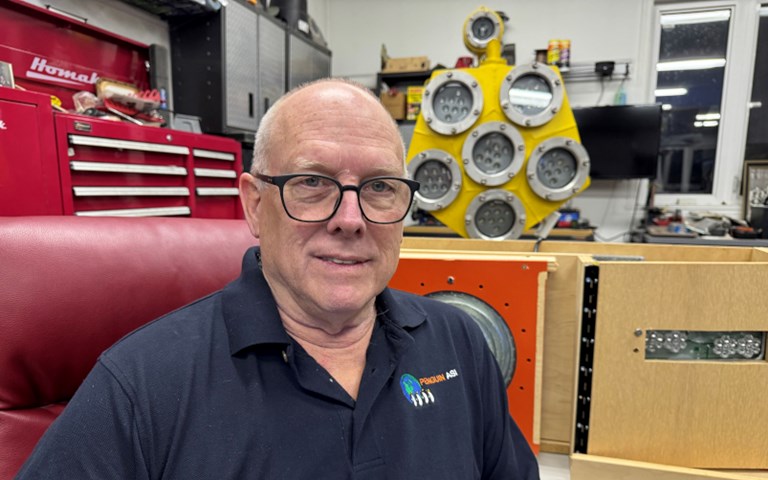
Gregory R. Baiden, PhD, is the founder of Penguin Automated Systems in Sudbury and the former global head of strategic mining research and innovation at Inco Ltd., and former Canada Research Chair in Robotics and Mines Automation. A version of this column appeared first in Northern Ontario Business. Reprinted with permission.