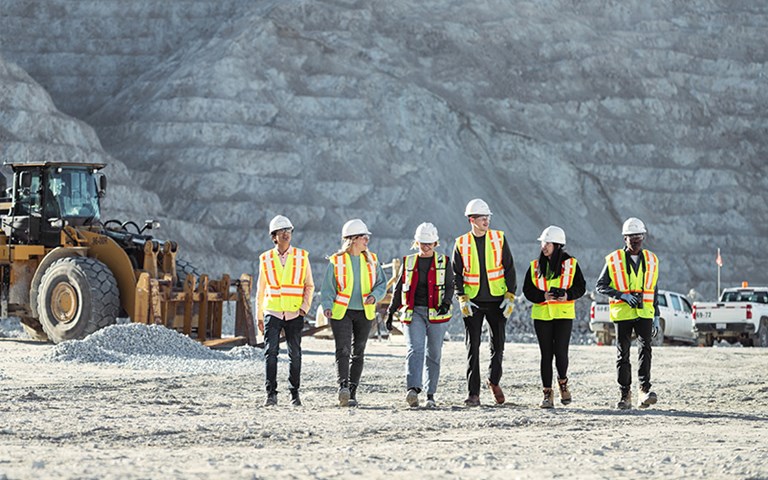
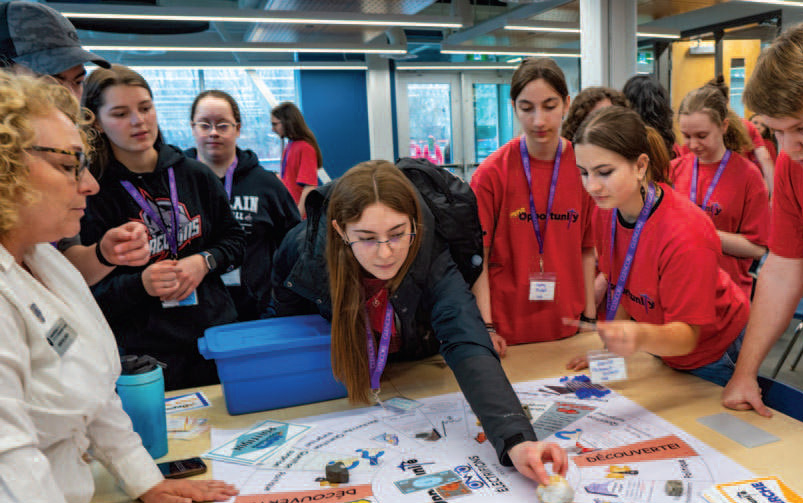
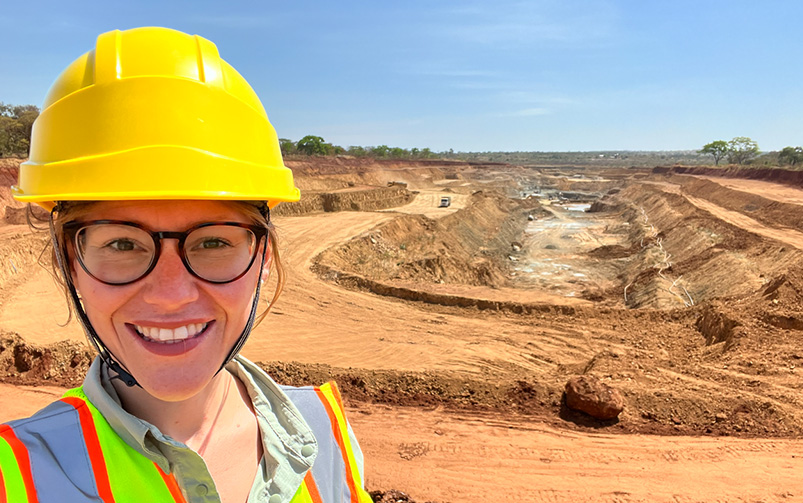
The program gives students a front-row view of mining through a blend of on-site visits and guidance from industry professionals. Courtesy of Teck
Fifty first-year post-secondary science, technology, engineering and mathematics (STEM) students will have the opportunity to explore the world of modern mining this May through the Mining Industry Experience Program (MiEX).
The two-week program, offered by the Mining Industry Human Resources Council (MiHR), will begin at several classroom-based learning hubs across Canada before taking participants to operational sites, where they will engage with industry experts, take part in interactive activities and see first-hand the variety of roles that keep the industry running.
The students will receive $2,000 each for their participation, and all accommodation, travel and personal protective equipment costs for the site visits will be covered by the host companies.
Ryan Montpellier, executive director of MiHR, noted that diversity has been a key priority for the program, with MiHR actively working to engage under-represented groups to ensure cohorts reflect a wide range of backgrounds and perspectives. He added that students with disabilities or specific accommodation needs can submit requests, which the MiEX working group will use to tailor the experience to better support them.
CIM is a MiEX program partner responsible for coordinating the design and development of live industry presentations and panels that will be broadcast across the three learning hubs.
MiEX is also being sponsored by five mining companies—Teck, Newmont, Agnico Eagle, Cameco and Rio Tinto—that are funding the initiative and offering participants opportunities for site visits and professional networking.
“Our goal is to showcase how important the mining industry is on a global stage and to Canada, helping young people better understand our sector and the different [roles] that exist,” Montpellier said. He added that the program aims to highlight how technologically advanced the industry has become, while teaching participants how raw materials are transformed into the everyday products we use.
The MiEX pilot was adapted from an existing program at BHP. It first ran in Australia in 2025 as a partnership between the Minerals Council of Australia, AusIMM, Rio Tinto, BHP and Peabody Energy and was a "huge success." This prompted the organizers to explore international expansion, with Canada emerging as the next logical destination.
He explained that—like Australia—Canada’s mining industry plays a vital role in the national economy and it faces similar challenges, including rapid workforce growth, supply constraints from an aging workforce, low youth interest in mining careers and enduring negative perceptions of the sector.
During the three-week recruitment period in January for the Canadian program, MiHR received over 600 applications, with additional inquiries from other mining companies interested in sponsoring the program.
Montpellier explained that if the Canadian pilot proves successful, MiHR plans to make it an annual program, expanding student spots from 50 to 250 students. The eventual goal is to increase industry sponsorship to ensure its long-term sustainability and establish an alumni network of former participants to serve as program ambassadors.
From classroom to operational site
According to Montpellier, MiEX is designed for students who are curious about the mining industry but may not yet have extensive knowledge or have decided whether to pursue a career in it.
The first week of the program will have MiEX participants based at a learning hub hosted at an educational institution in Vancouver, Saskatoon or Montreal.
“[Participants] are going to be there for about eight hours a day listening to different industry speakers, participating in Q&A sessions, and they’re also going to be participating in some hands-on group activities,” said Lindsay Kajiura, senior manager of emerging talent and skills initiatives at MiHR.
During the second week, participants will travel to an operational site for up to four days, where they will be guided by site chaperones. “Each site is going to be a bit different in terms of what these experiences look like,” she added. “They’re going to experience as much as they possibly can within that period, to understand what mining looks like from exploration to final product.”
During site visits, students will learn about various processes, engage with industry experts, see daily operations and learn about the variety of roles available. In the final two days of the program, students will return to the learning hubs to reflect on their experiences and share what they have learned.
Montpellier considers site visits to be a particularly important part of the program because one challenge in fostering a more accurate understanding of the mining industry is that, unlike industries such as manufacturing or construction, mine workers often operate far from residential areas, making it harder for the industry to be visible to the public.
“We felt it was important to bring students to a mining operation so they can see the breadth and magnitude of it,” he said. “They can interact with the people on site, see the communities and where these activities operate, and hopefully they can bring that [experience] back to their schools and peers.”
Montpellier added that many perceptions of the mining industry are shaped by TV or social media, which often reinforce outdated stereotypes and fail to reflect the sector’s modern advancements. Kajiura also noted that widespread assumptions about certain working conditions, like rotational schedules, can discourage people from pursuing a career in the industry, even though not all mine sites follow fly-in-fly-out arrangements.
“When we have limited knowledge of an industry, we often paint our own mental picture of what that looks like, and while that picture may be [somewhat] accurate, it’s not the full picture,” Kajiura said. “[This program] is an opportunity for students to learn about the range of career opportunities [within the industry] and [challenge] any assumptions that they may have had about the industry.”
The site visits will give MiEX participants the chance not only to hear directly from industry professionals but also to ask questions that could help them envision a potential career in mining, such as the educational requirements for specific roles or the types of tasks those positions involve.
Kajiura explained that MiEX differs from co-op placements and similar academic programs in that many co-op participants already have a clear sense of the industry they want to enter and are often testing out a specific role within it. By contrast, MiEX is designed as an exploratory experience, exposing participants to the breadth of careers within the mining industry—including roles they may not have previously considered.
She also pointed out that many co-op and comparable programs require participants to be at a later stage in their academic journey, whereas MiEX does not require the same level of prior experience or academic progression.
Kajiura noted that, for participants who may feel out of place due to limited industry knowledge, daily icebreaker activities during the first week will help foster a sense of shared experience and reassure them that others are in a similar position. She added that dedicated “hub facilitators” will be present each day to provide ongoing support.
Investing in future talent
Patrick Doyle, vice-president of human resources and talent at Teck, explained that the MiEX program’s success in Australia provided a tested framework and measured outcomes that made it an attractive sponsorship opportunity for the company as the program expanded to Canada. He added that the sponsorship aligns with Teck’s long-term workforce strategy by helping to cultivate a pipeline of informed, motivated candidates who appreciate both the technical and community aspects of mining.
“Teck wants participants to recognize the wide range of career paths beyond traditional roles,” Doyle said. “Through conversations with professionals, participants will gain realistic expectations about day-to-day work, required skills and career trajectories...and should leave with the understanding that careers in mining can be intellectually challenging and socially and personally valuable.”
For the next generation of mining professionals, Doyle said he believes that critical thinking, adaptability and collaboration will be key. The ability to analyze complex problems and develop practical solutions while staying resilient will be essential as mining projects, technologies and regulations evolve, he noted. Finally, success in mining relies on multidisciplinary teamwork and strong stakeholder engagement, making effective communication and collaboration vital.
Another program sponsor, Newmont, sees the program as a chance to tackle labour shortages and inspire the future mining talent.
“Newmont is proud to support the MiEX pilot program in Canada because we recognize the critical labour shortages facing the mining industry and the need to build long‑term capacity within the country,” said Kristy Lennox, a people business partner in Canada for Newmont.
Lennox said the program is especially meaningful for Newmont’s Red Chris copper-gold mine in British Columbia, which will be one of the sites students will visit during the program. She explained that Canada faces a significant talent gap in underground mining, particularly in technical services, geotechnical specialties and block caving expertise, which are critical for the company as Red Chris transitions from an open-pit mine to an underground block cave operation.
Newmont also aims to encourage participation from Tahltan Nation youth, emphasizing that giving local Indigenous students hands-on mining experience is essential to ensuring they have a voice in the responsible development of projects within their territory.
Correction: In the March/April issue of CIM Magazine, we did not accurately represent the origins of the MiEX program. The pilot was adapted from an existing program at BHP. It first ran in Australia in 2025 as a partnership between the Minerals Council of Australia, AusIMM, Rio Tinto, BHP and Peabody Energy.