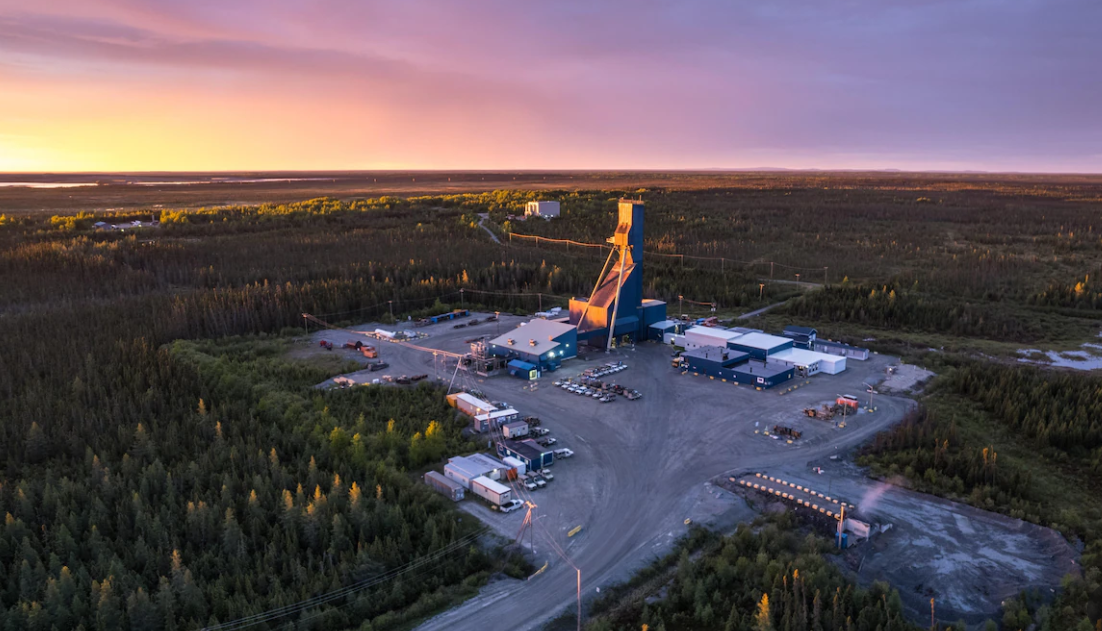
One of two Early Learner battery-electric Cat 793 XE haul trucks, deployed at BHP’s Jimblebar mine in Western Australia. Courtesy of Caterpillar.
BHP, Rio Tinto and Caterpillar have completed the first three months of trials for two Early Learner battery-electric Cat 793 XE haul trucks at BHP’s Jimblebar iron ore mine in Western Australia’s Pilbara region, marking an early step in efforts to assess how battery-electric haulage could help decarbonize large-scale mining operations.
The trucks have logged more than 100 operating hours and completed over 200 test laps. The companies said the early data is helping to validate assumptions about the trucks’ safety, technology and maintenance requirements.
The trial is part of a broader effort to tackle one of mining’s most difficult decarbonization challenges: replacing diesel in heavy haulage without compromising production. Jimblebar is hosting two of seven Caterpillar Early Learner battery-electric haul trucks currently being trialled worldwide.
The trucks were delivered to the Jimblebar site in December 2025 after undergoing safety checks and controlled trials at Caterpillar’s Tucson Proving Ground in Arizona, U.S. The Pilbara site’s extreme conditions and large-scale daily mining operations will offer a real-world test of the technology’s performance.
“This trial is helping to advance the technology we need and improve our understanding of how to scale across our operations, from charging infrastructure and energy management through to how it integrates into safe and productive operations,” said Geraldine Slattery, president of BHP Australia, in a June 23 news release.
The next stage of the trial will focus on dynamic charging, using an energy transfer system designed to power the trucks while they are moving. The demonstration at the Jimblebar site will provide data on the trucks’ technical performance, infrastructure needs and commercial feasibility, including testing high-powered static and dynamic charging systems.
“This trial will give us real-world data in some of the most demanding operating conditions on earth,” Matthew Holcz, chief executive, iron ore at Rio Tinto, said in the same news release. “The Pilbara’s scale and intensity are unique, and that’s exactly what makes it the right place to test this technology to understand what’s needed to support broader deployment.”
It builds on a collaboration announced by BHP and Rio Tinto in May 2024, under which BHP would trial two Cat 793 battery-electric haul trucks and Rio Tinto would trial two Komatsu 930 battery-electric haul trucks in the Pilbara, while both miners worked with Caterpillar and Komatsu on separate trials of large-scale battery-electric haulage technology.
According to the companies’ May 2024 collaboration announcement, diesel combustion accounted for about 40 per cent of BHP’s Scope 1 and 2 greenhouse gas (GHG) emissions in 2020, while diesel use in Rio Tinto’s mining equipment and rail fleet accounted for 12 per cent of its Scope 1 and 2 GHG emissions in 2023.
Slattery noted that BHP remains on track to meet its goal of at least a 30 per cent reduction to its operational GHG emissions by 2030 from 2020 levels. Rio Tinto aims to cut its Scope 1 and 2 GHG emissions by 50 per cent by 2030.
“This is exactly why industry collaboration matters,” Slattery said. “By working together, we can accelerate progress in the technologies enabling electrification, on what is needed in the mining operation and in the supply chain.”