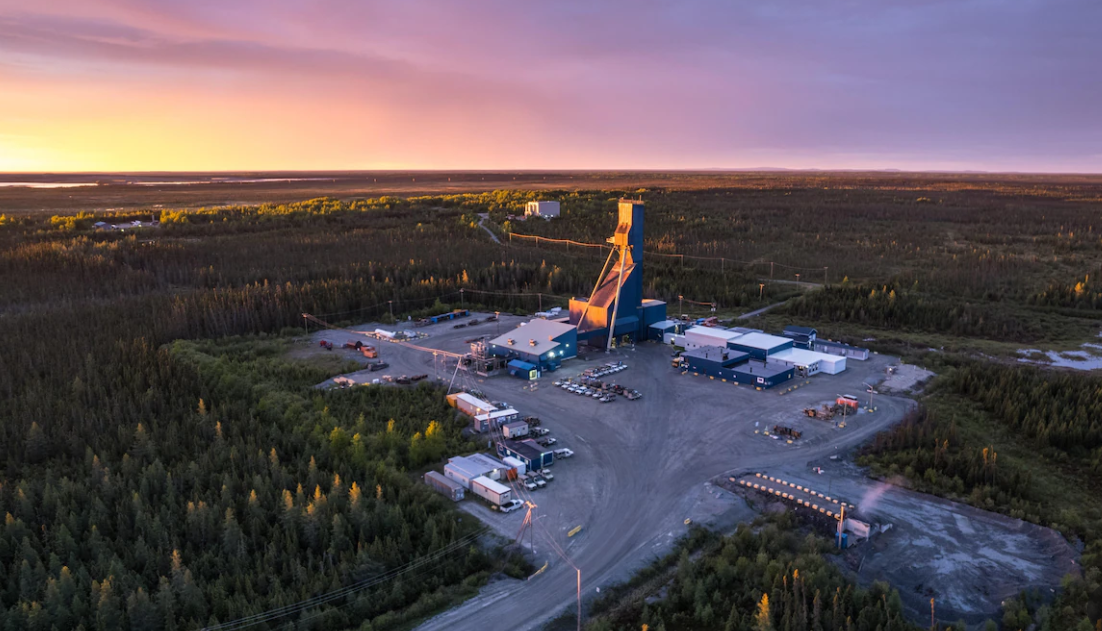
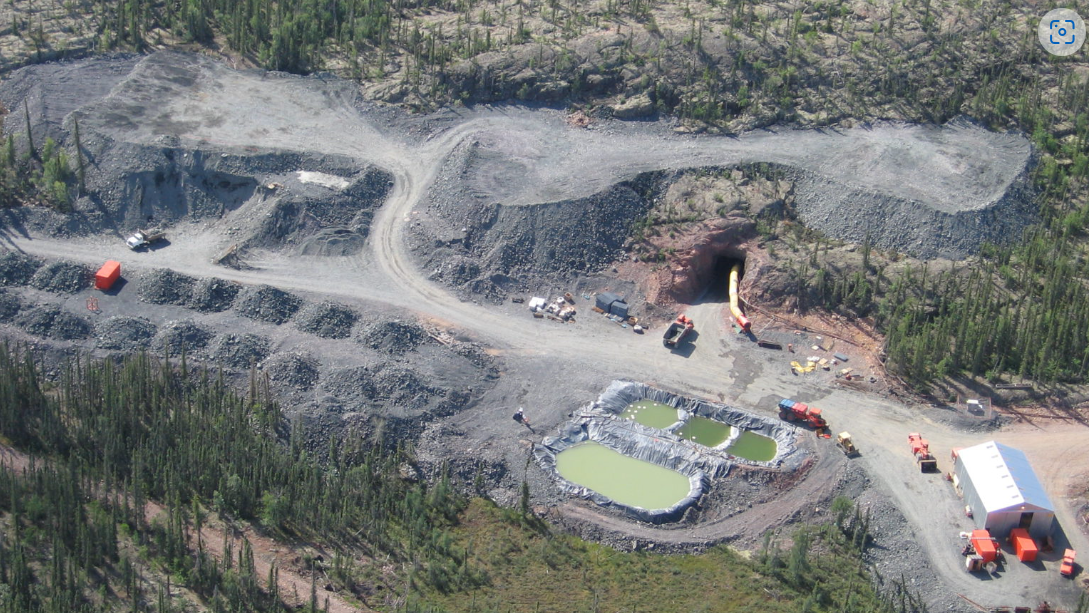
Industry members and alumni attended a Developing a Curriculum meeting in October 2025 to help update the engineering technology program offered at the Haileybury School of Mines. Courtesy of Northern College
A major modernization of the Haileybury School of Mines (HSM) in Temiskaming Shores, Ontario, is under way, with the goal of restoring the century-old institution’s standing as a global leader in mining education. The project involves revamping the school’s mining engineering technology program, along with updating the institution’s labs and equipment.
HSM first opened in 1912 in response to the demand for skilled workers in the silver mining boom at Cobalt, Ontario. Since then, the school has built a strong reputation as a longstanding contributor to mining education, having trained more than 2,000 graduates who have gone on to careers in mining and related industries around the world.
In 1970, HSM merged with Northern College, becoming a mining-focused division rather than continuing as a standalone school. HSM continued operating under its same name, but over time, enrolment in the mining engineering technology program declined sharply, and several mining labs were decommissioned as the program shifted towards online learning.
An updated curriculum
Jamie Johnston, dean of trades, technology, apprenticeship and mining at Northern College, told CIM Magazine that she and the team leading the HSM’s revitalization project held a Developing a Curriculum meeting in October 2025 at Northern College’s Timmins campus, bringing together around 25 industry experts, external consultants and alumni to help shape a redesigned, competency-based curriculum for the mining engineering technology program. The team is modernizing the program to better align training with the current technological, environmental and workforce needs of the mining sector.
A key recommendation brought up by industry members at the meeting was to incorporate more hands-on learning opportunities.
Building on this feedback, the team decided to introduce a mandatory co-op component to the program as part of its finalized revitalization plan. The school is now working with industry partners to establish paid placements that will provide students with experiential learning opportunities, helping them build the practical skills needed to transition directly into the workforce following graduation.
“We also really want students to [participate] in [more] fieldwork and go on different mine tours,” said Johnston, adding that the school will also be reaching out to mining companies to see if students can have tours of their processing plants.
While Johnston explained that the program was designed to give students a broad foundation to help them secure entry-level positions in the mining industry, some course additions were needed to keep it current with industry demands.
“We really wanted to modernize the curriculum and to exceed industry standards with what we’re offering in the program,” Johnston said. “We now have [courses] like geographic information systems, drones and long-range light detection and ranging (LiDAR) for monitoring, [automation technologies], geological mapping underground and surface mine planning and development, [and more].”
As part of its revitalization plan, HSM aims to modernize several of its labs and introduce new equipment, including petrographic microscopes, LiDAR and global navigation satellite system—real-time kinematic systems, and software for drone and blast simulations.
Industry support
Johnston recalled that at the 2024 PDAC convention, when she approached mining executives with early plans to revitalize HSM, she was met with doubt about whether the changes would stick. She was told similar proposals had been made before, prompting questions about how this initiative would be different.
“We’ve made tremendous gains in the last year and what’s fantastic is that, at [the 2025] PDAC convention, we were able to say, ‘look at what we’ve done,’” she said. “It’s been a pretty phenomenal journey so far.”
Johnston is encouraging all forms of support to help make the revitalization a success, including funding and companies willing to take on co-op students.
In November 2025, Swiss measurement and automation technology manufacturer Endress+Hauser donated over $91,000 worth of equipment to HSM’s automation and control engineering department. This equipment included magnetic and vortex flowmeters, along with analytical and pressure transmitters.
Johnston emphasized that support from industry partners and alumni has been crucial in revamping this program. For example, some mining companies were able to share different lab reports and raw data from mines, so students will have access to accurate and relevant information that can then be incorporated into the new curriculum.
Johnston pointed out that, as northern Ontario and Canada face rising retirements in the mining industry and growing demand for critical minerals, the need for skilled, site-ready professionals is increasing.
“We want people to stay in the North and grow in the North,” Johnston said. “We need skilled workers and we need people to support the mining sector, so we’re going to be able to do that for them, but it’s because we’re working together in collaboration [with industry partners] that we can make this happen.”