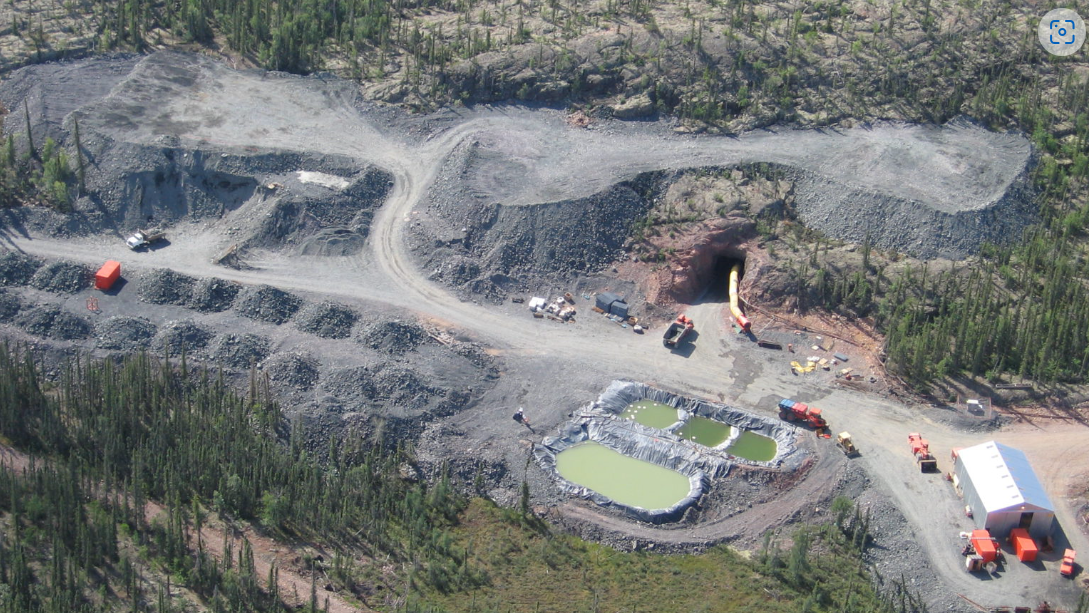
A potential buyer has been selected for the Eagle gold mine near Mayo, Yukon, which had a major heap leach failure in June 2024. Courtesy of Victoria Gold.
Welcome back to your weekly mining news recap, where we catch you up on some of the news you may have missed. This week’s headlines include a potential buyer for the Eagle gold mine in Yukon, the Royal Canadian Mint investigating claims of alleged cartel-linked gold supply and Barrick Mining selecting the U.S. for the primary stock listing of its planned spinoff.
The federal government announced on Monday that it is launching a sovereign wealth fund. The Canada Strong Fund will be backed by an initial $25 billion investment over three years to support infrastructure, energy, mining and advanced manufacturing projects such as those Canada’s Major Projects Office (MPO) has identified as being in the national interest. The fund, to be managed independently as an “arm’s length” Crown corporation, will focus on equity investments.
Late last week, Energy and Natural Resources Minister Tim Hodgson said up to 10 new major natural resource projects could be under way within a year as federal efforts through the MPO accelerate approvals and investment decisions, The Globe and Mail reported. So far, 15 projects have been referred to the MPO, including Canada Nickel’s Crawford nickel project in Ontario and Foran Mining’s McIlvenna Bay copper-zinc project in Saskatchewan.
The B.C. government announced on Wednesday that it is adding 17 more projects to its list of priority projects, bringing the total to 35, The Canadian Press reported. The Look West plan, launched in 2025, aims to expedite approvals for major projects; new additions to the list include Seabridge Gold’s KSM project and the New Ingerbelle extension at Hudbay Minerals’ Copper Mountain mine.
The Impact Assessment Agency of Canada is inviting public feedback until May 22 on a draft impact assessment report for the proposed Webequie Supply Road project in northern Ontario’s Ring of Fire region. The roughly 107-kilometre all-season road would link Webequie Airport to a mineral-rich area near McFaulds Lake, improving access for Webequie First Nation as well as the movement of materials for future mining and exploration activities.
Private investment firm Boroo has been selected as a potential buyer for the Eagle gold mine in Yukon, which was shut down in June 2024 after the slope of a heap leach pad failed, contaminating the local environment with cyanide-soaked ore, The Globe and Mail reported. Accounting firm PricewaterhouseCoopers, the court-appointed receiver of the mine’s owner Victoria Gold, has signed a 90-day exclusivity deal with Boroo to conduct due diligence and negotiate a sale. Talks on restart conditions will also include the Yukon government and the First Nation of Na-Cho Nyäk Dun.
The Royal Canadian Mint is investigating claims that some of its gold supply may be linked to Colombian mines allegedly controlled by a drug cartel, The Canadian Press reported. A New York Times report on Monday said the Colombian gold is combined with U.S. gold before being shipped to Canada. The Mint has suspended refining from the affected supply chain and launched a full review.
Barrick Mining will list its North American spinoff primarily in New York, along with a secondary Toronto listing, The Globe and Mail reported. The spinoff, North American Barrick, will involve a 10 to 15 per cent stake in the company’s North American projects. Newmont, Barrick’s joint venture partner in several assets, has indicated that any deal involving shared operations must comply with protections set out in their existing agreements, though Barrick maintains it can proceed independently with the spinoff.
Former Red Pine Exploration CEO Quentin Yarie has been charged by the RCMP with fraud and forgery for allegedly manipulating mining assay results for the Wawa gold project in Ontario, Northern Ontario Business reported. The alleged changes led to a 2023 technical report that overstated gold resources by 62,000 to 87,000 ounces of gold. The investigation began in 2024, and Yarie is scheduled to appear in court on June 5.
China is tightening control over its rare earths sector through a new draft framework from its Ministry of Industry and Information Technology, which outlined stricter enforcement rules and penalties for violations by the country’s rare earths producers, Mining.com reported. The proposals include heavy fines for production quota breaches and, in severe cases, the loss of business licences. China, which dominates global rare earths production and refining, has previously used export restrictions as leverage in trade disputes.
Several companies released first quarter results this week, including Alamos Gold, Kinross, Agnico Eagle, Eldorado Gold, Centerra Gold, Hudbay Minerals and Imperial Oil.
A new partnership between Genome BC and the University of British Columbia’s Bradshaw Research Institute for Minerals and Mining (BRIMM)—supported through Rio Tinto’s global research and innovation network—is aiming to move biomining from lab research to real-world mining applications, Kristen Frisa reported for CIM Magazine. Biomining uses microbes to extract metals from ore and waste, with the potential to improve efficiency and reduce environmental impacts. The project will scale promising technologies through industry collaboration and field testing, backed by up to $1 million in funding from Genome BC and BRIMM over three years.
That’s all for this week. If you’ve got feedback, you can always reach us at editor@cim.org. If you’ve got something to add, why not join the conversation on our Facebook, Twitter, LinkedIn or Instagram pages?