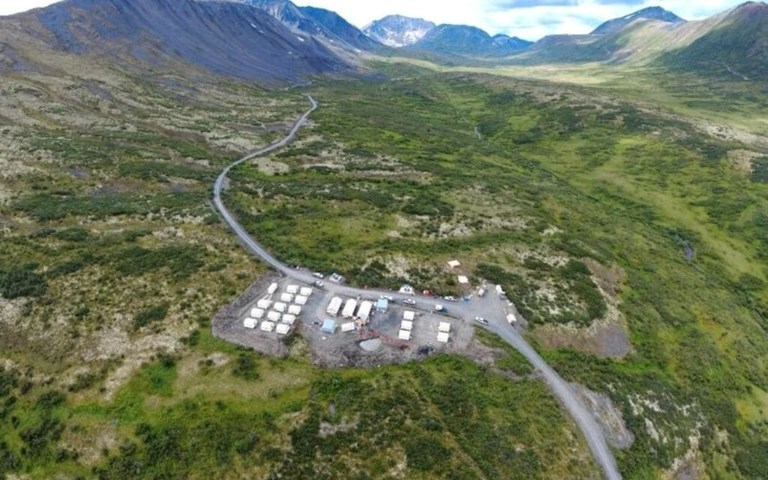
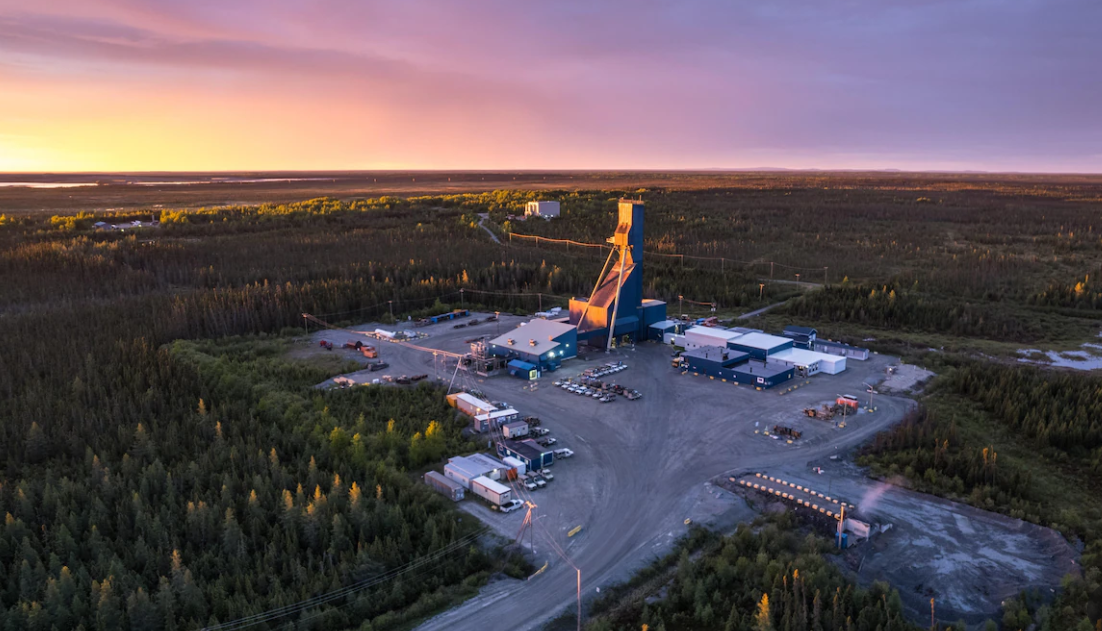
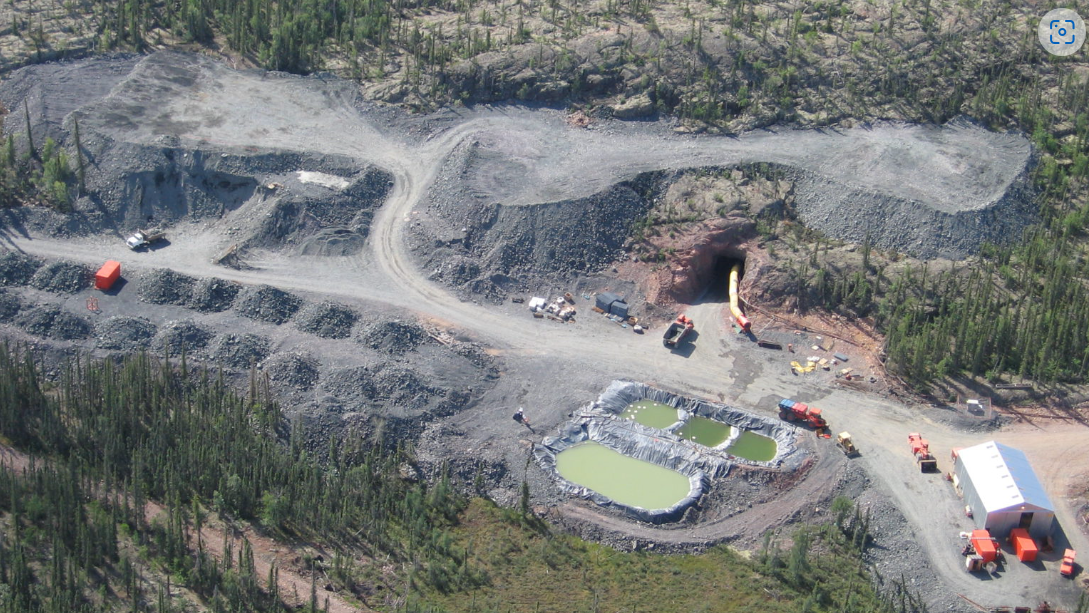
Fireweed Metals’ Mactung tungsten project, located in the Yukon, is set to undergo further engineering, technical and validation work with support from new federal funding announced on Monday. Courtesy of Fireweed Metals.
Welcome back to your weekly mining news recap, where we catch you up on some of the news you may have missed. This week’s headlines include the B.C. Supreme Court ordering further consultation on Seabridge Gold’s KSM project, Nutrien considering the construction of a potash export terminal in the United States and Cambrian College receiving funding to develop a mobile electric vehicle charger for underground mines.
On Tuesday, Manitoba appointed Stacy Kennedy as its first chief mining officer, The Globe and Mail reported. Kennedy will focus on reducing regulatory barriers and advancing infrastructure projects as the province aims to triple mineral production within five years. She brings nearly 20 years of experience at Vale Base Metals and will serve a five-year term. The province has allocated $5 million annually to her new department to support these efforts.
Agnico Eagle Mines plans to recruit around 10,000 workers company-wide by 2030 to largely support its domestic growth projects and boost annual output by up to 30 per cent, The Northern Miner reported. While the company has already hired 3,500 of these workers, it still faces industry-wide workforce shortages. To achieve its goal of exceeding four million ounces of annual gold production in the 2030s, Agnico plans to fund key Canadian projects internally while expanding graduate recruitment, specialized training programs and the recruitment of Indigenous workers.
Fireweed Metals will receive up to $14 million from Natural Resources Canada to advance its Mactung tungsten project in the Yukon. The funds will go towards engineering, technical work and validation as the company progresses towards a final investment decision. According to the federal government, the Mactung project contains one of the world’s largest undeveloped high-grade tungsten deposits.
On Thursday, a B.C. Supreme Court judge struck down a decision designating Seabridge Gold’s KSM copper-gold-silver project as “substantially started,” ordering the provincial government to conduct "deep consultation” with the Tsetsaut Skii km Lax Ha Nation, The Canadian Press reported. While Seabridge maintains the project met the requirements for the designation, Chief Darlene Simpson warned that its proposed tailings facility poses serious long-term environmental risks.
Nutrien has signed a lease to build a potential US$1 billion potash export terminal at the Port of Longview in Washington State, The Globe and Mail reported. When construction is completed, which could be as early as 2032, the facility would ship five to eight million tonnes of Saskatchewan-mined potash annually to markets in Asia. A final investment decision for the project is expected in 2028. Meanwhile, the Port of Vancouver is trying to convince Nutrien to reconsider its choice of location and use B.C. infrastructure instead.
Cambrian College will receive $300,000 in federal funding over two years to partner with industry on what could be Canada’s first mobile, high-power charging system for battery-electric mining vehicles, The Sudbury Star reported. The planned rugged, skid-mounted system, which will be developed with power management company Eaton, would combine a large battery and fast charger to provide portable charging for vehicles in underground mining operations. The project will help to support Canadian miners’ transition away from diesel-powered equipment while giving students hands-on experience in clean energy technologies.
Canada will broaden tariff exemptions to cover 32 additional Chinese steel and aluminum tariff items and prolong existing relief through 2028 following discussions between Prime Minister Mark Carney and Chinese President Xi Jinping, Mining.com reported. The measures aim to ease costs for Canadian manufacturers facing domestic supply shortages while maintaining broader import surtaxes designed to protect steel and aluminum production in Canada. In exchange, China will offer further tariff relief on approximately $400 million in Canadian pork, fish and seafood exports.
Freeport-McMoRan will pay around $110 million for a 51 per cent controlling stake in TDG Gold’s Aurora West project in British Columbia, The Northern Miner reported. Freeport could increase its ownership to 75 per cent in the main joint venture and acquire full ownership of two additional claims by funding $80 million in exploration and paying TDG a further $40 million.
Panama has begun discussions with First Quantum Minerals over a possible reopening of the Cobre Panama mine, The Globe and Mail reported. Any agreement would still be subject to legal and environmental conditions. The mine was shut down in 2023 after the country’s Supreme Court ruled its mining contract to be unconstitutional.
Mynwell aims to transform mine site health care by treating workers like athletes, prioritizing injury prevention and early intervention over reactive treatment, Andrew Snook reported for CIM Magazine. Mynwell co-founder and director of health and wellness services Mario Causevic highlighted how on-site physical and mental health services, particularly at remote sites, can improve recovery, reduce injuries and address challenges unique to mining operations. By combining specialized care, education and workplace-specific prevention strategies, Mynwell hopes to make workforce wellness an essential part of mining safety.
That’s all for this week. If you’ve got feedback, you can always reach us at editor@cim.org. If you’ve got something to add, why not join the conversation on our Facebook, Twitter, LinkedIn or Instagram pages?