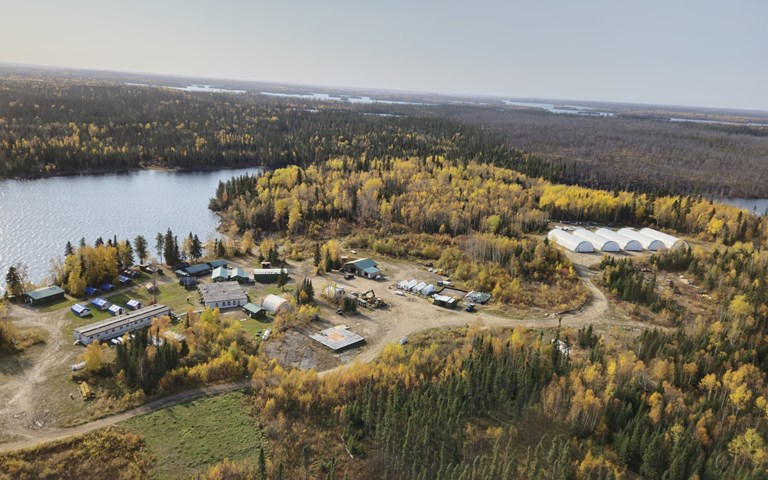
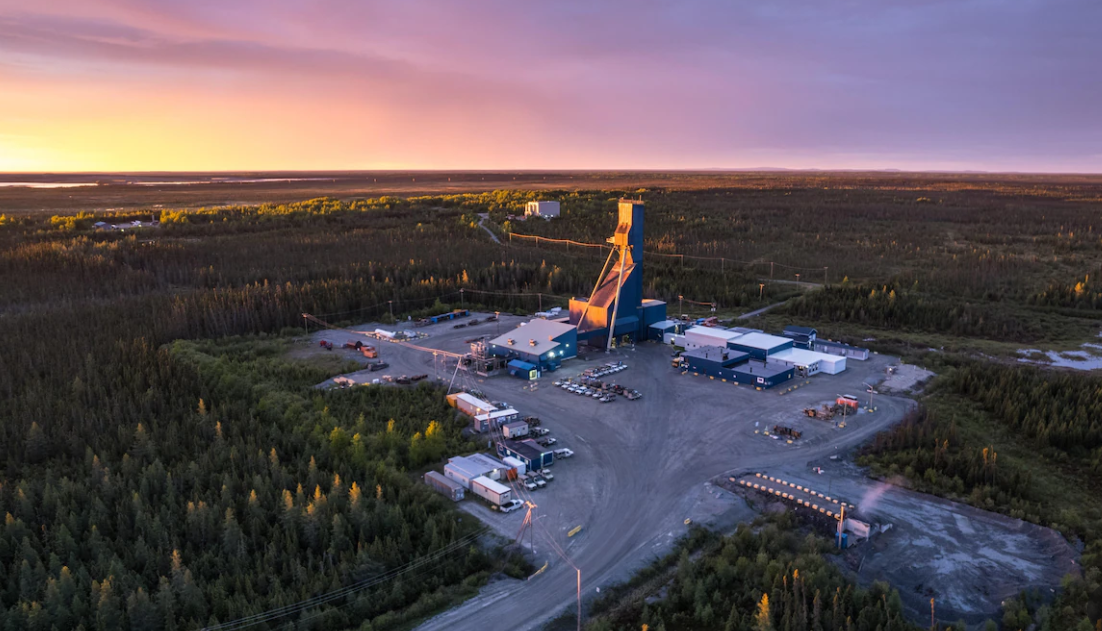
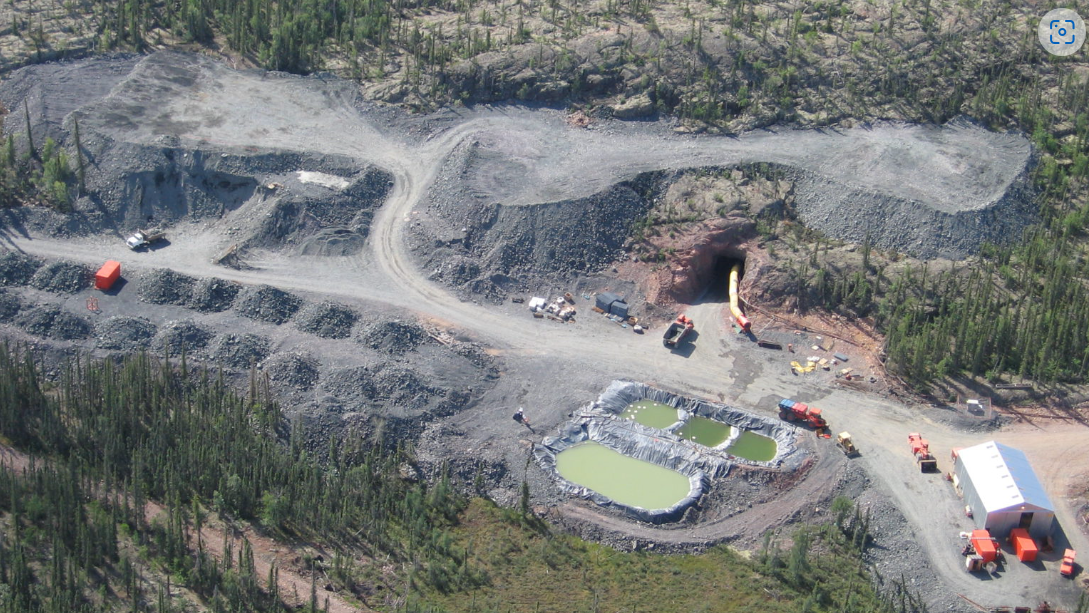
First Mining Gold's Springpole gold project, located in northwestern Ontario, received provincial environmental approval on Monday. Courtesy of First Mining Gold.
Welcome back to your weekly mining news recap, where we catch you up on some of the news you may have missed. This week’s headlines include a battery-electric haul truck trial beginning at an Ontario graphite mine, new funding from the BHP Foundation to support First Nations negotiations on major Canadian projects and a legal setback for U.S. deep-sea exploration leases.
First Mining Gold announced on Monday that it secured environmental assessment approval for its proposed $1.6 billion Springpole open-pit gold project in Ontario, The Northern Miner reported. The project secured federal approval in June. The company aims to complete a feasibility study and secure financing in 2027. A 2025 prefeasibility study projected average annual gold production of 281,000 ounces over an initial 9.4-year mine life.
Ontario plans to introduce legislative and policy reforms to speed up mine development and mineral exploration. Announced on Tuesday, the proposed measures include simpler exploration permitting requirements, three-year early exploration plans, an end to renewals of inactive mining leases and tougher enforcement measures to address non-compliance. The province also intends to centralize oversight of mine tailings storage facilities within the Ministry of Energy and Mines. The legislation is expected to be introduced in the upcoming days.
Australian uranium mining company Peninsula Energy suspended operations at its Lance uranium project in Wyoming following a cybersecurity incident detected on Nov. 20. The attack appears to have been directed at the project’s plant and wellfield control systems, with corporate and administrative functions unaffected. Peninsula has enlisted external specialists to investigate the incident and oversee recovery efforts. Trading of Peninsula shares has been halted since Monday.
Global Battery Materials launched a battery-electric haul truck trial at its Kearney graphite project in Ontario this week ahead of a planned full mine restart by 2028. Led by MEDATech Engineering with support from Green Graphite Technologies and funding from Natural Resources Canada, the study combines digital modelling with a weeklong field test of a haul truck with a 22-tonne payload capacity. The findings will inform future fleet and infrastructure decisions and help assess operating costs and potential emissions reductions.
Canada’s First Nations Major Projects Coalition (FNMPC) will receive $5.6 million in funding from the BHP Foundation to help First Nations across the country negotiate ownership and partnership agreements for major projects. The funding, which extends through March 2031, will give FNMPC’s over 200 member First Nations increased access to commercial expertise and resources to help them structure agreements that protect community interests and support economic self-determination in major project development.
A U.S. federal court ruled this week that the planned sale of deep-sea surveying leases would violate the country's Endangered Species Act. The leases near the Northern Mariana Islands, a U.S. territory, were scheduled to be sold on December 16. The judge ruled that the surveying permits might eventually lead to mining, yet the impact on biodiversity caused by the extraction of polymetallic nodules had not yet been adequately assessed.
The Saskatchewan Research Council (SRC) released TracePoint this month, an automated mineral analysis system developed in partnership with Hitachi High-Tech Canada, I, Ashley Fish-Robertson, reported for CIM Magazine. The technology uses robotics, advanced analytical instruments and AI-assisted data interpretation to examine individual mineral grains and their chemical composition. SRC aims to reduce sample turnaround times from months to weeks, while providing exploration companies with more detailed data that could reveal previously overlooked opportunities across multiple commodities.
New digital technologies are helping mining companies adapt their plans to changing site conditions, Kristen Frisa reported for CIM Magazine. ABB’s operations management system connects information across mine operations to support real-time scheduling adjustments, while Datamine’s MineScape software uses digital twins to keep geological models and mine schedules current. Strayos uses artificial intelligence to assess rock conditions from field data to improve drilling and blasting outcomes.
That’s all for this week. If you’ve got feedback, you can always reach us at editor@cim.org. If you’ve got something to add, why not join the conversation on our Facebook, Twitter, LinkedIn or Instagram pages?