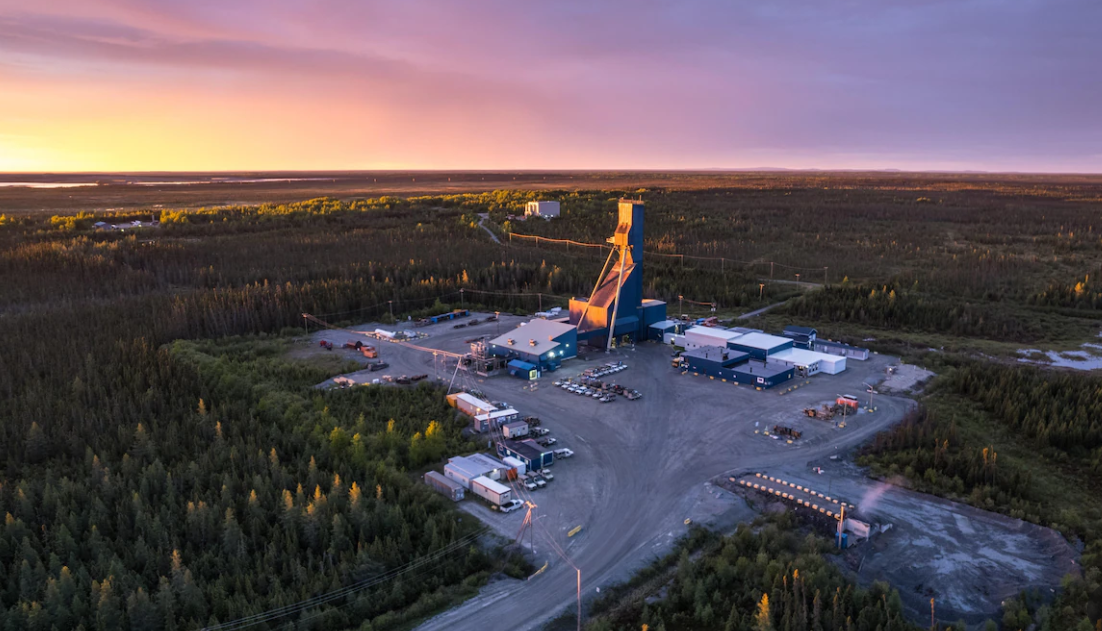
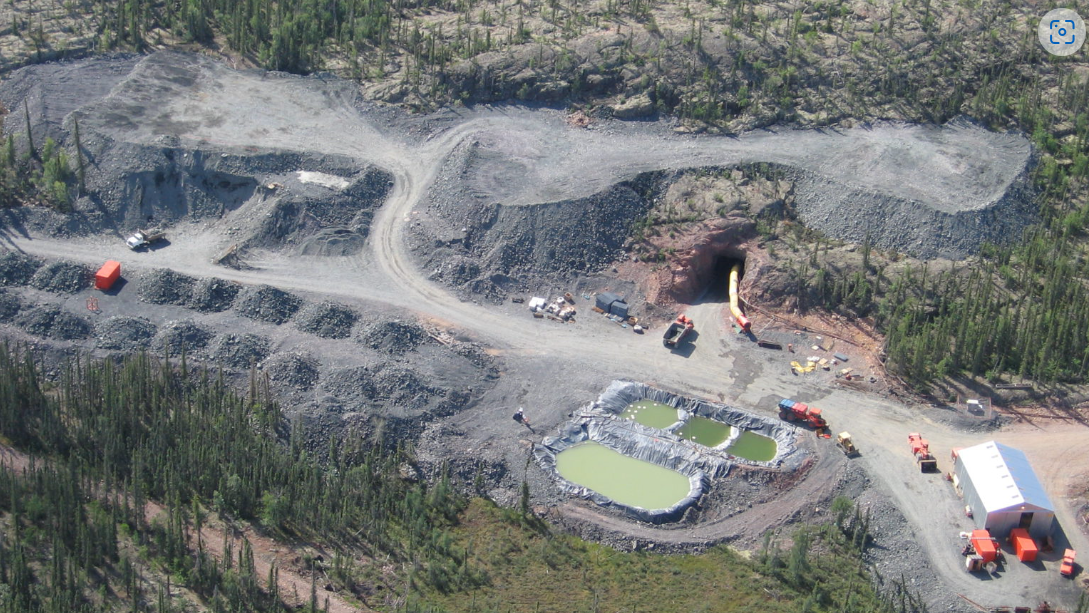
NORCAT’s underground centre, which opened in 1997 at the former Fecunis Adit copper mine in Sudbury, Ontario, will receive federal funding to expand its capacity to test mining and defence-related technologies. Courtesy of NORCAT.
Welcome back to your weekly mining news recap, where we catch you up on some of the news you may have missed. This week’s headlines include ongoing U.S. sanctions on Cuba triggering layoffs at Sherritt International’s Canadian operations, the Saskatchewan Research Council launches a new tool to improve mineral exploration and Ontario to fast-track Mayfair Gold’s Fenn-Gib gold project.
The federal government released Budget 2026 on Thursday, proposing $2.3 billion in new support for Canada’s critical minerals sector to strengthen domestic production and processing. The budget would also extend the Mineral Exploration Tax Credit and Critical Mineral Exploration Tax Credit for an additional five years to 2032 and add antimony as a critical mineral eligible for the credit. Other measures include tax relief for helium exploration and more incentives for mining investment. The budget also proposes to commit $518.5 million to advance Canada’s nuclear energy strategy.
The Canadian federal government is investing $4.5 million to help NORCAT expand its underground innovation centre in Sudbury, Ontario, as the organization moves beyond its traditional focus on mining technology to support defence-related testing. The expansion will give companies a place to develop and test dual-use technologies for both sectors, including robotics, artificial intelligence, autonomous systems and GPS-independent navigation. The project will also allow for larger equipment and more complex trials, with completion expected in about two years.
The Snowline exploration team, the Citxw Nlaka’pamux Assembly and Cupric Canyon Capital will be among those recognized at PDAC’s awards event at its annual convention in March 2027. The awards celebrate significant contributions to both Canadian and global mineral exploration and development and recognize achievements in sustainability, Indigenous leadership and more.
Sherritt International announced plans on Wednesday to temporarily lay off about 280 Canadian employees for around 90 days as U.S. sanctions on Cuba continue to affect its operations, The Globe and Mail reported. The company’s refinery in Alberta has been idle since June due to a lack of feed material, which comes from its joint venture nickel and cobalt operations in Cuba. Sherritt secured its first U.S. emergency licence in October, allowing fuel and sulfur shipments to its Cuban operations, but further approvals are still required for mining and processing to restart.
The Saskatchewan Research Council, in partnership with Hitachi High-Tech Canada, launched TracePoint on Wednesday, which it describes as the world’s first fully automated indicator mineral analysis workflow. The service automates sample preparation and combines micro-X-ray fluorescence with scanning electron microscopy and energy-dispersive spectroscopy to analyze till samples for mineral grains. The process produces larger, quantitative datasets that can help mining companies refine exploration targets and make more informed decisions.
Ontario added Mayfair Gold’s Fenn-Gib gold project near Timmins to its accelerated permitting program on Monday, The Northern Miner reported. The province’s One Project, One Process coordinated review process aims to streamline provincial approvals. Mayfair is targeting construction of the project to start in 2028. A prefeasibility study released in January outlined initial development costs for Fenn-Gib at around $450 million.
Some more mining companies released third quarter financial results this week, including The Mosaic Company, Artemis Gold, Cenovus Energy, Ivanhoe Mines, Hecla Mining, Suncor Energy, Pan American Silver, B2Gold, Wesdome Gold Mines, Trekor Metals, Denison Mines, Lundin Gold, Coeur Mining, Wheaton Precious Metals, Lundin Mining, Iamgold and Imperial Metals.
The BC Securities Commission (BCSC) issued a warning to investors on Monday about crypto tokens marketed as being backed by mineral deposits that issuers have no intention of mining. The issuers claim they are a way for investors to buy, hold and transfer interests in deposits through blockchain technology. These promotions may reference technical reports or mineral resource estimates, but the BCSC noted that these documents alone do not establish a deposit’s economic value.
Mining companies are being encouraged to address the underlying causes of worker fatigue rather than relying primarily on systems that can detect drowsiness after performance begins to decline, Lynn Greiner reported for CIM Magazine. Several experts recommended a broader approach that considers shift schedules, commuting, sleep opportunities and workplace conditions such as lighting, noise and heat. Combining preventive strategies, measures to maintain alertness during shifts and fatigue monitoring across sites could improve worker safety.
Although AI can help mining companies identify stakeholder concerns and emerging risks, it cannot replace human judgment, leadership or trust building, argued Chafika Eddine for CIM Magazine. Eddine explained that the industry must also invest in the people responsible for implementing responsible mining practices, while treating stakeholder concerns as important risk signals.
That’s all for this week. If you’ve got feedback, you can always reach us at editor@cim.org. If you’ve got something to add, why not join the conversation on our Facebook, Twitter, LinkedIn or Instagram pages?