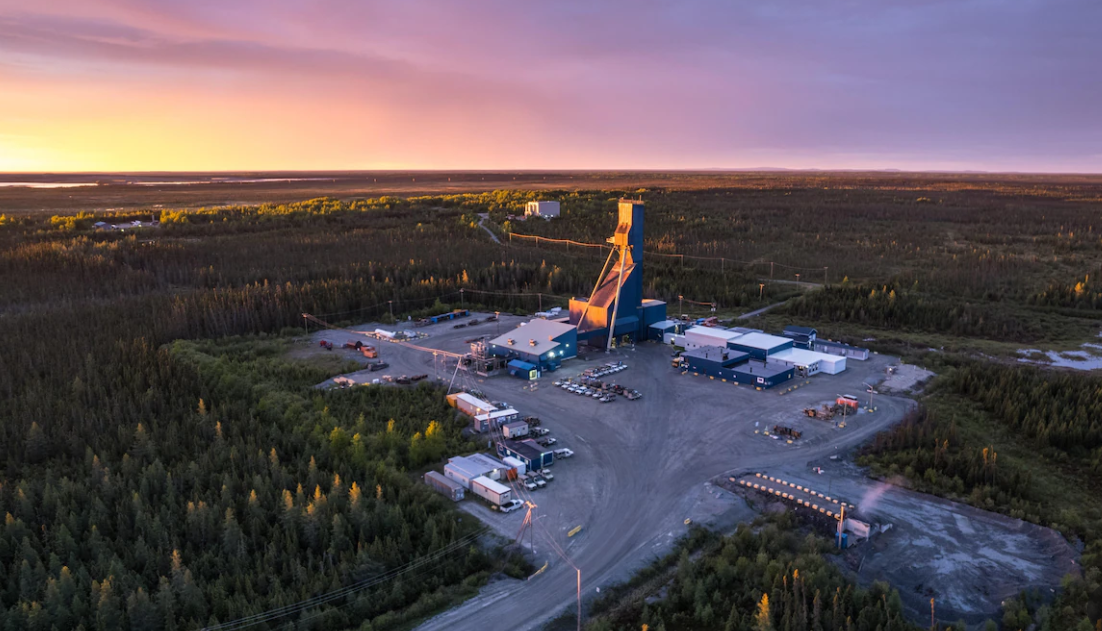
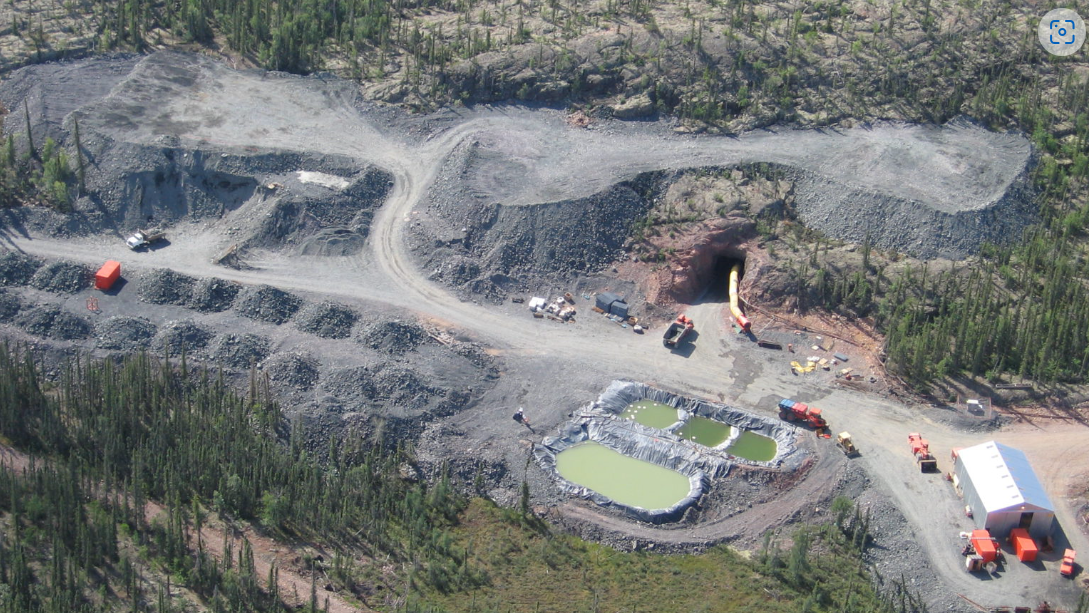
The proposed Pine Point zinc mine site in the Northwest Territories, owned by Pine Point Mining Limited. Courtesy of Osisko Metals.
Welcome back to your weekly mining news recap, where we catch you up on some of the news you may have missed. This week’s headlines include a collaboration between McGill University and Nouveau Monde Graphite on battery materials, Cambria Gold Mines targeting a late-2027 restart of its Premier mill and Laurentian University working to attract more mining students.
The Northwest Territories government is asking Ottawa for two tax changes to encourage critical minerals development in the territory, Cabin Radio reported. One proposal is to introduce an additional 15-per-cent “North of 60” mineral exploration tax credit for projects in Canada’s three territories to help offset higher operating costs. The other proposal would make zinc projects eligible under the federal Clean Technology Manufacturing Investment Tax Credit. Territorial officials say the changes could improve project economics and attract investment, potentially benefiting proposed N.W.T. zinc mines such as Pine Point and PC Silver.
Mayfair Gold has reached a financing agreement with Macquarie Bank for up to $310 million to advance its Fenn-Gib gold project in Ontario, Canadian Mining Journal reported. The proposed funding includes a $300 million project loan and a $10 million equity investment towards the project’s estimated $450 million initial development cost.
The Canadian Steel Producers Association expects U.S. steel tariffs to remain in place over the long term, as Stelco workers in Hamilton, Ontario, face layoffs amid the trade dispute, Global News reported. The United Steelworkers union expects 300 to 350 workers to lose their jobs at the Hamilton plant, with additional cuts anticipated at Stelco’s Lake Erie Works in Nanticoke. On Oct. 5, the federal government gave Stelco’s U.S.-based owner Cleveland-Cliffs five business days to provide a plan to maintain jobs, warning that it could pursue legal action over commitments made as part of its acquisition of the company in 2024.
Nouveau Monde Graphite (NMG) has developed a bio-based coating process with McGill University for coated spherical purified graphite (CSPG), a processed form of graphite used in anode materials for lithium-ion batteries. The process replaces the petroleum-derived pitch normally used to coat the graphite with a bio-based material, which NMG anticipates could reduce direct emissions from the coating stage.
Cambria Gold Mines is aiming to restart the Premier gold mill in British Columbia during the fourth quarter of 2027, Canadian Mining Journal reported. The company’s first restart attempt, when it operated as Ascot Resources, ended in 2024 after delays in underground development left it without enough ore to sustain processing. The 2,500-tonne-per-day mill would initially process material from three of the site’s deposits. An updated feasibility study, expected in the first half of 2027, will outline a revised mine plan, production schedule and restart costs.
Laurentian University in Sudbury, Ontario, outlined a five-year strategy on Wednesday to strengthen its position as Canada’s leading mining university and attract more students to the industry, CTV News reported. The plan, which runs from 2026 to 2031, includes a fundraising target of $10 million. The university also hosted a forum on Wednesday connecting students with potential employers, with plans to make the event an annual opportunity to showcase career paths in the industry.
Trekor Metals reported 41 million pounds of copper production in the third quarter from its Gibraltar operation in British Columbia and its Florence Copper in-situ project in Arizona. Gibraltar produced 34 million pounds, while Florence Copper produced seven million pounds. Trekor also raised its 2026 Gibraltar production guidance to 115 million to 120 million pounds, up from 110 million to 115 million. Florence Copper is now expected to produce 25 million to 28 million pounds in 2026, with its ramp-up to full production capacity expected to be completed in early 2027.
In a Q&A with Alexandra Lopez-Pacheco for CIM Magazine, York University PhD research scholar Khyati Joshi discussed her work to recover rare earth elements from Alberta’s oil sands tailings using bio-based acids produced by microorganisms. The approach could turn oil sands tailings into a secondary source of these critical metals while helping to reduce environmental liabilities. Joshi also explained the potential and limitations of organic acid leaching, the challenges of scaling up the process and its possible applications beyond oil sands tailings.
That’s all for this week. If you’ve got feedback, you can always reach us at editor@cim.org. If you’ve got something to add, why not join the conversation on our Facebook, Twitter, LinkedIn or Instagram pages?