Prime Minister Mark Carney speaks at Canada’s first Investment Summit in Toronto on Sept. 15, 2026, which brought together investors from nearly 30 countries. Courtesy of Mark Carney via LinkedIn.
Welcome back to your weekly mining news recap, where we catch you up on some of the news you may have missed. This week’s headlines include Osisko Gold moving ahead with its Cariboo gold project in British Columbia, financing for Generation Mining’s Marathon copper-palladium project in northwestern Ontario and Canada Nickel selecting fleet suppliers for its Crawford nickel project in Ontario.
On Monday and Tuesday, the first Canada Investment Summit took place in Toronto. The event united investors, businesses and financial institutions from around the world to promote investment in Canada and build partnerships that support economic growth and major projects.
During the summit on Tuesday, the federal government unveiled the Productivity Mega Deduction tax incentive. This will allow businesses to immediately write off the full cost of assets representing more than 65 per cent of capital investment in the year they become available for use. For mining, the measure could cover a broad range of eligible machinery, equipment and infrastructure. The Mining Association of Canada welcomed the proposal, saying it could lower the effective cost of investment and support new mines and expansions.
Speaking at the summit, Teck Resources Limited CEO Jonathan Price called for greater investment in electricity and transportation infrastructure to help develop Canada’s remote mineral deposits, The Globe and Mail reported. He cited the Ring of Fire region in northern Ontario and B.C.’s Golden Triangle region as areas where such investment is needed. Price said improved access to power, roads, rail and ports would support the development of new mines. He also credited recent changes to Canada’s permitting process with helping move major projects forward more quickly.
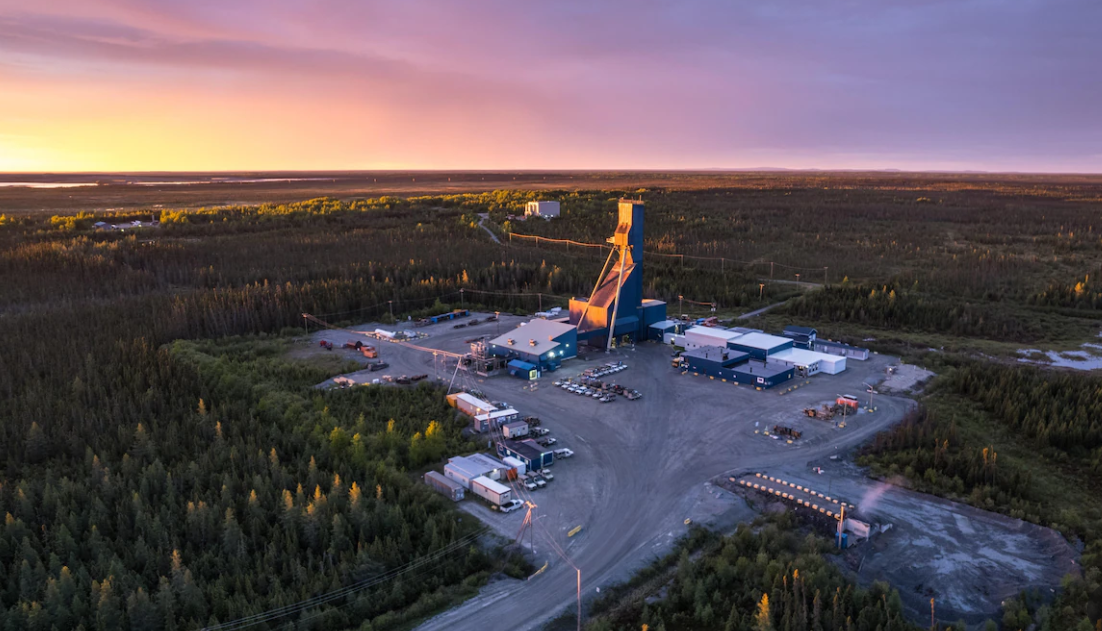
Osisko Gold’s board has approved construction of the Cariboo gold project in British Columbia. First gold is anticipated in the first quarter of 2029. The company estimates it will cost $990 million to get to production. A 2025 updated feasibility study for the project outlined average annual production of around 190,000 ounces over a 10-year mine life, including an average of 202,000 ounces per year during the first five years.
Generation Mining has raised the final $340 million of the estimated $1.3 billion budgeted to build its Marathon copper-palladium project in Ontario. The company plans to begin early construction work in the fourth quarter of 2026, following a final investment decision. In addition to copper and palladium, Marathon is also expected to produce platinum, gold and silver over an estimated 13-year mine life.
Canada Nickel has chosen Komatsu and its dealer SMS Equipment to provide the load and haul fleet for its Crawford nickel project in Ontario. More than 300 machines collectively worth about $1.5 billion are planned for purchase over the project’s 40-year life. The companies are expected to finalize agreements in the first quarter of 2027.
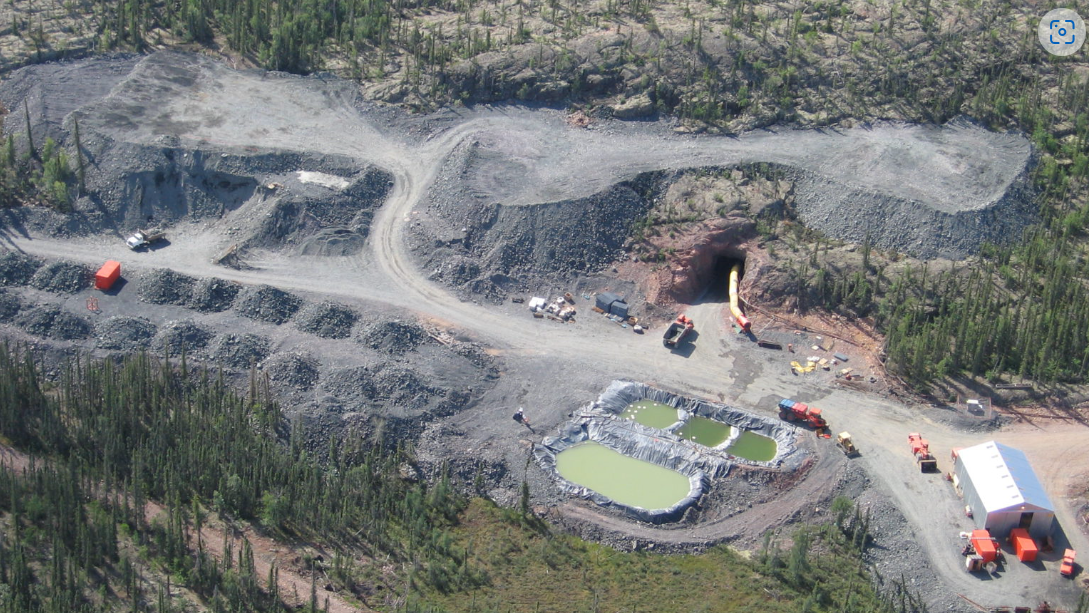
1911 Gold said on Wednesday that it has advanced work at its True North gold project in Manitoba, completing dewatering of the site’s A-Shaft and Level 26 and bringing the Level 16-to-26 ore-pass chute into operation. Underground mining contractor SCR Mining & Tunnelling has also deployed crews and equipment to the site. Infrastructure upgrades are underway across the mine and mill, including ventilation improvements, construction of the new crusher-building foundation, commissioning of the primary ball mill and recommissioning of the assay lab. The work will pave the way for test mining this fall before a planned 2027 production decision.
Agnico Eagle Mines CEO Ammar Al-Joundi said the company is not interested in investing in Barrick Mining’s proposed North American initial public offering, Reuters reported. Barrick plans to sell a 10 per cent to 15 per cent stake in its North American business through a dual listing in Toronto and New York. Al-Joundi said Agnico is focused on its own operations and, when asked whether the company might eventually seek to acquire Barrick’s Nevada assets, said that decisions would rest with Barrick’s board and management.
Deep-sea mining is moving closer to commercial development, but international rules governing the industry are still taking shape, Mehanaz Yakub reported for CIM Magazine. The International Seabed Authority is still negotiating its Mining Code, while the United States is pursuing a separate regulatory pathway for mining in international waters. Companies are advancing technologies to recover polymetallic nodules containing high concentrations of nickel, cobalt, copper and manganese from depths of up to 6,000 metres below the ocean surface. Scientists, however, continue to raise concerns about environmental impacts and gaps in knowledge around deep-sea ecosystems.
In February, MineConnect received $1.5 million over three years to expand and digitize MineOpportunity, a board game that introduces high school students to mining careers, Kelsey Rolfe reported for CIM Magazine. Created at Laurentian University in 2005, the game has reached more than 4,000 students through annual competitions in northern Ontario. The funding will support a hybrid version that can reach schools across the province, as well as new content developed with First Nations communities.
That’s all for this week. If you’ve got feedback, you can always reach us at editor@cim.org. If you’ve got something to add, why not join the conversation on our Facebook, Twitter, LinkedIn or Instagram pages?