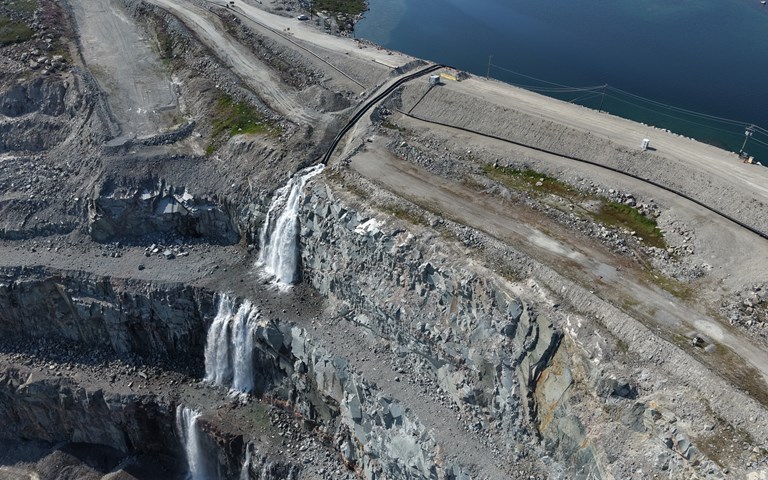
Siphons transfer water from Lac de Gras into the A21 pit at the Diavik diamond mine. Courtesy of Rio Tinto.
Welcome back to your weekly mining news recap, where we catch you up on some of the news you may have missed. This week’s headlines include funding for the Bégin–Lamarche phosphate project in Quebec, EMP Metals completing construction of its Saskatchewan lithium-brine demonstration plant and Kal Tire extending its payload management services through a new agreement.
Canada Nickel’s Crawford nickel project near Timmins, Ontario, has passed federal review, clearing a major hurdle towards construction. The company is now pursuing financing, engineering work and remaining permits, targeting an investment decision in 2027. Over a life of 41 years, the mine could yield 1.6 million tonnes of nickel.
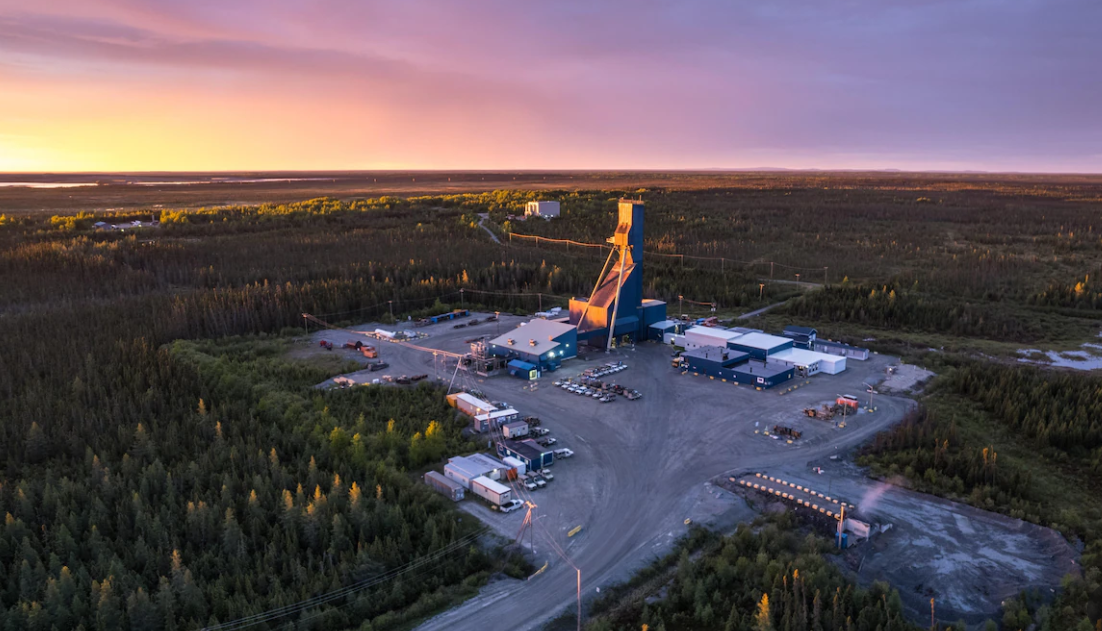
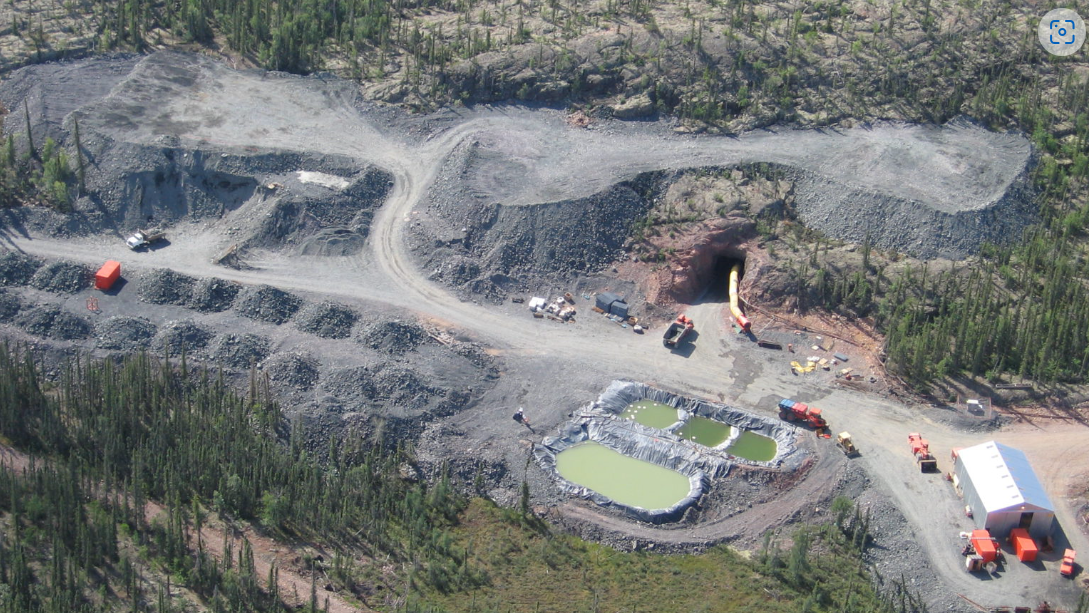
Rio Tinto announced on Thursday that it has started filling three mined-out pits at its Diavik diamond mine in the Northwest Territories with water, Cabin Radio reported. The Diavik mine ceased production in March after 23 years of operations. Following a decommissioning phase, the company activated nine siphons to fill the A21, A418 and A154 pits with water from Lac de Gras. The process is expected to take six to 12 months, and once the filling is complete and the water quality is confirmed to meet required criteria, the pits will be reconnected to Lac de Gras. Rio Tinto said that Diavik remains on schedule to complete active closure activities by 2030.
The Alberta Energy Regulator has approved Coalspur Mines’ expansion of the Vista open-pit thermal coal mine near Hinton without a public hearing, CBC News reported. The project is also proceeding without a federal impact assessment. The expansion would add over 630 hectares of land to the mine’s footprint, raise annual production to 15 million clean tonnes of thermal coal and extend the mine’s life by 12 years. Conservation groups warned the expansion could harm local watersheds and affect at-risk species downstream, while the regulator said permit conditions adequately address environmental concerns.
Natural Resources Canada is providing nearly $5 million to First Phosphate for studies, design and planning related to power transmission and transportation infrastructure for its Bégin–Lamarche phosphate project in Quebec. First Phosphate will match the contribution. The work will examine potential connections to regional rail links and the Port of Saguenay, and help to advance a mine that is targeting production in 2029.
EMP Metals has completed construction of the Project Aurora lithium-brine demonstration plant at its Viewfield project site in Saskatchewan, Mining.com reported. The facility has been connected to production and disposal wells, is about halfway through commissioning and remains on schedule to begin demonstration operations in the third quarter of 2026. The plant will validate process performance, optimize operating parameters and generate engineering and economic data for a future commercial-scale facility capable of producing more than 3,000 tonnes of lithium products annually.
Kal Tire’s Mining Tire Group has partnered with Transcale, an Australian payload management company, to expand fleet optimization services across Canada, Canadian Mining Journal reported. Kal Tire will handle sales, installation, calibration, training and support for Transcale’s weighing, 3D scanning and data systems in Canada. The partnership aims to help mine operators improve payload accuracy, prevent overloading, boost productivity and better understand fleet performance across surface and underground operations.
Artemis Gold shared that the Phase 1A expansion at its Blackwater gold mine in British Columbia was 57 per cent complete at the end of the second quarter. The $120-million project will increase the processing plant’s nameplate processing capacity from six million to eight million tonnes annually, and commissioning remains on track for the fourth quarter of 2026. Major works construction has also begun on the site’s $1.44 billion EP2 expansion, which will further boost Blackwater’s processing capacity. Together, the two expansions are expected to increase total throughput capacity to 21 million tonnes annually by the fourth quarter of 2028.
More companies released second quarter results this week, including Equinox Gold, Trekor Metals, Lundin Mining, Fortuna Mining, McEwen Mining, Artemis Gold, Nutrien, Coeur Mining, Hecla Mining, Suncor Energy, Iamgold, Wheaton Precious Metals, Torex Gold, Lundin Gold, B2Gold and Imperial Metals.
Westinghouse Electric, owned 51 per cent by Brookfield Renewable and 49 per cent by Cameco, has confidentially filed for a U.S. initial public offering, The Globe and Mail reported. The number of shares, price range and timing have not yet been determined. A US$30 billion valuation would represent a key target under Westinghouse’s strategic partnership with the U.S. government. The agreement also includes plans to build eight to 10 large nuclear reactors across the United States and for the U.S. Department of Energy to provide up to US$17.5 billion in loans for early equipment purchases.
The federal government is seeking feedback to refresh its Critical Minerals Strategy. The updated strategy will prioritize domestic critical mineral production and processing, along with stronger partnerships with Indigenous groups, provinces, industry and international allies. Eligible stakeholders can submit input through the federal Request for Information form by Aug. 14.
Canada’s critical minerals financing landscape is being reshaped by government incentives, international capital and strategic investors, argued Carlos da Costa for CIM Magazine. He said conditions attached to public funding, discretionary national security reviews, trade obligations and expectations for Indigenous participation are creating complex legal and commercial uncertainties. A more coherent statutory framework defining the state’s role would help strengthen transparency and accountability while supporting long-term capital investment.
That’s all for this week. If you’ve got feedback, you can always reach us at editor@cim.org. If you’ve got something to add, why not join the conversation on our Facebook, Twitter, LinkedIn or Instagram pages?