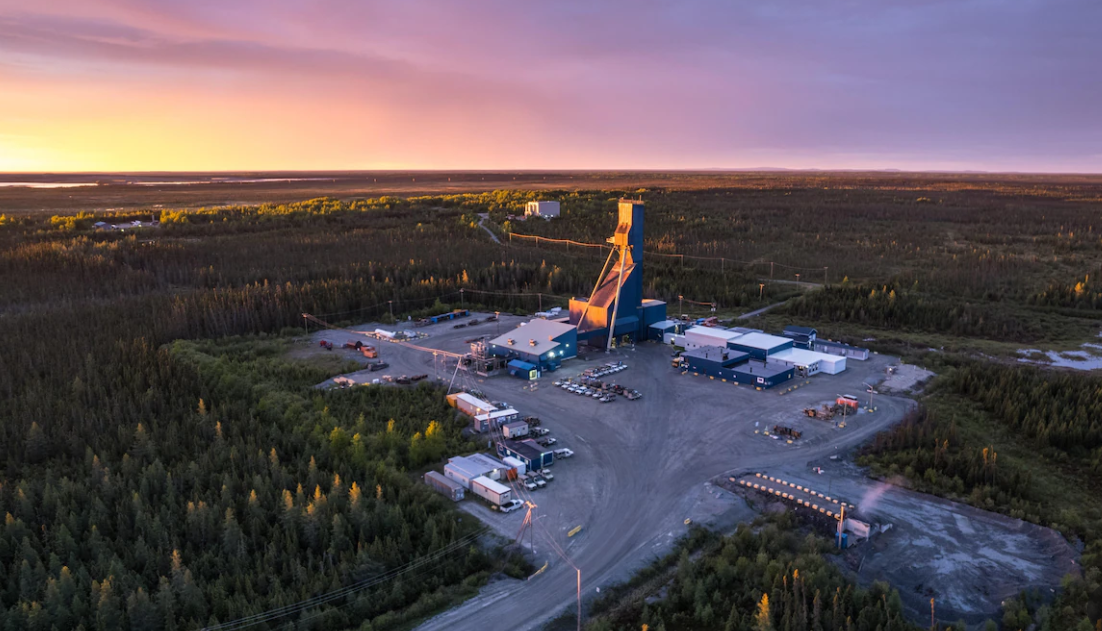
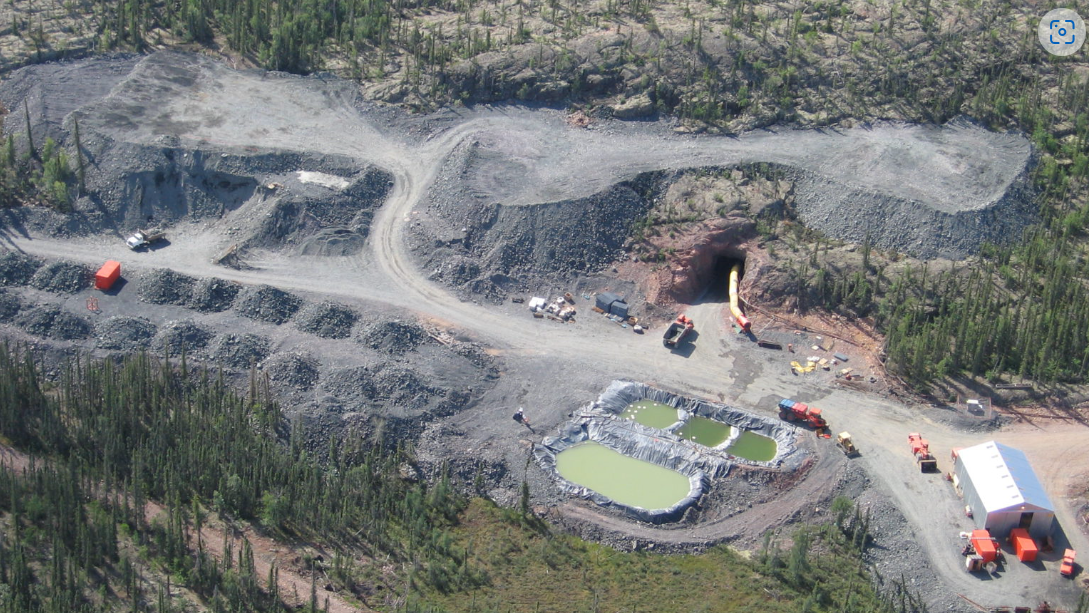
The Ekati diamond mine in the Northwest Territories is set to close after nearly three decades of operation amid ongoing financial strain. Courtesy of Burgundy Diamond Mines.
Welcome back to your weekly mining news recap, where we catch you up on some of the news you may have missed. This week’s headlines include the Angus silica sand project in British Columbia clearing environmental review, Hatch expanding its partnership with a Saudi Arabian mining company and a restart of operations at the Cigar Lake uranium mine.
Alberta, the federal government and Canada’s five largest oil sands producers have reached a non-binding agreement to advance the Pathways carbon capture initiative and support plans for a new West Coast pipeline, The Globe and Mail reported. The agreement also creates a framework for expanding oil sands production. The Pathways project will be built in stages, with the first stage expected to begin operations in 2032.
Burgundy Diamond Mines’ Ekati mine in the Northwest Territories will shut down after entering court-supervised receivership on Tuesday, CBC News reported. PricewaterhouseCoopers will oversee operations, maintenance, reclamation and closure. The closure comes despite a $115 million federal loan announced in December 2025 to keep the mine operating and protect jobs. Ekati had been expected to operate until 2029, but falling diamond prices left the company’s subsidiary Arctic Canadian Diamond Co. unable to meet its financial obligations.
Australian miner Genesis Minerals is set to acquire Vault Minerals, gaining ownership of the Sugar Zone gold mine near White River, Ontario, Northern Ontario Business reported. The mine is in the early stages of restarting after a shutdown in 2023. Rival bidder Regis Resources withdrew its bid for Vault on Monday after declining to match Genesis’s offer. The roughly $12.3-billion merger would create a producer that could generate up to 700,000 ounces of gold annually.
British Columbia granted environmental assessment approval on Monday for Vitreo Minerals’ proposed $300 million Angus silica sand mine near Bear Lake, B.C. The project would supply locally produced fracking sand for crude oil and gas operations, replacing U.S. imports. It will now move to the permitting phase and must meet 19 legally binding conditions concerning air quality, impacts on local First Nations communities and more. The mine is initially expected to operate for 20 years.
Canadian engineering firm Hatch signed a strategic delivery partnership agreement on Monday with Saudi Arabian mining company Maaden to support the development and execution of its project pipeline, Mining Weekly reported. The deal follows a memorandum of understanding signed in January at the Future Minerals Forum. Hatch has worked with Maaden in Saudi Arabia for more than three decades, delivering projects involving gold, phosphate, aluminum, alumina and more.
The International Energy Agency’s annual Global Critical Minerals report highlighted how supply risks intensified in 2025 and early 2026 as prices rose and export controls expanded. China continued to dominate the refining of most key energy minerals, while Indonesia led nickel refining. If China’s expanded rare-earth export controls were fully implemented, industries outside China producing an estimated US$6.5 trillion worth of goods each year could face supply disruptions. The report calls for stronger policy support from governments to build more resilient and diversified supply chains.
Operations resumed at Cameco’s Cigar Lake uranium mine in Saskatchewan on Tuesday after a temporary shutdown caused by operational issues at Orano’s McClean Lake mill, where the mine’s uranium ore is processed. The shutdown, which occurred on June 29, stemmed from an expansion joint problem at the mill’s sulfuric acid plant. Both companies say their 2026 production forecasts remain unchanged.
Workplace Safety North (WSN) launched a four- to five-day certification pathway for Ontario mining supervisors to help companies fill positions more quickly while meeting provincial requirements, I, Ashley Fish-Robertson, reported for CIM Magazine. First offered in May, the streamlined training option covers three common core programs and is offered in Sudbury, Timmins and Thunder Bay, with on-site delivery available for companies operating remote mines. WSN will continue to offer its original training pathway and is also offering free refresher courses through March 2027.
Underground mines are using purpose-built scaling machines and remote operation to keep workers away from unstable rock, Renée Sylvestre-Williams reported for CIM Magazine. Simulation training also lets operators practice safely before entering active work areas. As mines become deeper, these changes are helping to reduce injuries while making scaling work more efficient.
That’s all for this week. If you’ve got feedback, you can always reach us at editor@cim.org. If you’ve got something to add, why not join the conversation on our Facebook, Twitter, LinkedIn or Instagram pages?