Collège Boréal officially launched its new Construction Engineering Technician—Civil and Mining program at its Timmins campus last Friday, hosting a ceremony with dignitaries and community partners to mark the occasion. Courtesy of Collège Boréal.
Welcome back to your weekly mining news recap, where we catch you up on some of the news you may have missed. This week’s headlines include Nunavut’s announcement of a new mines and natural resources department, a new two-year civil and mining technician program in Timmins and the signing of an impact benefit agreement for the Windfall gold project in Quebec.
Canada is responding to labour market pressures by launching the Mining and Minerals Workforce Alliance, led by the Mining Industry Human Resources Council with support from the Mining Association of Canada. The initiative, announced at the Mining Society of Nova Scotia Conference on Thursday, will bring together industry, labour organizations, post-secondary institutions and Indigenous partners to address skills gaps and strengthen the mining workforce. It is the first of six planned sector workforce alliances aimed at building talent pipelines and addressing labour shortages across various industries in Canada.
Rio Tinto has begun commissioning a US$1.5 billion expansion of its AP60 aluminum smelter at its Arvida complex in Quebec. The upgrade, expected to be completed by the end of the year, will add 96 new AP60 pots to the smelter and increase its annual primary aluminum production capacity from 60,000 tonnes to around 220,000 tonnes. The AP60 technology is designed to generate lower carbon emissions than traditional aluminum smelting while supporting growing demand for low-carbon aluminum across multiple industries.
Troilus Mining has secured approval for a 70 megawatt power allocation to support construction and future operations at its Troilus copper-gold project in Quebec. The approval from Hydro-Québec and Quebec’s Ministry of Economy, Innovation and Energy will ensure access to the province’s low-carbon hydroelectric grid. Troilus is advancing permitting, engineering and financing activities for its proposed 22-year mine, as outlined in the company’s 2024 feasibility study.
Collège Boréal will introduce a new two-year Construction Engineering Technician—Civil and Mining program at its campus in Timmins, Ontario, Canadian Mining Journal reported. Blending classroom learning with hands-on training, the program is designed to prepare students for technical and supervisory careers in mining, infrastructure development and more. The program will welcome its first cohort in September.
Nunavut will establish a new Department of Mines, Natural Resources and Land (MNRL) that will formally launch on April 1, 2027, which will coincide with the implementation of the territory’s devolution agreement with the federal government, Nunatsiaq News reported. The department will serve as a single point of access for land and resource development matters and will assume responsibility for managing lands and natural resources transferred from Ottawa. According to Nunavut Premier John Main, its mandate will include public lands and freshwater management, oversight of mineral and oil and gas development, and the promotion of geoscience and mineral exploration through a Nunavut Geological Survey.
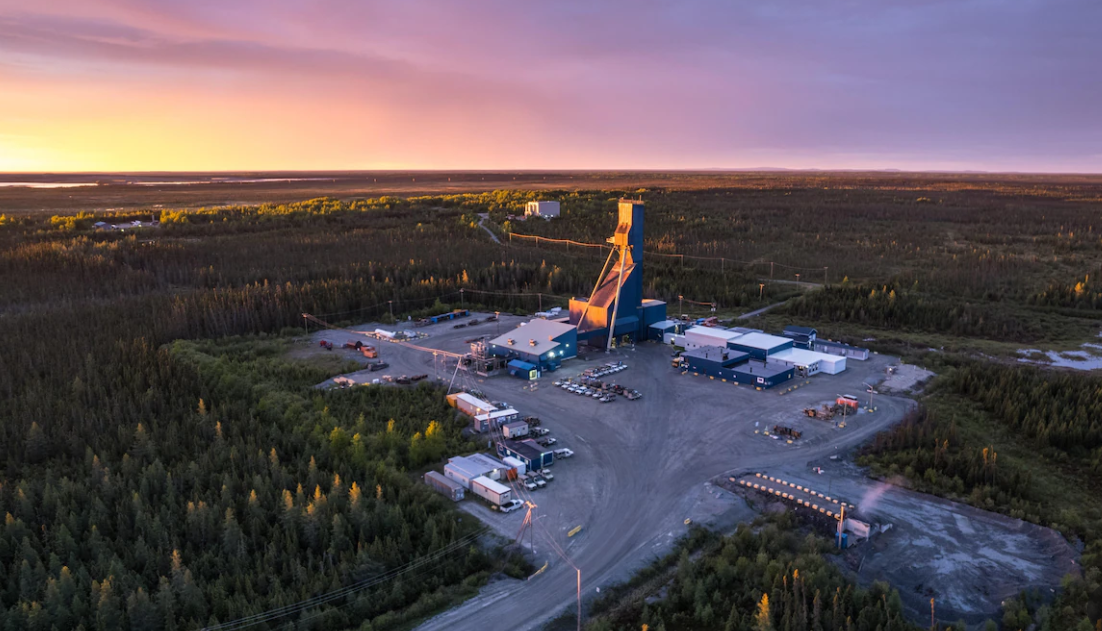
The Cree First Nation of Waswanipi, the Cree Nation government, the Grand Council of the Crees and Gold Fields have signed an impact benefit agreement for the Windfall gold project in Quebec. Known as the Uukiimau Agreement, the deal establishes a framework covering financial, environmental, operational and social commitments, while outlining employment, training and business opportunities for Cree communities. Gold Fields expects to spend $495 million on the Windfall project this year.
Orla Mining confirmed on Friday that operations have restarted at its Camino Rojo gold-silver mine in Zacatecas, Mexico, following the end of an illegal blockade earlier this week. The company said dialogue with employees and union representatives continues on site. After a meeting with the union and labour authorities on Wednesday, all parties agreed to restore normal operations and continue negotiations, and Orla has reaffirmed its annual production guidance for Camino Rojo of 110,000 to 120,000 ounces of gold.
New Found Gold has broadened the scope of its fully funded $44 million 2026 work program at the Queensway gold project in Newfoundland and Labrador. With the addition of two new drill rigs, the program will include roughly 40,000 metres of exploration drilling focused on expanding mineralized zones and testing recent targets. The company is aiming for first gold production in late 2027.
Battery recycling has not yet delivered the expected “closed-loop” outcomes, wrote Manochehr Oliazadeh for CIM Magazine, because converting mixed battery waste into battery-grade materials is technically complex. He explained that lithium-ion batteries are highly engineered products, and recycling struggles to reverse the multi-step production chain needed for strict purity standards. Mixed chemistries and contaminants in black mass further reduce quality. He suggested focusing on intermediate materials, improved sorting and integration with existing chemical refiners.
That’s all for this week. If you’ve got feedback, you can always reach us at editor@cim.org. If you’ve got something to add, why not join the conversation on our Facebook, Twitter, LinkedIn or Instagram pages?