

Rethinking the surface mine Why this next era of surface mining will be built on system change, not silver bullets
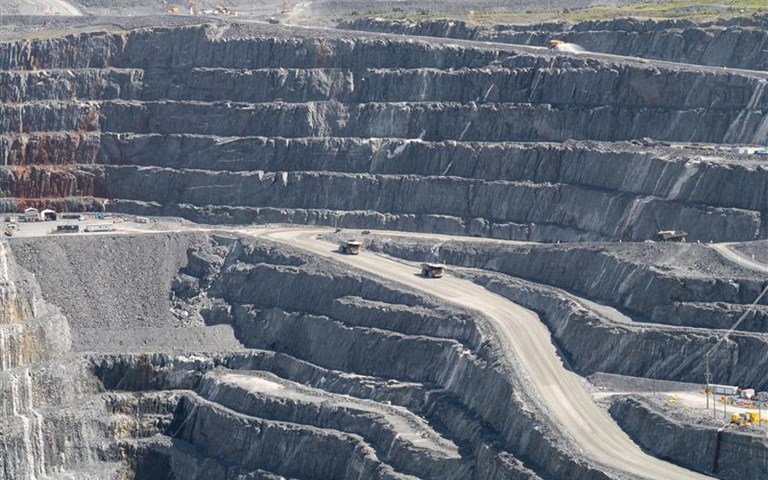
For decades, surface mining has advanced through steady, incremental gains: larger haul trucks, higher-capacity shovels, improved dispatch systems and tighter operational controls. In fact, these advances have delivered measurable productivity improvements across the mining sector. But looking to the future, industry leaders caution that incremental optimization is no longer sufficient.
As surface mines face mounting pressures related to energy supply, workforce availability, capital intensity and long-term mine design, attention is shifting towards system-level challenges. Experts say rather than focusing on individual technologies, the future of surface mining is dependent on how entire operations are designed, powered, integrated and managed over their full life cycle—including how they interact with surrounding communities and environments.
“The industry has done a very good job of optimizing individual pieces of equipment,” said Tim Skinner, president of SMART Systems Group and co-CEO of the Global Mining Guidelines Group (GMG). “But the next level of improvement comes from the integration of the whole operational mining system; getting everything working together.”
That shift in emphasis—from individual assets to integrated systems—runs through nearly every aspect of surface mining’s next phase. Electrification, autonomy, advanced analytics, new planning tools and alternative material handling strategies are advancing at the same time. Yet these technologies also expose constraints that have been easier to manage in the era of surface mines using diesel-powered fleets—namely, power availability, infrastructure readiness, workforce capability, reliability risk and the assumptions embedded in decades of mine design. As a result, Skinner said this next era will work only “if the mine operates as a continuous, total system rather than being siloed.”
Hooman Askari, a researcher and professor of mining engineering at the University of Alberta who also provides consulting services to the mining industry through OptiTek Mining Consulting, agreed that the future of surface mining cannot be framed as a technical transition alone. He said the industry’s ability to modernize will depend in part on whether communities and the broader public believe mining is addressing real environmental and social concerns, and whether the sector communicates its role in modern life with clarity and evidence.
“Mining has a great responsibility today to reduce [greenhouse gas] emissions, use less water, minimize its footprint and engage communities more meaningfully,” he said. “These concerns are real and how we respond to them will shape public trust.”
Along with aspirational emissions reduction targets, Askari said public trust will be earned through visible changes in how mines are designed and operated. In surface mining, where scale and footprint are highly visible, operational decisions carry disproportionate weight in shaping public perception.
When it comes to reducing operational emissions, electrification is sure to be a focal point of the industry’s next phase, he added.
Electrification and the hard limits of power
Fleet electrification is gaining momentum across the mining industry, with OEMs committing to battery-electric and hybrid surface fleets. Yet translating that momentum into widespread deployment at surface mine sites remains challenging.
Unlike underground operations, where fleet electrification has been enabled by confined layouts and shorter haul distances, surface mines must contend with long ramps, variable grades and constantly changing pit geometries. These characteristics complicate charging strategies, energy recovery and infrastructure placement, making electrification as much a mine design challenge as an equipment decision.
Tim Joseph, professor emeritus, mining at the University of Alberta and president and CEO of JPI Mine Equipment and Engineering, cautioned that most surface mines are still far from being ready to adopt electric haulage at scale. “I don’t think any of our surface operations anywhere in the world are quite ready,” he added.
His concern is not whether electrification will happen in surface mining—“it’s still going to be one of the biggest drivers pushing this industry forward,” he said—but what it will demand of mine operations and engineering design. In operations with diesel-powered fleets, haul roads have often been treated as operational details—adjusted as pits evolve. In operations with electric vehicles, road performance becomes a strategic constraint because rolling resistance and gradients directly affect energy use, he explained, requiring more permanent, low-resistance constructed surfaces geared for online battery charging.
“If the rolling resistance isn’t low enough, you’ll use all your energy just to move the vehicle,” Joseph said. “You won’t have enough energy transferred to charge the battery.”
That reality forces mine operators to think differently about pit sequencing and haul road design, longevity and consistency—targeting the life of the mine. Constantly shifting haul routes (a hallmark of most surface operations) will be prohibitively costly for an electric fleet, where infrastructure, energy efficiency and charging logistics are key.
Askari noted that battery-electric surface haulage requires a fundamental rethink of dispatch logic, charging strategy and, potentially, trolley assist. Fleet electrification therefore pushes key design decisions earlier in the mine life, increasing the importance of front-end planning accuracy. Choices once treated as flexible and deferred or optimized operationally—such as ramp placement, pit sequencing or waste routing—become locked in earlier and are harder to change once electrical infrastructure is installed because they are directly tied to energy efficiency and infrastructure investment. That shift pushes more risk, and more value, into early-stage mine planning.
Scale will further complicate the electrification transition, said Joseph. Battery-electric underground fleets progressed rapidly because equipment is smaller than surface equipment and power demands are more manageable. But surface mining operates at a very different magnitude.
“We’re very good at electrification underground because everything is small,” he said. “Surface mining is huge…with trucks up to eight times the size [of those underground] and the power we need to move those machines just doesn’t exist yet.”
Underlying all of this is the question of power supply, said Joseph, noting that electrification is constrained not just by mine site readiness, but by grid capacity and provincial permit realities. “There is no more electrical power left to allocate in Western Canada, especially in British Columbia and Alberta, without [major grid] expansion,” he said. “Unless we’re looking at non-fossil [fuel] alternatives, [expansions are] probably not going to get approval.”
For remote and northern operations, Joseph pointed to small modular nuclear reactors (SMRs) as a potential source of long-term, reliable baseload power independent of constrained grids. This option may need to be seriously considered for grid shortfalls across provinces, he said; not just for industry, but to assure community energy needs without blackouts.
However, industry experts cautioned that SMRs would introduce new layers of regulatory, social and workforce complexity. So, while technically promising, their adoption depends on both provincial and national energy policy, public acceptance and long lead times—factors largely outside the control of individual mining companies. “Right now, we’re looking at a number of uphill battles around electrification,” said Joseph, noting that progress will depend, in part, from drawing solutions from other energy-intensive industries.
Joseph and JPI are leading a Canada-EU project team considering a low-power mining micro-reactor nuclear battery to untether mining equipment from limited grid power reliance; the project is starting with mining shovels before tackling haulage.
As power supply limits shape the pace of electrification, mines are also looking to autonomy as a parallel lever—one that changes how material moves and work is organized, even within existing energy constraints.
Autonomy, interoperability and capital timing
Autonomous haulage is no longer experimental, but its value depends on how well it is integrated across fleets, planning systems and people.
“Autonomy isn’t just about taking people out of trucks,” Skinner said. “It’s about how all the equipment works together—production equipment, support equipment, everything.”
Without interoperability and shared data standards, he said that mines risk recreating operational silos under new technology. Autonomous trucks may perform well on their own, for example, but still be constrained by drill performance, shovel availability, road maintenance or plant bottlenecks.
Industry analysts also noted that autonomy exposes inefficiencies that were previously absorbed by human flexibility. In autonomous systems, variability must be engineered out through planning, scheduling and system coordination, increasing the importance of short-interval control and real-time data integration.
John Rhind, president-elect of CIM and an independent director with more than 50 years of industry experience, said mines often underestimate the internal change required to operationalize autonomy and electrification.
“They think they can just buy the technology, put it on the fleet and off you go,” Rhind said. “But the reality is there is a significant learning process that has to occur at the mine site.”
In Rhind’s experience, it can take a year or more for site-level teams to adapt to autonomous operations, particularly in hybrid environments where autonomous and human-operated equipment must coexist. Mines remain highly reliant on OEM platforms for autonomy, he said, but they cannot outsource the operating transformation itself. “You need to make it your own—and you can’t shop that out,” he said.
That learning curve, Rhind added, has implications for capital timing as well. Productivity gains often lag behind initial deployment, requiring patience from both operators and investors. Mines that fail to account for this transition period risk underestimating costs and overstating near-term returns.
From a capital perspective, he said return on investment is increasingly tied to long-term viability rather than short-term cost reduction alone. Electrification and autonomy affect carbon footprint, safety performance and operational resilience—factors investors increasingly consider when assessing risk. “If you don’t move in this direction, investors start asking why,” Rhind said.
At the same time, he said the adoption of these technologies will not be uniform across the sector. Mid-tier producers often face mine-life constraints that make major system investments difficult to justify. For operations with less than a decade of remaining mine life, Rhind said many companies will continue operating as they are. System-level investments are more likely to be triggered by greenfield developments or major expansions, where new capital is already being deployed and design assumptions can be reset.
As mines deepen, efficiency and reliability collide
As surface mines deepen and expand, moving material efficiently becomes a defining challenge. Longer hauls increase operating costs, energy use and traffic congestion, putting pressure on traditional truck-based haulage systems.
Bob McCarthy, principal consultant at SRK Consulting (Canada), pointed to declining ore grades and deeper pits as drivers of renewed interest in upstream waste rejection and alternative material handling strategies. “We’re going to continue to push ourselves down the grade curve,” McCarthy said. “Preconcentration becomes more important to remove waste [from mill feed] before it gets pulverized.”
Real-time grade control and bulk sorting can reduce energy use, water consumption and tailings generation, while also supporting more flexible mine planning. These approaches shift decision making upstream, where waste can be rejected before it becomes a downstream burden.
Askari highlighted in-pit crushing and conveying (IPCC) as another strategy that can reduce long truck hauls in certain conditions. IPCC is not new, he noted, but it becomes more attractive as pits deepen and haul distances grow.
At the same time, Askari and McCarthy both advised that IPCC is highly site-specific and capital intensive, so reliability is a central concern. When production is tied to a single conveying system, downtime can have enormous impacts.
JPI’s Joseph added a note of caution about scale. “We’ve got ourselves into a mentality since the late 1990s that bigger is better,” he said. “The problem is, if something goes wrong, the production losses are enormous. Many operations are looking at modular smaller multiples for everything from operations to processing, akin to assembling Lego blocks to achieve the larger equivalent.”
Taken together, these views underscore why mine design decisions increasingly revolve around balancing efficiency with resilience. System-level optimization can reduce energy intensity and emissions, but it can also concentrate risk if reliability and contingencies are not designed in right from the start.
Skills, safety and the future workforce
Looking ahead, industry experts stress that technology alone will not define the future of surface mining unless the workforce is equipped to operate and sustain it. Skills development, they say, is both a limiting factor and a critical opportunity.
Askari sees the workforce transition as part of a broader historical pattern: major technology shifts change roles but also create new ones. Autonomy and remote operation move work away from physical exposure towards system oversight, control rooms and data-driven decision making. “The [mining] jobs are changing and the requirements are changing,” he said, adding that universities are responding through curriculum review and restructuring aimed at aligning engineering education with industry needs.
He emphasized that future mining engineers will need fluency in data, automation interfaces and system-level thinking. Strong foundations in geology, rock mechanics and mine planning remain essential, but must now be complemented by the ability to work alongside electrical engineers, automation specialists and data teams.
Rhind framed the skills shift in operational terms. As mines electrify and adopt energy-assist systems, he pointed out that surface mining increasingly resembles process industries that manage continuous operations and high-risk energy systems. That raises the importance of process control expertise and process safety thinking—skills common in utilities, refining and advanced manufacturing.
Safety improvements are another benefit of technology changes. Rhind argued that autonomy can significantly reduce serious incidents and fatalities by limiting high-consequence interactions, particularly metal-to-metal contact [mobile equipment making contact with other mobile equipment in the mine]. As fleets become increasingly autonomous, those risks decline, strengthening safety performance across surface operations.
Askari added that reducing physical exposure to hazardous environments may also influence how mining is perceived as a career, particularly as work shifts towards remote operation, system oversight and technical problem-solving rather than direct exposure to risk.
Tailings, water and long-term responsibility
Even as electrification and autonomy dominate technology discussions in surface mining, long-term environmental performance remains a defining driver of the future—particularly around tailings and water management.
Rhind identified tailings and water management as areas where progress is happening, but challenges remain. “There is a lot of work going on to reduce the amount of tailings and in returning water [to] the same condition it was when it was extracted from its natural environment…but it’s a long haul,” he said. “We haven’t figured this one out yet, and it’s going to require a lot more focus.”
For surface operations, the scale of material movement means that upstream decisions—about blasting, haulage, waste rejection and processing intensity—directly shape tailings volumes and water demand. Rhind said he expects regulatory obligations to continue tightening and stressed that tailings and water management must be addressed early in mine design, not deferred to closure.
“You can’t leave it until the very end,” he said. “You have to figure it out early, and then continuously improve how you’re operating.”
Askari’s system-level view reinforced this point. Strategies such as preconcentration, IPCC and reduced haulage distances can significantly reduce the amount of material being sent to tailings facilities, while also lowering energy use and water consumption. In that sense, mine design choices shape environmental outcomes long before ore reaches the plant.
A future built at the system level
All these industry perspectives suggest that surface mining is entering a period where incremental improvements are no longer sufficient.
Electrification, autonomy, alternative material handling and advanced digital tools are not endpoints. They are forcing functions that require mining to revisit foundational assumptions about mine design, power strategy, workforce development and community relationships.
In this next era, the most successful operators will likely be those willing to redesign the system around surface mining—balancing productivity with resilience and innovation with responsibility. “This is not a single solution or a single technology,” Askari said. “It’s about how the entire mining system evolves.”
More Operations
All packed and ready to go
Proven benefits and outside financial pressure push modular construction into the mining mainstream
Steelmaking coal price surge reinvigorates Canadian mines
Conuma Coal Resources plans to reopen three coal mines in eastern B.C.