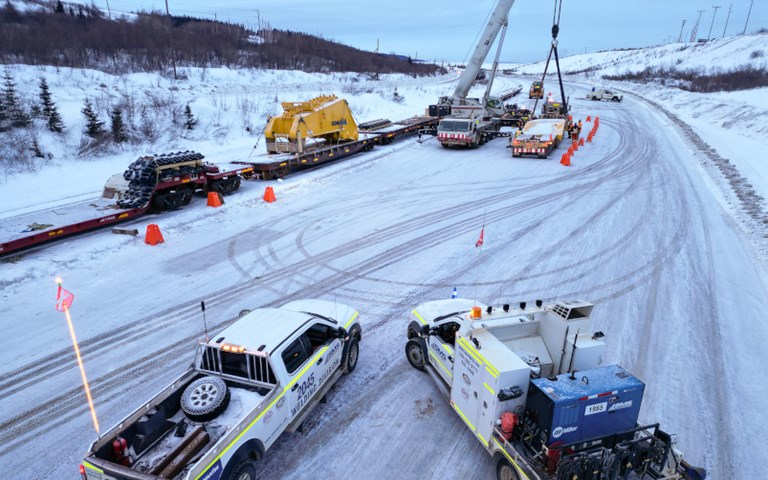
Komatsu PC7000-11 components being transferred from rail car to truck in Sept-Îles, Quebec. SMS Equipment managed the complex transport of the large excavator from its manufacturing facility in Düsseldorf, Germany, to a remote mine near Labrador City, Newfoundland and Labrador. Courtesy of SMS Equipment
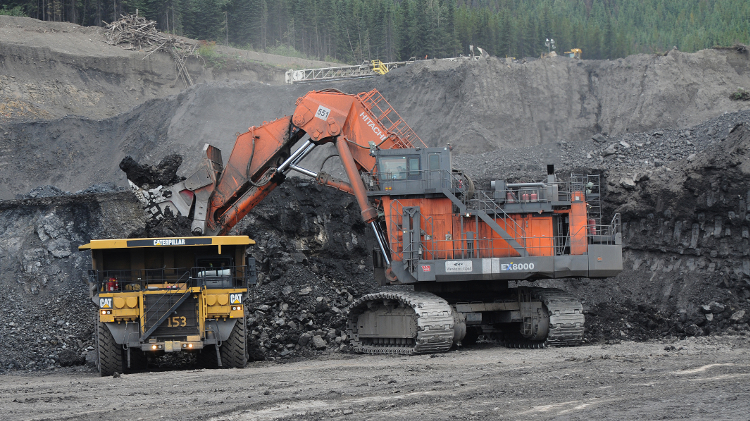
The towering haul trucks and high-capacity shovels essential to mine production are specifically engineered to move massive amounts of earth. Their scale makes them uniquely suited to the work site. Consequently, it makes getting them to the mine site a logistical challenge of equally large proportions.
Transporting heavy equipment is fraught with hazards. It takes complex logistics planning and expertise to make it from factory or dealer to site, especially when the item being moved is the size of a small building.
“The key challenges lie in balancing customer expectations with real-world shipping scenarios and adapting to last-minute changes in the established routes,” said Carolina Ribeiro, logistics coordinator at SMS Equipment, which distributes Komatsu mining equipment across Canada.
Those real-world scenarios can encompass a huge number of factors, including some that are not exactly top-of-mind.
The narrow, winding mountain roads in British Columbia and Yukon, for example, meant that in some instances, the body of a 240-tonne Cat 793 haul truck had to be transported in pieces, noted Cody Broster, head of coals and metal mining at Finning Canada, the Caterpillar dealer that provides sales and service in British Columbia, Yukon, Alberta, Saskatchewan, the Northwest Territories and a portion of Nunavut. Then the pieces had to be assembled on site, which required two cranes and a team of welders working for 10 days.
“It was quite a process at site,” he said. But thanks to some infrastructure upgrades in B.C., coupled with the work that the trucking companies have done to negotiate large load permits with the government, those truck bodies can now be transported in one piece.
However, that does not mean the equipment moves are easy—just easier than before.
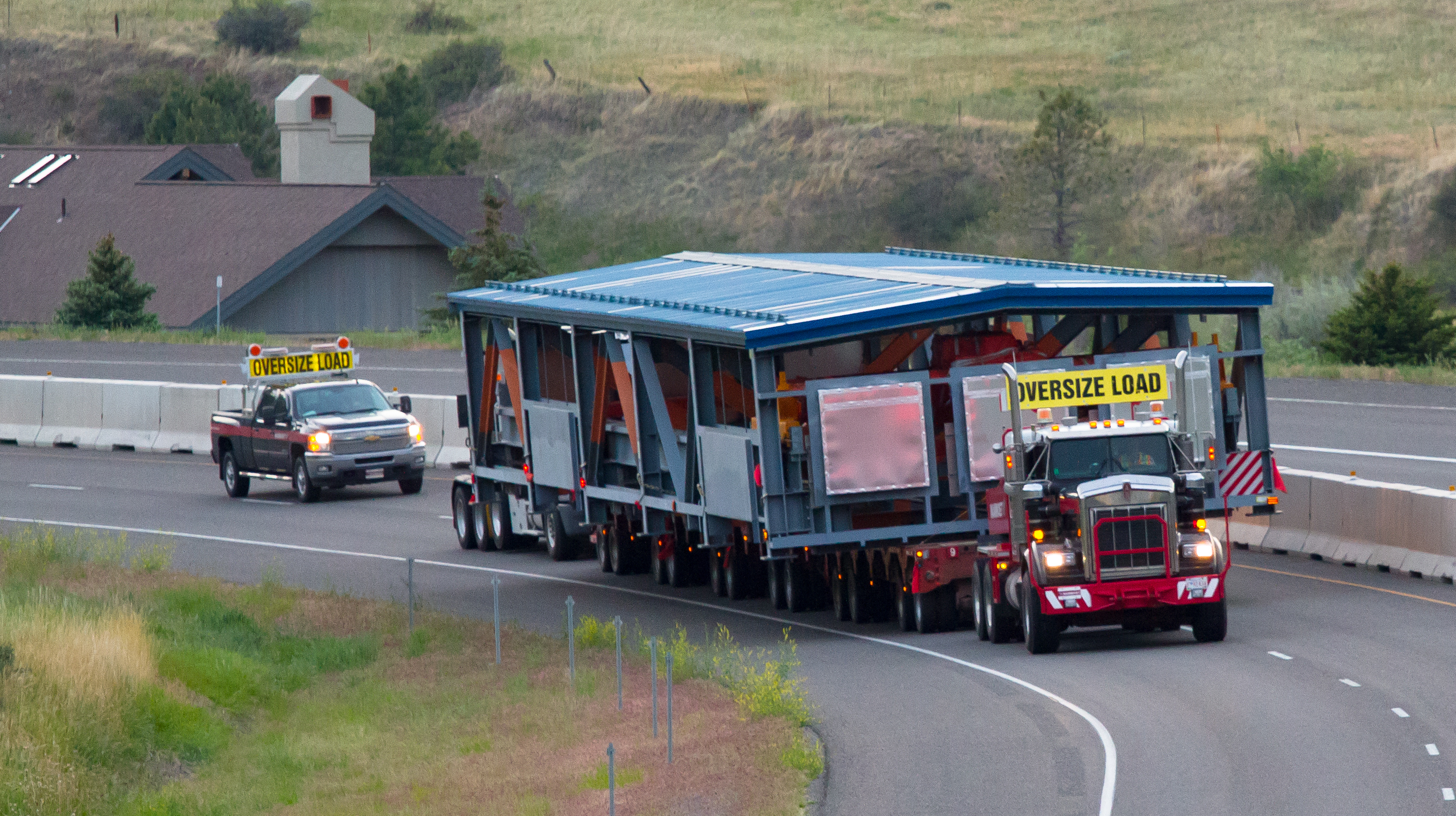
“They’re massive, massive moves,” Broster said. “You can only move them at certain periods of time—for instance, not over a weekend [as weekend traffic is typically heavier]. They have to be moved in the middle of the night [during quieter hours, to help reduce risks], they have to have four pilot cars accompanying them [as escorts to ensure safe passage].”
Then, there is still assembly work to do in many areas (just not as much), which can take as little as a couple of days to put a blade and a ripper on a bulldozer, or as much as a month to six weeks for a shovel build. That means finding accommodation for the crews doing the work, as well as creating an assembly pad.
“Before we get to site and start building the equipment, we make sure that we have, first and foremost, a plan with the customer,” Broster said. “The logistical challenges of the individuals involved in making sure all the proper parts and pieces are on site is another [challenge].”
Seasonal and infrastructure considerations
To make things more complicated, there is “thaw season,” the period at the end of winter when the ground ice is melting, making roads more fragile to heavy vehicle loads. For that time period, which varies by location but is typically from sometime in March until as late as the end of June, provincial ministries of transportation further restrict the loads that may be hauled to protect the roads, reducing the weight permitted per axle by 50 to 70 per cent.
The seasonal restrictions are even more pronounced in some areas of Yukon and the Northwest Territories, Broster added. There, some sites are inaccessible until the winter ice road is completed, and companies have only “a six-ish week window, once per year” to move equipment in or out.
“Planning starts far in advance to be able to make sure you can hit your equipment timing cycles to get everything up and through to site in advance of that ice road closing,” said Broster.
In addition, Ribeiro noted that more frequent extreme weather events are driving up transportation costs. “Especially during spring road bans, where deliveries may be rerouted, delayed or divided into multiple smaller loads to accommodate weight restrictions on thawing roads,” she said. “Changing weather is also shortening road lifespans, increasing repair needs, and therefore raising permit costs and requirements for specialized trailer configurations.”
Infrastructure deficiencies can also challenge equipment movers, according to Robert Khachatryan, founder and CEO of Los Angeles-based Freight Right Global Logistics, which serves customers globally. “Routes must be carefully planned to avoid hazards such as low overpasses, overhead wires and other gaps such as weak bridges,” he said.
Chris Winters, strategic asset manager at Toromont Cat, the Caterpillar dealer that handles the eastern portion of Canada, including much of Nunavut, noted that a bridge does not care how many axles you have. “It’ll have a maximum rating, and the gross weight of the vehicle, trailer and all of the cargo that’s on that trailer cannot exceed that maximum load,” he explained.
In Canada, provincial transportation ministries issue large load transport permits and decree the routes heavy loads may take, based on the weight and dimensions of the load, as well as specifying additional restrictions such as the type of equipment to be used and the number of axles.
“Weight [restrictions] are as a result of the fact that roads in Ontario and other provinces are designed to bear a certain amount of weight per axle of the vehicle,” said Winters. “If you have something that’s very heavy, you can move it, but you have to put more axles underneath it.”
That, he said, is why you sometimes see heavy haulers that look as though they have 100 wheels—they are spreading the weight across all of those wheels to prevent damage to the road.
“Oftentimes they’ll require certain types of escorts for these large loads,” said Winters. “It might be a situation where sections of the road we’re travelling along are closed while we’re travelling on them, so you actually have a travelling police escort that’s closing sections of the road as you move along, to allow you to pass safely. If you’re blocking a two-lane road, at some point you [will] have to stop people who are going the other way in order to let you pass, and then once you’ve passed, reopen the [section of] road and close the next section of the road. All of that is part of the permitting process, and the [provincial] ministry of transportation will set the specifications for what’s required in terms of escort.”
Winters added that some deliveries to Arctic regions have to go by ship because road transport is so expensive, or some mines have no connection to the public road network (see "A new northern vision").
“There is road infrastructure that connects a lot of those northern mines, but it just can’t handle the weight and the size of the equipment that they actually use at the mine site,” he said. “From [the perspective of] dollars per pound of material moved, the economic avenue to deliver stuff up there is to take it up by ship, because they have access from the coast to those mine sites. They offload close to the mine site, and then the road that they have to build to support moving these heavy loads is whatever the shortest distance from the coast [to the site] is for them.”
Similarly, Winters said, significant equipment elsewhere is transported as close to the mine as possible by rail, then offloaded to trucks for the last leg of the journey. “Once you do that, the restrictions for transporting equipment are based on the weight and dimensions of the piece of equipment,” he pointed out.
Preventing delays
Timing and site access are also two key factors companies need to consider when bringing equipment to site, added Scott Ross, general supervisor, mechanical at SMS Equipment. “Along with transport, [mining companies] need to plan for the support equipment and people required to offload and stage major components. That includes cranes with operators, rental equipment such as telehandlers and aerial work platforms, as well as light towers, generators, heaters and so on.”
Khachatryan recommended that senior project staff should be on the ground to supervise critical milestones such as offloading, border crossings and last-mile transport.
Ross noted that available workforce and support infrastructure are critical to the success of transporting heavy equipment to mine sites. “Having trained personnel, proper tooling and adequate work space [on site] is just as important as the transport itself,” he said. “When any of these elements is missing, it can create risks and delays.”
Delays can also result from errors in paperwork such as customs documents, and from political situations (such as cross-border tariffs) resulting in obstacles such as revoked permits and transport curfews, Khachatryan added. Planners have to consider these factors, along with unexpected conditions including wildfires, heat-related pavement restrictions (to prevent damage to road surfaces) and flood washouts. They can do that, he said, by maintaining alternate routes, as well as planning for modular splits so loads can detour on constrained segments.
He also advised mining companies to prepare for equipment arrival by planning last-mile works such as temporary road widening, culvert protection and pad preparation, along with arranging for pre-staged spares and consumables.
The fact that these moves can happen at all is a tribute to the immense amount of work done over many years, Broster noted, with infrastructure updates removing constraints such as low bridges. These open the gateway for mining, in a time when growth in mining of critical minerals is anticipated. Now the fundamental question, he said, is how do you do it faster and more economically?