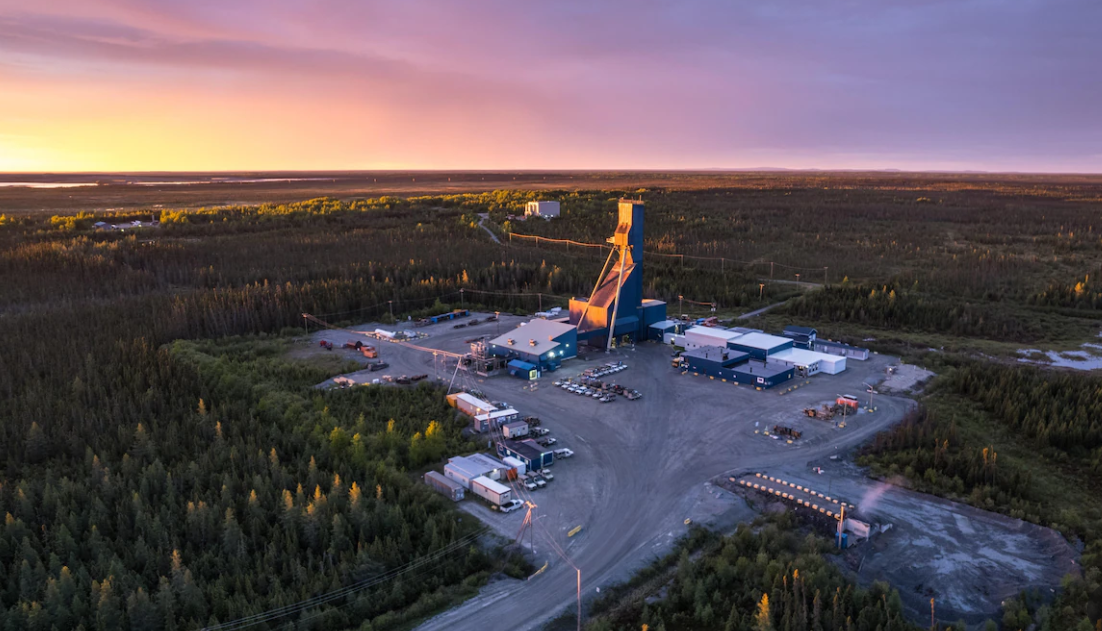
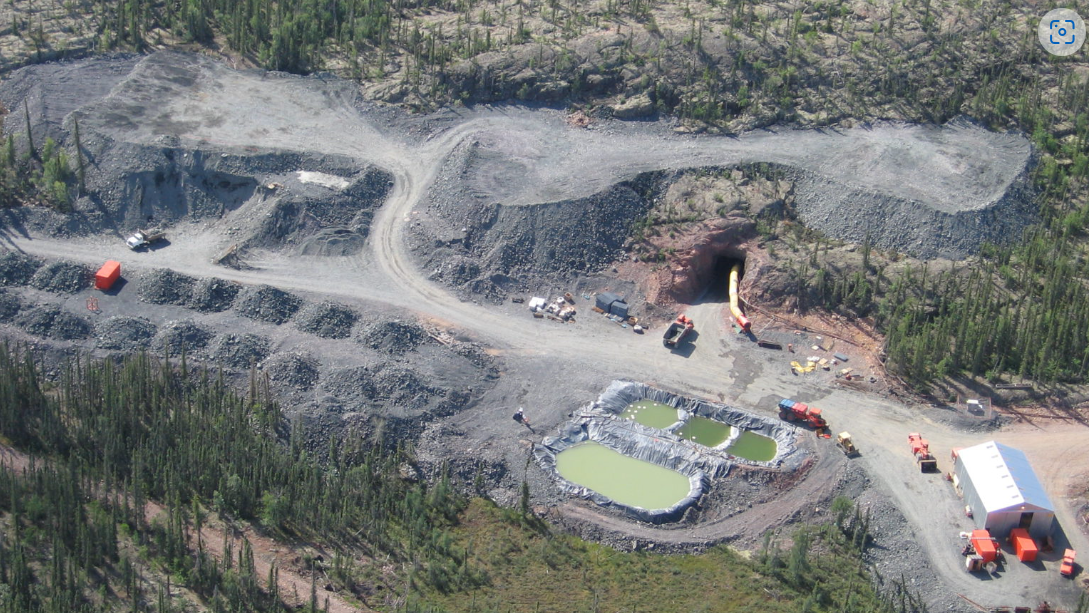
Agnico Eagle announced this week that it plans to purchase a stake in Radisson Mining, owner of the O’Brien gold project in Quebec. Courtesy of Radisson Mining.
Welcome back to your weekly mining news recap, where we catch you up on some of the news you may have missed. This week’s headlines include Glencore starting production at its Onaping Depth nickel mine in Ontario, Seabridge Gold responding to calls for further Indigenous consultation on the KSM project and Electra Battery Materials receiving funding for its planned cobalt sulfate refinery in Ontario.
Agnico Eagle plans to commit around $57.2 million in Radisson Mining for a roughly 10.45 per cent stake in the company, with warrants that could allow it to increase its ownership to 14.9 per cent. The deal is expected to close around September 2, subject to several closing conditions. Radisson owns the O’Brien gold project in the Abitibi region of Quebec, where drilling work is currently under way.
Canada announced on Tuesday that it will introduce counter tariffs on U.S. imports starting September 8, including 50 per cent tariffs on certain steel and aluminum products. The decision comes after the United States announced a 50 per cent tariff on $27.6 billion worth of Canadian goods. The Mining Suppliers Trade Association of Canada supports the measures but is also calling for deeper government and industry collaboration, citing the need for trade-diversification support to help mining suppliers expand into new markets.
The Ontario government announced on Monday that work has been under way since June on upgrades to the province’s Anaconda and Painter Lake roads as part of a plan to improve access to the Ring of Fire region. The project includes plans to upgrade 97 kilometres of road and to widen the roads to two-lane secondary highway standards. Expected to open by November 2030, the roads would connect Highway 643 to three proposed all-season routes that will provide access to the mineral-rich region.
Glencore’s Onaping Depth nickel mine near Sudbury, Ontario, recently achieved several milestones, including first production, construction of the mine shaft and access to the ore body, Sudbury.com reported. The mine is expected to operate until at least 2040 and yield 280 kilotonnes of nickel, along with 145 kilotonnes of copper.
Seabridge Gold has responded this week following last week’s news that the Gitxsan Huwilp Government withdrew its support for Seabridge Gold’s KSM copper-gold project in British Columbia, citing concerns raised by the Tsetsaut Skii km Lax Ha (TSKLH) Nation over consultation and the proposed tailings facility. Seabridge Gold noted that TSKLH was previously offered extensive, fully funded consultation during the project’s environmental assessment. TSKLH has until September 28 to submit written statements to the B.C. Environmental Assessment Office.
Electra Battery Materials has secured $17.5 million in funding from Invest Ontario to support the construction of its cobalt sulfate refinery in Temiskaming Shores. The project is progressing towards commissioning in late 2026 and is expected to start commercial production in 2027.
Troilus Mining’s Quebec gold-copper project has received potential financing support of up to US$132 million from Finland’s Finnvera for equipment and services, The Northern Miner reported. The proposed financing would support a US$155-million equipment order from Metso as the Troilus project advances towards construction. The project is expected to operate for 22 years and is anticipated to yield an average of 244,600 ounces of gold and 17.3 million pounds of copper annually. The Quebec provincial government selected the project for specialized support in July, while Troilus continues permitting and engineering work.
First Mining Gold and Slate Falls First Nation have reached an agreement on the Springpole gold project in Ontario. The deal includes a role for the Nation in environmental monitoring and management, while creating opportunities for local training and employment, along with other economic benefits. First Mining also signed agreements with Cat Lake First Nation and Lac Seul First Nation this week, focused on community participation and benefits tied to the project. The Springpole project secured federal environmental assessment approval in June.
Block caving can be an efficient but technically challenging mining method that depends on gravity and rock fracturing, Mehanaz Yakub reported for CIM Magazine. Advanced monitoring technologies are helping mines overcome the uncertainty of the process, providing more continuous and high-resolution insights into subsurface conditions. These technologies can reveal changes in density, deformation, strain, seismicity and other indicators of ground behaviour.
That’s all for this week. If you’ve got feedback, you can always reach us at editor@cim.org. If you’ve got something to add, why not join the conversation on our Facebook, Twitter, LinkedIn or Instagram pages?