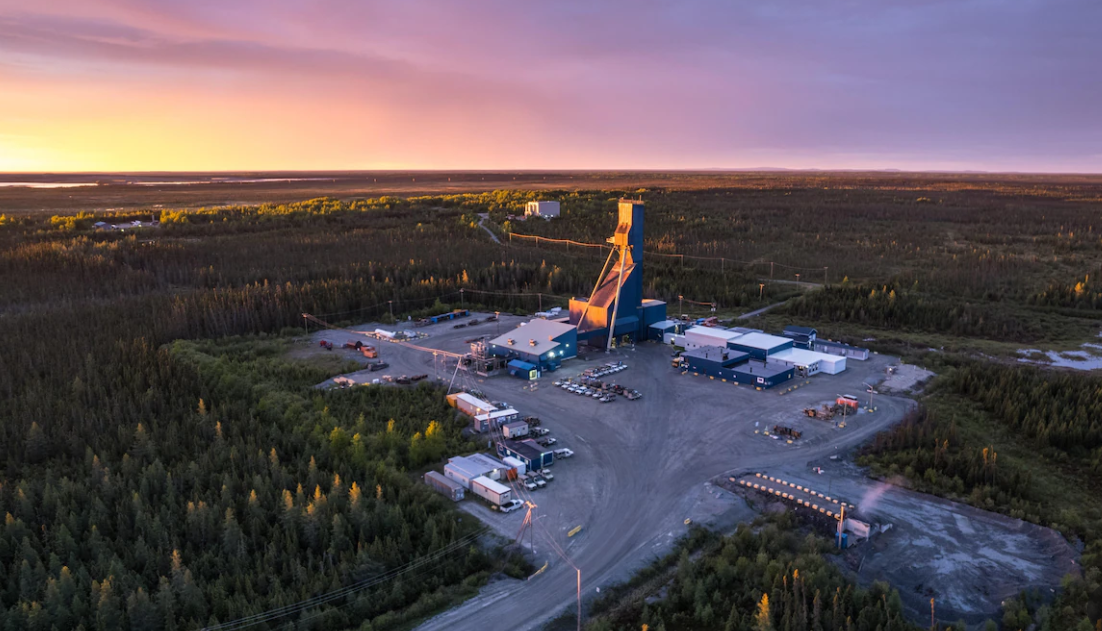
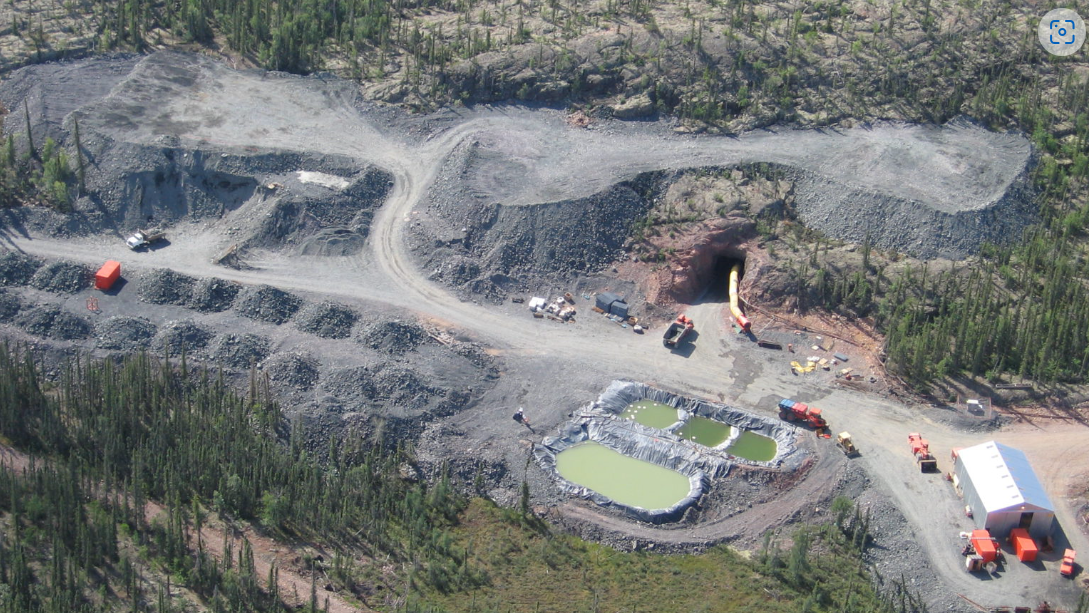
Selkirk Copper Mines preliminary economic assessment reports that the Minto copper-gold-silver mine in the Yukon will generate an after-tax net present value of $494 million. Courtesy of Selkirk Copper Mines.
Welcome back to your weekly mining news recap, where we catch you up on some of the news you may have missed. This week’s headlines include Vizsla Copper acquiring the Miller copper-gold porphyry project in British Columbia, EMP Metals moving its Project Aurora lithium refining demonstration plant in Saskatchewan into full-time operations, and Mining Association of Canada selecting Ben Chalmers as its new president and CEO.
The federal government has introduced Bill C-39, which aims to speed up federal approvals for major infrastructure and resource projects. The legislation sets a one-year target for federal reviews and decisions once a complete application is submitted. It also includes changes aimed at improving the movement of goods through Canada’s trade and port networks, along with updates to federal labour rules and new hires to increase workplace health and safety inspection capacity.
U.S. President Donald Trump said on Monday that the United States is considering Belarus as a new source of potash, potentially reducing its reliance on Canadian supplies, CBC News reported. Trump said Belarusian potash would cost substantially less than the material the U.S. currently buys from Canada. Belarusian President Alexander Lukashenko said his country resumed potash sales on Sept. 11 to the U.S after Washington lifted sanctions. A U.S-Belarus deal is under discussion; however, Belarus has previously committed to export most of its potash to other countries.
The Trump administration is also considering a 90-day ban on U.S. diesel exports, according to a report from Politico on Wednesday. Trump said the measure would help lower fuel prices for Americans, while energy analysts have warned that restricting U.S. exports could push global diesel prices higher and potentially increase demand for Canadian supplies.
EMP Metals has finished commissioning its Project Aurora lithium refining demonstration plant in Saskatchewan and has advanced the facility into full-time operations. The plant now processes brine continuously from a production well through to lithium chemicals. The company and its partner Saltworks Technologies are focused on optimizing the integrated process, establishing stable operating conditions and collecting data to inform the next stage of Project Aurora and move towards commercial development plans.
Fortune Minerals received renewed approvals for its Class A water licence and Type A Land Use Permit for the NICO cobalt-gold-bismuth-copper project in the Northwest Territories. The permits cover construction, operations and reclamation requirements. Fortune is updating its feasibility study, advancing an access road with the Tłı̨chǫ Nation Government and targeting a final investment decision in 2027.
Vizsla Copper has acquired the Miller copper-gold porphyry project in central British Columbia through staking, Canadian Mining Journal reported. The project borders Centerra Gold’s producing Mount Milligan copper and gold porphyry open-pit mine and covers several copper-gold exploration targets near existing infrastructure. Vizsla plans to begin magnetotelluric surveying across the project in the coming weeks.
Selkirk Copper Mines has released a preliminary economic assessment for the restart of its past-producing Minto copper-gold-silver mine in the Yukon, Mining.com reported. The study outlines a 13-year operation processing of 4,100 tonnes per day through the existing mill, with initial capital estimated at $186 million. The operation could generate an after-tax net present value of $494 million.
A worker has died in an accident at BHP’s Escondida copper mine in northern Chile, Mining.com reported. BHP said the worker was killed during maintenance work involving a front-end loader, and all operational activities at the mine have been suspended. The company has not provided a timeline for a restart.
The Mining Association of Canada (MAC) board has appointed Ben Chalmers as president and CEO, effective Jan. 1, 2027. Chalmers joined MAC in 2011 and has overseen the Towards Sustainable Mining initiative since then. He currently serves as senior vice-president, overseeing MAC’s public affairs, communications and government relations, and has led the association’s international mining policy work. In 2014, CIM recognized Chalmers as a Distinguished Lecturer for his work on mining sector tax transparency. Chalmers is succeeding Pierre Gratton, who is retiring after over 15 years leading the association.
Canada’s mining innovation ecosystem needs stronger coordinated connections between industry, academia, suppliers and government, argued Manochehr Oliazadeh for CIM Magazine. Oliazadeh pointed to Australia’s collaborative ecosystem and approach to mining as a model for Canada, highlighting how coordinated funding and intentional partnerships can help fuel innovation and commercialization.
Canada’s new Defence Industrial Strategy could create new opportunities for the mining industry by driving demand for critical minerals and reducing financing risks for projects, Trish Saywell reported for CIM Magazine. The $6.6 billion strategy includes measures to expand critical minerals production, processing, procurement and stockpiling. Mining companies could tap into areas such as autonomous technologies and northern and Arctic infrastructure.
That’s all for this week. If you’ve got feedback, you can always reach us at editor@cim.org. If you’ve got something to add, why not join the conversation on our Facebook, Twitter, LinkedIn or Instagram pages?