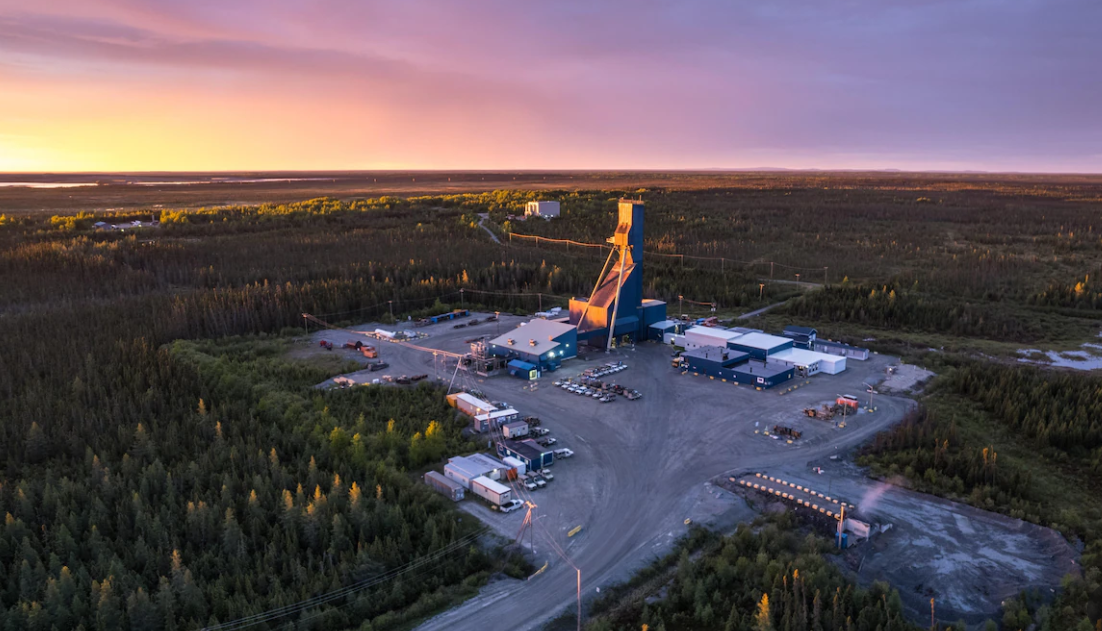
A Cat 793 XE battery-electric haul truck operating at the Jimblebar iron ore mine in Western Australia, where BHP, Rio Tinto and Caterpillar are studying how electrified haulage could perform in Pilbara mining conditions. Courtesy of Caterpillar.
Welcome back to your weekly mining news recap, where we catch you up on some of the news you may have missed. This week’s headlines include Canada unveiling its Nuclear Energy Strategy, three northern infrastructure projects being eyed for federal fast tracking and Sherritt International beginning the shutdown of its nickel and cobalt refinery in Alberta.
Newmont announced it had received provincial approvals on June 19 to expand the Red Chris copper-gold mine in British Columbia, shifting it from open-pit mining to underground block caving. The expansion project is expected to extend the mine’s life into the mid-2040s. Newmont is now working on a feasibility study for the project, with both the study and a final investment decision expected in the second half of this year.
BHP, Rio Tinto and Caterpillar have launched a trial of two Cat 793 XE battery-electric haul trucks at BHP’s Jimblebar mine in Western Australia’s Pilbara region. The trial has logged more than 100 operating hours and 200 test laps, helping to assess safety, technical readiness, charging infrastructure and commercial feasibility. The next phase will test dynamic charging while trucks are in motion.
St Barbara’s proposed 15-Mile processing hub in Nova Scotia has entered federal permitting after regulators accepted its initial project description, The Northern Miner reported. The hub would centralize the processing of gold-bearing ore from the 15-Mile, Old Austen and Old Mitchell historic mine sites at a facility capable of treating three million tonnes annually. The filing is now in a 20-day public comment period and consultation with First Nation communities. A prefeasibility study for the hub released in January outlined average production of about 100,000 ounces of gold a year over a lifespan of more than 11 years.
On Tuesday, the federal government released its Nuclear Energy Strategy for Canada. It sets out a number of objectives including doubling uranium exports by 2035 and expanding the fleet of CANDU-design nuclear reactors in Canada and internationally. Then on Wednesday, the U.S. Department of Energy offered a US$17.5 billion conditional loan package to support the development of large-scale nuclear reactors by Westinghouse Electric Corporation, which is jointly owned by Cameco Corporation.
The Canadian federal government identified three northern infrastructure projects on Wednesday that could be fast tracked under the Building Canada Act, The Globe and Mail reported. These include the Mackenzie Valley Highway project in the Northwest Territories, the Grays Bay Road and Port project in Nunavut and the Deep Geological Repository nuclear waste storage project in Ontario. The projects may be listed under the act this fall as being projects of national interest after consultation with governments and Indigenous communities.
Sherritt International commenced a shutdown of its Fort Saskatchewan nickel and cobalt refinery in Alberta on Monday after expanded U.S. sanctions on Cuba disrupted the feedstock supply from its Moa joint venture, Mining.com reported. Sherritt said the refinery will remain idle until mining and processing at Moa restart and the feed pipeline is rebuilt.
PricewaterhouseCoopers, the receiver for Victoria Gold’s former Eagle mine in the Yukon, is suing the contractor JDS Energy and Mining over the mine’s 2024 heap leach failure, CBC News reported. The lawsuit alleges JDS failed to meet contractual and legal standards in its engineering and construction work on the heap leach facility and that those failures caused the slide, which contaminated nearby waterways. The claims, which have not been tested in court, seek unspecified damages tied to a loss of mining operations, site damage, cleanup and legal costs. Boroo, a private mining company based in Singapore, was chosen in April as a prospective buyer for the mine and is currently carrying out due diligence.
Li-FT Power signed a binding agreement on Tuesday for a two-year option to acquire the Renard diamond mine site in Quebec, including the processing facility and associated infrastructure, subject to approval by the province’s Superior Court. The company said Renard’s existing 2.2-million-tonne-per-year plant may be suitable for processing spodumene pegmatite ore from its Adina lithium project, located about 60 kilometres north of the Renard site. Li-FT acquired Adina through its acquisition of Winsome Resources last month, which had previously held an option to acquire Renard but terminated it in 2025.
Glencore’s Sudbury Integrated Nickel Operations mine rescue team won Ontario Mine Rescue’s 2026 provincial competition in Sudbury. The eight participating teams completed a mock emergency scenario at Magna Mining’s past-producing Podolsky nickel-copper mine involving oxygen-deficient air, rope rescue and a mock vehicle fire. Agnico Eagle’s Macassa mine team placed second.
In March, Canada announced an initiative to create the Canadian Digital Core Library, a public national database intended to digitize and centralize drill core sample data from across the country, Sara King-Abadi reported for CIM Magazine. Backed by $40 million in federal funding over 2026 to 2027 and supported by partners from government, academia and mining companies, the project aims to improve access to geological information, support artificial intelligence research, reduce costly re-drilling and speed up the discovery of critical mineral deposits.
That’s all for this week. If you’ve got feedback, you can always reach us at editor@cim.org. If you’ve got something to add, why not join the conversation on our Facebook, Twitter, LinkedIn or Instagram pages?