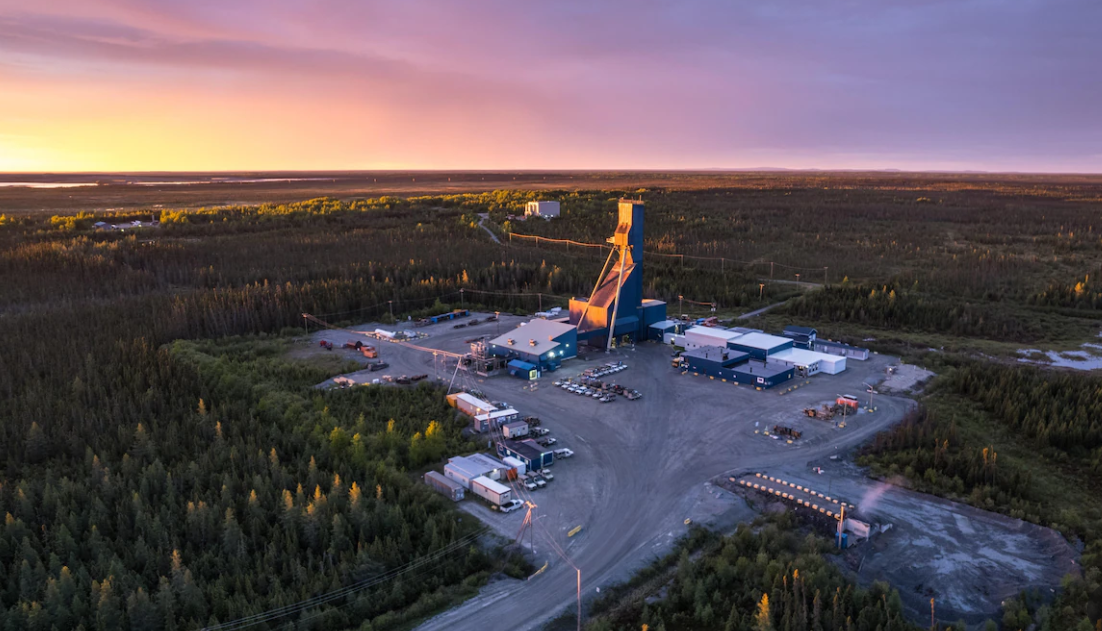
Production activities at Cameco's Key Lake mill (pictured) and McArthur River uranium mine in northern Saskatchewan resumed this week after flooding from earlier this month led to transportation disruptions at both sites. Courtesy of Cameco.
Welcome back to your weekly mining news recap, where we catch you up on some of the news you may have missed. This week’s headlines include a proposed name change for Taseko Mines, commercial production beginning at Blue Lagoon Resources’ Dome Mountain gold-silver project in British Columbia and Cameco resuming production at its McArthur River mine and Key Lake mill in Saskatchewan.
Taseko Mines announced on Monday it is proposing a corporate name change to Trekor Metals to reflect the company’s expanding North American asset base and growing focus on copper development, Resource World Magazine reported. Shareholders will vote on the proposed rebrand at the company’s annual general meeting on June 24.
The latest BC Mine report from Pricewaterhouse Coopers (PwC) found British Columbia is well positioned to become a global leader in critical minerals development as mining projects become increasingly tied to energy security, defence and advanced manufacturing priorities. The report also highlighted growing Indigenous participation in mining partnerships and the Yukon’s emerging role in Canada’s critical minerals supply chain. PwC said faster permitting, regional infrastructure investment and greater adoption of digital tools and AI will be key to improving the B.C.’s global competitiveness.
The Supreme Court of Canada will hear the British Columbia government’s appeal of a lower court ruling involving the province’s Declaration on the Rights of Indigenous Peoples Act (DRIPA) and Indigenous mineral rights, Global News reported. The case stems from a challenge by the Gitxaała and Ehattesaht First Nations over B.C.’s mineral claims system and is expected to have major implications for mining project approvals, Indigenous consultation and resource development across the province. No dates have been set yet for the Supreme Court hearing.
Construction is set to begin next week in Geraldton, Ontario, on the first phase of the long-planned Ring of Fire road network, Northern Ontario Business reported. The proposed infrastructure is intended to support the transport of minerals, supplies and workers in and out of the region, while also connecting Marten Falls First Nation and Webequie First Nation to Ontario’s road system for the first time.
Cleanup costs at the Eagle gold mine in the Yukon are expected to reach $377.5 million as remediation work continues following the 2024 heap leach failure, CBC News reported. The mine is owned by Victoria Gold but is currently being managed by PwC, which is the court-appointed receiver. PwC reported spending $301 million of the approximately $405 million secured for the entire cleanup effort from multiple sources, including a $220 million loan from the Yukon government. Boroo, a Singapore-based private mining firm, was selected in April as a potential buyer of the mine and is currently conducting due diligence.
Cameco said on Wednesday that full production has resumed at its McArthur River uranium mine and Key Lake mill in Saskatchewan following flooding-related transportation disruptions earlier this month, Mining Weekly reported. Cameco said its 2026 consolidated uranium production outlook remains unchanged at between 19.5 million and 21.5 million pounds of triuranium octoxide.
Blue Lagoon Resources has achieved commercial production at its Dome Mountain gold-silver project in British Columbia, Mining.com reported. Dome Mountain is permitted to mine up to 55,000 tonnes annually, with Blue Lagoon targeting steady-state production of 150 tonnes per day.
The Mining Industry Experience Program (MiEX)ran for the first time earlier this month to give post-secondary science, technology, engineering and mathematics students paid, hands-on exposure to Canada’s mining sector, Ashley Fish-Robertson reported for CIM Magazine. The program combined classroom-based learning hubs across Canada with visits to operating mine sites, where participants met with industry experts and explored the different mining careers. Designed for students with limited exposure to the sector, the pilot program aimed to showcase mining’s importance to Canada and the global economy.
Under National Instrument 43-101, technical disclosure should only be approved by a qualified person with direct experience relevant to the specific work being reviewed, noted James Whyte for CIM Magazine. Professionals should not be signing off on disclosure outside their areas of expertise and competency should be assessed based on their practical experience and familiarity with comparable geological or operational settings, rather than simply years worked in the industry or commodity alone.
That’s all for this week. If you’ve got feedback, you can always reach us at editor@cim.org. If you’ve got something to add, why not join the conversation on our Facebook, Twitter, LinkedIn or Instagram pages?